
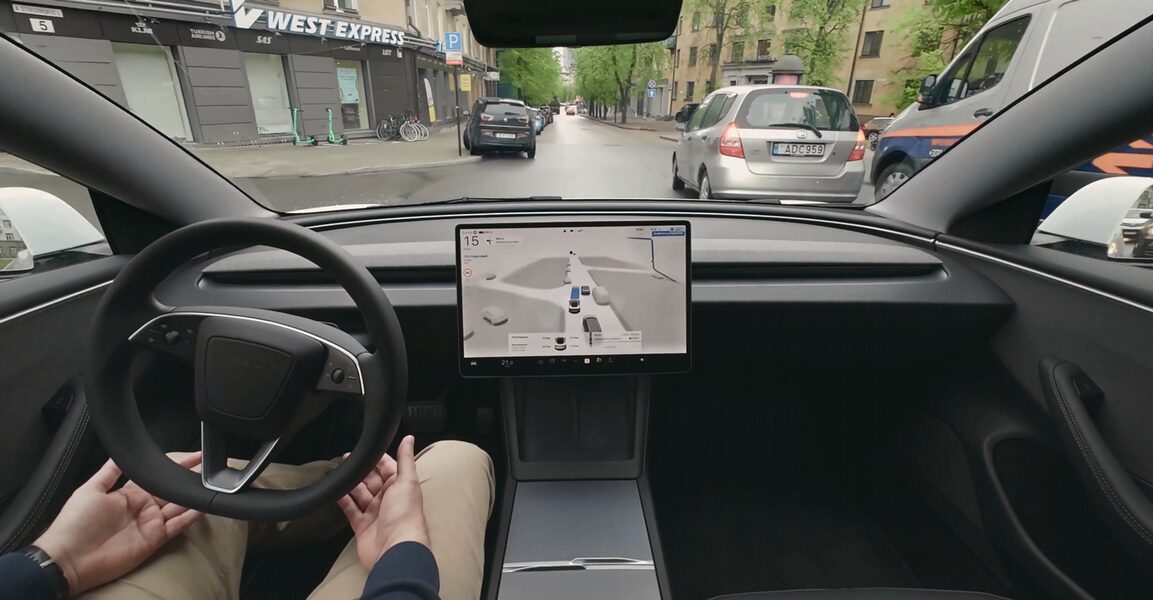
Tesla has begun rolling out its supervised Full Self-Driving system in Europe, starting with the Netherlands and Lithuania. The move gives Elon Musk’s company an early foothold on a continent where driver-assistance software is still boxed in by stricter approvals, and it also shows Tesla is finally finding regulators willing to move at something closer to Silicon Valley speed.
The first stop was the Netherlands, where the system was previously cleared for use on public roads in April. Lithuania is now the second European country to officially approve the supervised Full Self-Driving mode, with Tesla saying the feature is becoming available to owners there in stages. That sequencing matters: in Europe, software rollouts often spread country by country, not by some grand continent-wide switch.
What FSD Supervised does
Tesla describes FSD Supervised as a driver-assistance system that can handle intersections, turns, and parking, but it still requires the human behind the wheel to pay attention and intervene when needed. That ”supervised” label is doing a lot of heavy lifting, because this is not hands-off autonomy in the way marketing headlines sometimes pretend it is.
The company says the technology is intended to improve road safety and gradually introduce more autonomous functions across Europe. That is a familiar pitch, but the regulatory path is the real story: Tesla is making progress not by waiting for one sweeping approval, but by winning small approvals market by market.
Why the Netherlands and Lithuania matter
The Netherlands has long been one of Europe’s more receptive markets for advanced driver-assistance testing, which makes it a logical launch point. Lithuania is smaller, but it now gives Tesla a second official beachhead in the EU and a fresh proof point that the company can navigate local transport authorities without stalling out.
That is a useful contrast with the broader European auto industry, where rivals have often moved more cautiously on hands-free and supervised automation. Tesla is still constrained by law, of course, but it has turned those constraints into a patchwork rollout strategy rather than a dead end.
What European drivers should expect next
If Tesla keeps landing approvals country by country, the next phase will be less about one dramatic launch and more about a slow, awkward expansion across the bloc. Expect the usual mix of optimism, regulator caution and drivers discovering that ”full self-driving” still very much means ”you drive, the car helps.”