

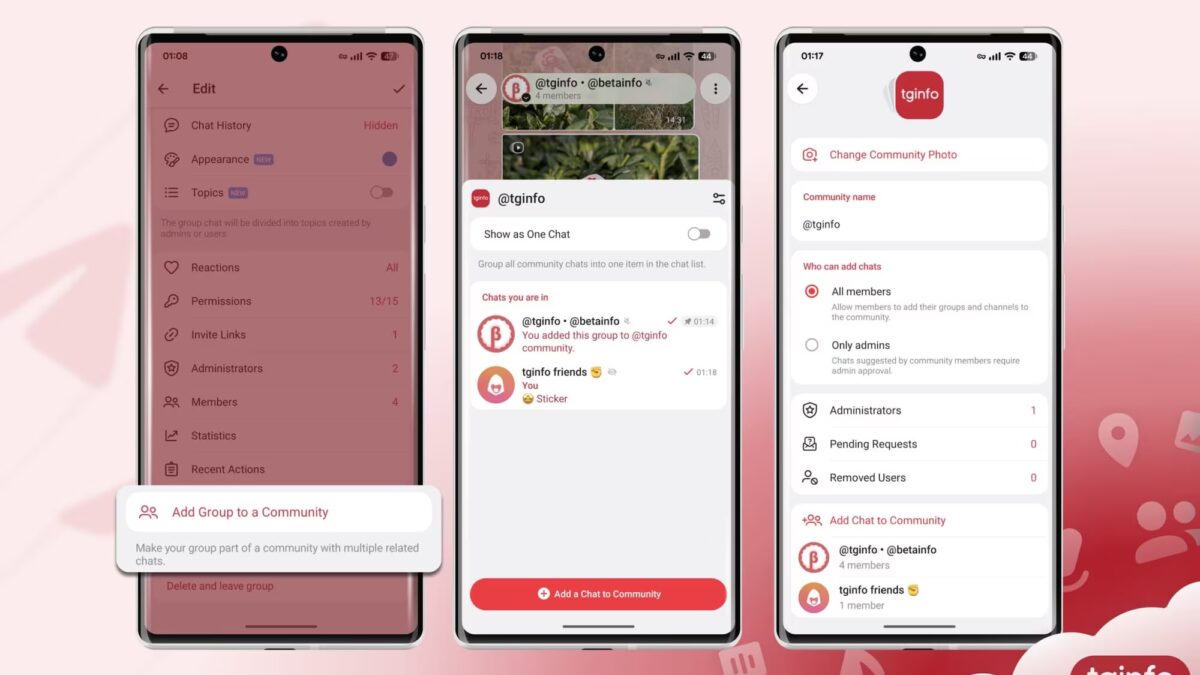
Telegram is trialing ”Communities,” a major new feature that bundles channels, group chats, and bots into unified spaces with shared navigation. Currently in beta on Telegram for Android 12.9, this update aims to solve a persistent headache for large channels, media outlets, and clubs: scattered links and fragmented conversations. If it rolls out in July as planned, Telegram will offer a fresh way to organize sprawling projects without users hunting through endless links.
The Communities feature is live only on a test server for now, but its concept is clear: Telegram isn’t creating an entirely new chat type. Instead, Communities act as a container grouping existing channels, groups, and bots under a single roof. Channels remain channels, groups stay groups, and bots keep working as before-just easier to navigate as parts of one collective.
This move feels inevitable. Telegram reported 950 million monthly active users in early 2024. Over time it has transformed from a simple messenger into a platform hosting media outlets, private clubs, support services, and creator communities. Its old interface of scattered links struggles to keep these sprawling projects manageable.
How Telegram Communities work
Joining a Telegram Community means you’re a member if you belong to at least one linked chat. But this doesn’t mean instant access to everything. Telegram displays an overview of available sections, and users decide which channels, groups, or bots to visit.
This selective access is critical to prevent notification overload. Communities function more like a navigation layer: once you enter part of a project, you see related chats and bots but only interact with what interests you.
Each element inside a Community stays independent. Individual chats keep their own members, settings, and rules. Admins can approve or deny new group additions, and community owners can restrict this power to admins only, according to the beta version.
- Channels can be added to a Telegram Community
- Group chats are supported inside Communities
- Bots operate fully within Communities
- Communities have distinct names and avatars
- Chats and channels display their Community affiliation
Unlike Telegram’s existing forums that live within a single group and divide discussions into topics, Communities are collections of separate chats and channels. To outsiders, Communities look like cohesive entities, but technically they’re independent spaces grouped together.
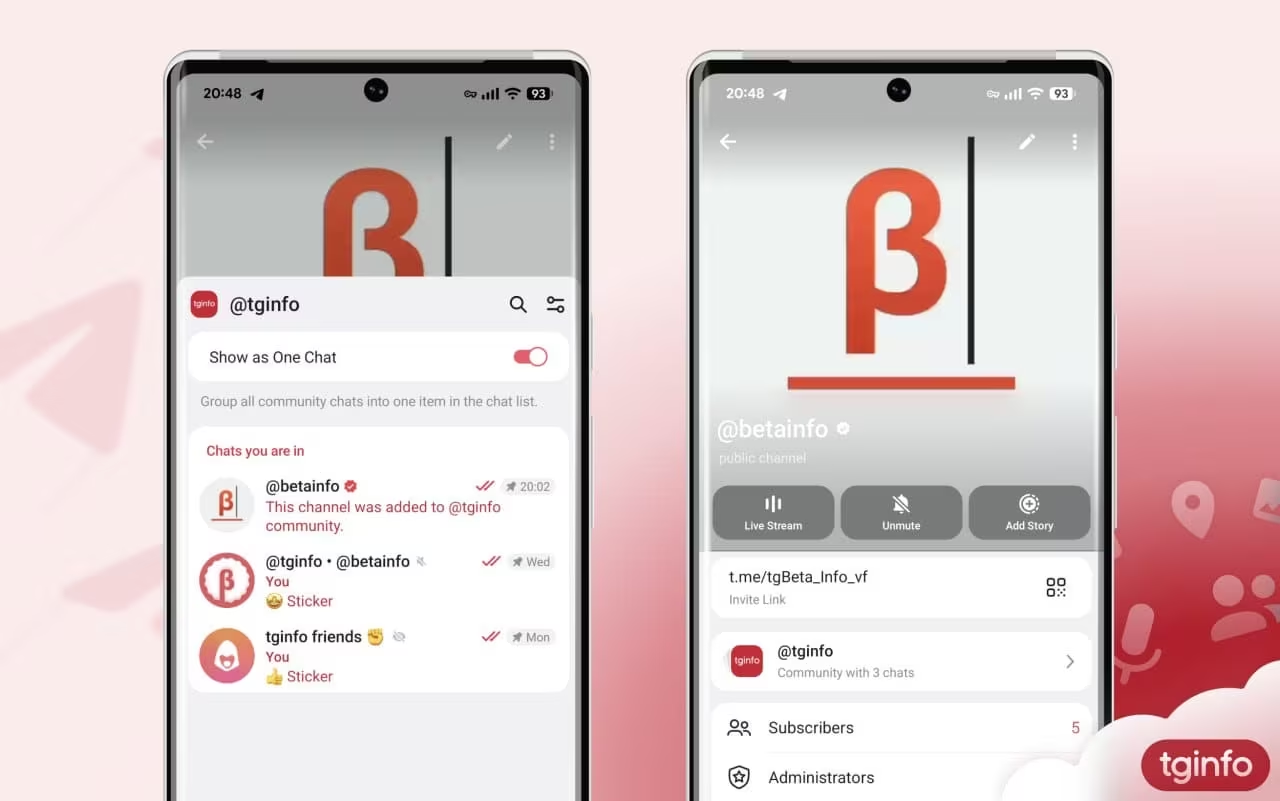
Telegram is also testing visible and hidden chats within Communities. Visible chats are open to any member of the Community, while hidden chats require an invite. This flexibility suits media groups, paid clubs, or teams balancing public discussion with private moderation, exclusive subscriptions, and internal channels.
Channels in Communities can act as front pages, offering news and announcements alongside related discussions, threads, and bots. This lets creators consolidate disparate components that were previously linked individually.
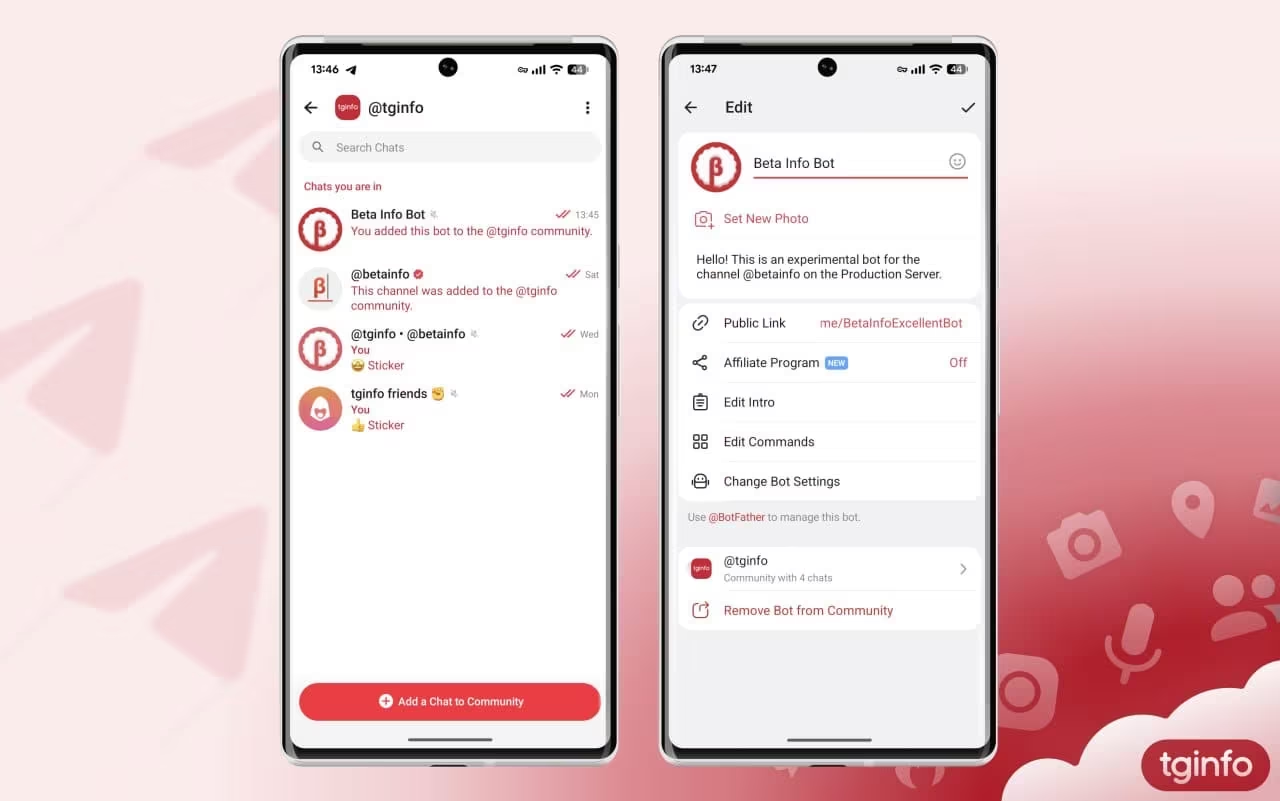
Bots here aren’t just add-ons. They can handle navigation, moderation, applications, role assignment, polls, and support. Telegram has long promoted mini-apps and business tools. In 2024, the company said payouts to mini-app developers and content creators surged amid expanded advertising and payment systems. Communities bundle content, conversation, and automation into a tighter loop.
Discord-like structure in Telegram Communities
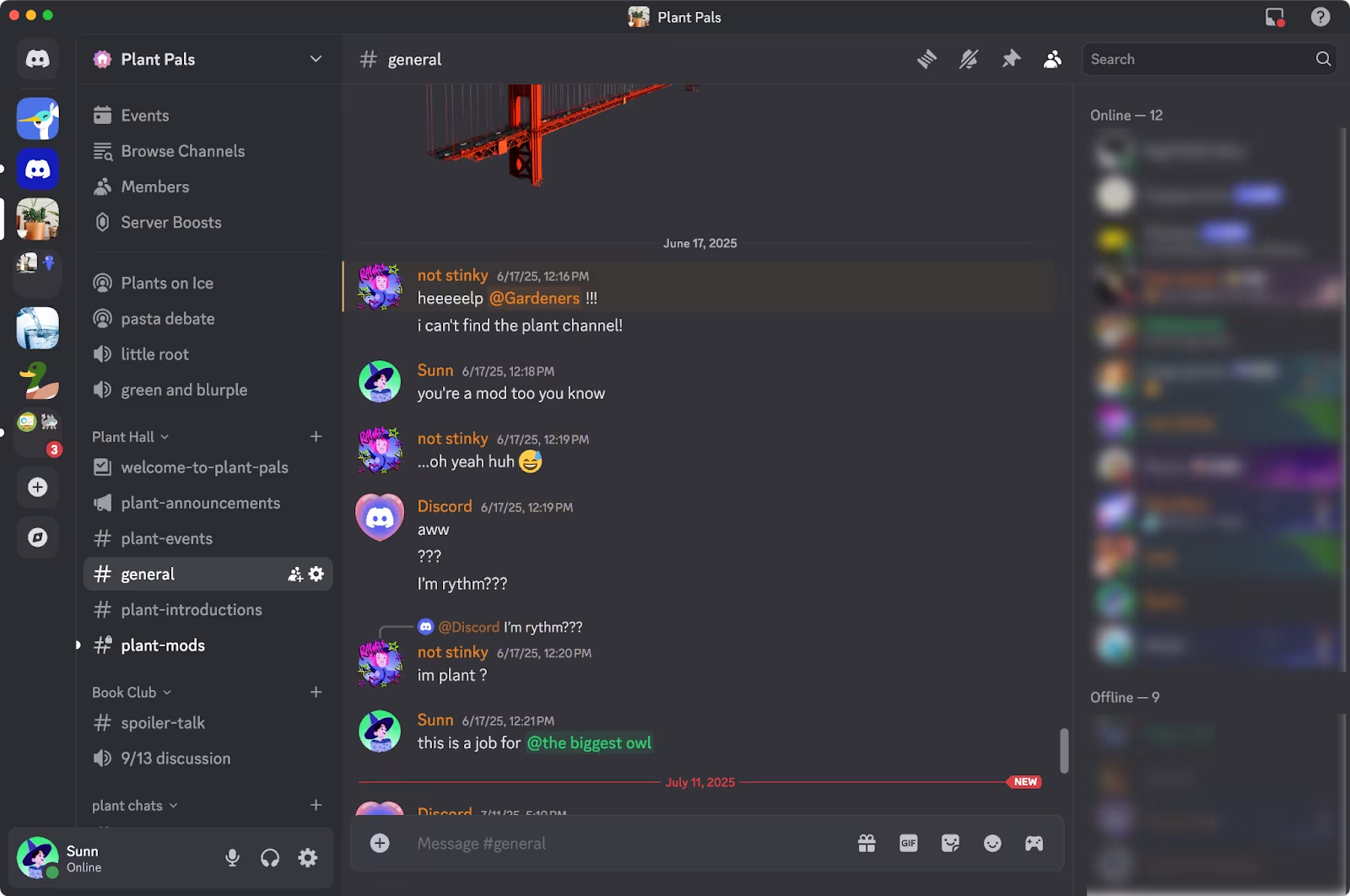
The most obvious parallel is Discord’s server model, where communities revolve around hubs containing channels, roles, access levels, rules, and onboarding features. Newcomers immediately see the whole structure. Until now, Telegram’s approach focused on separate chats, leaving users to piece together how they connected.
Discord has been tackling these needs for large communities for years, offering membership rules, role configurations, private channels, themed rooms, and newcomer onboarding. These features have become standard in gaming and fan groups, and they serve workgroups and clubs much better than a jumble of chats.
But Telegram isn’t cloning Discord wholesale. Discord’s ”server” is the core unit; Telegram’s main unit remains channels, chats, or bots. So Communities are an extra layer, not a complete redesign. That’s advantageous-for channel owners, no need to rebuild audiences from scratch. Existing channels, comment groups, feedback bots, and private groups can be linked together without migrating.
The market for this kind of solution is crowded. Reddit offers subreddits with their own moderation and rules; Slack has long had workspaces organizing channels; and WhatsApp launched Communities in 2022 to link multiple groups under schools or organizations. Telegram’s edge is playing in its own field, leveraging an existing ecosystem of channels and bots-just until now missing a unified way to navigate it all.
Several questions remain unanswered. Limits on the number of linked chats, channels, and bots are unknown. Will there be a discovery catalog for these Telegram Communities? How will Telegram tackle spam and abuse? Discord’s granular permissions help keep large communities orderly. Telegram’s beta shows only the basics: visible and hidden sections plus control over who can propose new groups.
If Telegram rolls out Communities close to what’s in the beta by the end of July, this will mark a substantial rethink of its messaging logic-not just a cosmetic tweak. For projects that have outgrown single channels or chats, this could finally provide a way to organize sprawling Telegram presences under one banner. The big question: will major media, education platforms, and brands quickly pull their scattered Telegram setups into Communities to streamline their audiences?