

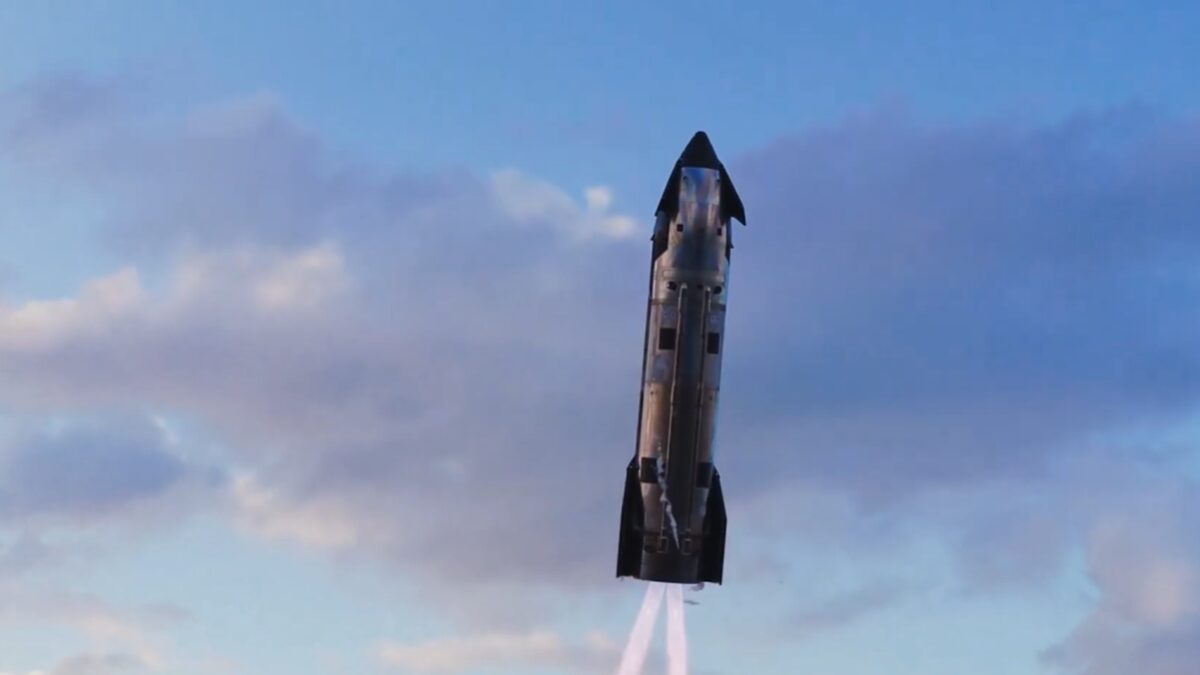
SpaceX has released fresh footage of Starship S39’s splashdown after the 12th test flight, and the interesting bit is not the water hitting the hull. It is the final descent: the ship came down on two engines, then switched to one just before touching the ocean, a sequence SpaceX is clearly trying to turn into a repeatable landing routine.
The company says the clip was recorded at 60 frames per second, which is a neat way to show off control authority at the last possible second. For a vehicle this large, that handoff from two engines to one is exactly the kind of detail that separates a dramatic test from a credible reusable spacecraft.
Starship’s final descent on two engines, then one
In the new video, Starship’s landing profile is easy to follow: a stable descent, then a late transition to a single engine before the splashdown. That matters because the final seconds of a landing are where margins get ugly fast, and extra thrust gives engineers more room to tune speed and attitude before the vehicle meets the surface.
SpaceX has been leaning hard into proof-by-video lately. Earlier the same day, it also published drone-shot launch footage from the end of last week, while continuing to push the message that Starship is not just a bigger rocket, but a system meant to be flown again and again.
The company wants more than routine launches
The ambition is classic SpaceX: not merely frequent launches, but absurdly frequent launches. The company has said it wants to fly Starship more often than once an hour, pointing to a target of more than 10,000 launches a year, a figure that only makes sense if the rocket becomes close to aircraft-style operations rather than today’s one-off cadence.
That is the real story behind the splashdown clip. A rocket this big only becomes economically interesting if reuse is fast and boring, and the late-engine landing sequence is one of the clearest signs that SpaceX is rehearsing that future in public.
What SpaceX says the 12th flight proved
SpaceX says the 12th Starship launch set a record, including the deployment of about 45 tons of Starlink mass simulators into orbit. The rocket also released all 22 simulators carried on board, including two modified Starlink units built specifically for filming.
The Federal Aviation Administration has not yet decided whether the post-launch incident requires an investigation. That leaves the company in the familiar position of celebrating technical progress while regulators decide how much paperwork the sky deserves.
Why thrust-to-weight still dominates the Starship story
Elon Musk has also been arguing that future rockets like Starship depend on a high thrust-to-mass ratio, because fully reusable systems change the economics of launch from the ground up. The message is simple enough: if the vehicle can climb, land, and do it again with less drama, the business case gets a lot more interesting.
The next question is whether SpaceX can turn these polished test clips into a cadence that approaches its own claims. If it can, Starship stops being just the biggest rocket show on Earth and starts looking like a transport system.