

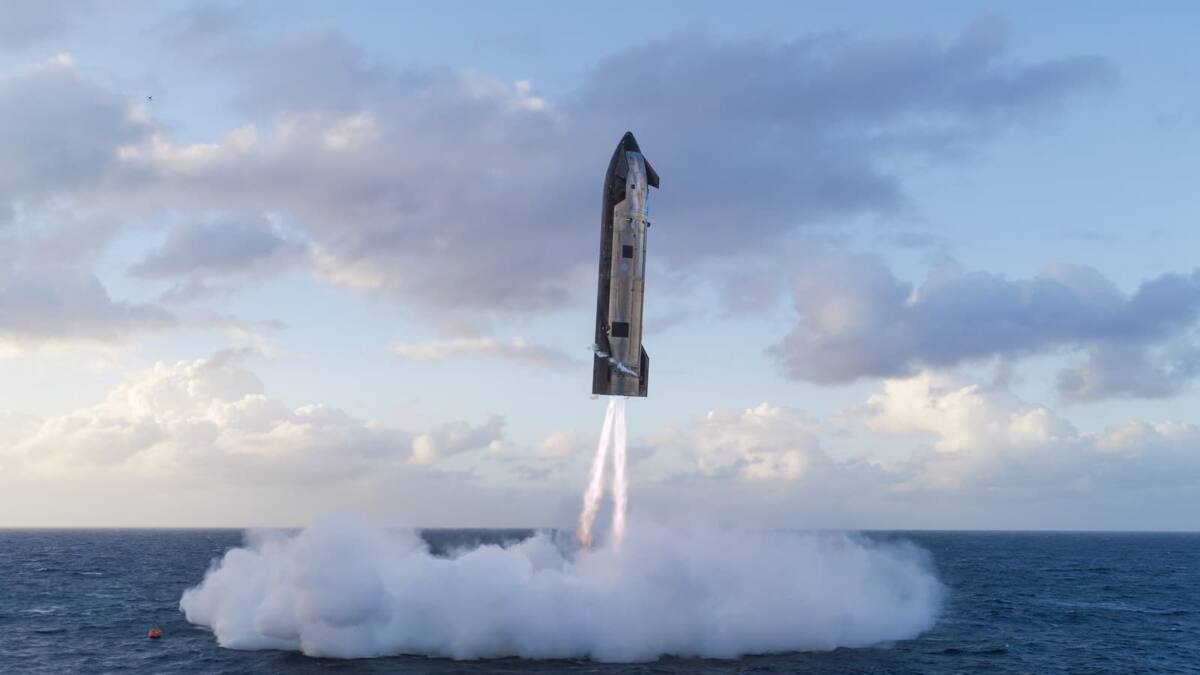
SpaceX has released a fresh set of high-resolution images from the first flight of Starship V3, and they make the vehicle’s final seconds look almost elegant. The company posted shots of the ship moments before it hit the Indian Ocean, plus new images of the Raptor 3 engine and hardware from Starship S39 and Super Heavy B19.


Starship V3’s final moments over the Indian Ocean
The photos show the spacecraft just before the splashdown, which ended in a tip-over and explosion. That sequence is still a reminder that SpaceX’s rapid testing style is doing what it was designed to do: collect data fast, even when the headline outcome is messy.
The company also said the images were taken from onboard views of Starship and Super Heavy V3 using upgraded cameras capable of sending 4K video through Starlink during each phase of flight. That’s a nice flex, but also a practical one: better footage means better debugging, and SpaceX has built an entire development culture around turning failures into instrumentation.
Raptor 3 and the hardware SpaceX wanted to show off
Alongside the splashdown shots, SpaceX posted images of the Raptor 3 engines and the fins on Starship S39 and Super Heavy B19. Those details matter because the hardware, not the fireworks, is the point: Starship V3 is the next step in a program that still has to prove reliability before it can claim anything more than promise.
- SpaceX says the onboard cameras can transmit 4K video via Starlink.
- The ship splashed down in the Indian Ocean, then fell over and exploded.
- The company also highlighted Raptor 3 engines and photos from Starship S39 and Super Heavy B19.
FAA scrutiny is part of the story too
SpaceX called the flight partially successful, and that sounds about right. The 12th Starship test flight was the first for Starship V3, but the FAA later said debris from the Super Heavy booster fell into a ”dangerous area.” That is the part of the story SpaceX cannot photograph away: the vehicle may be improving, yet the regulatory and safety questions are still attached to every launch.
What happens next is obvious enough. SpaceX will keep iterating, because that is what SpaceX does, and the company’s supporters will point to the increasingly polished imagery as evidence of progress. The real test is whether the next version spends less time as spectacular content and more time staying intact.