

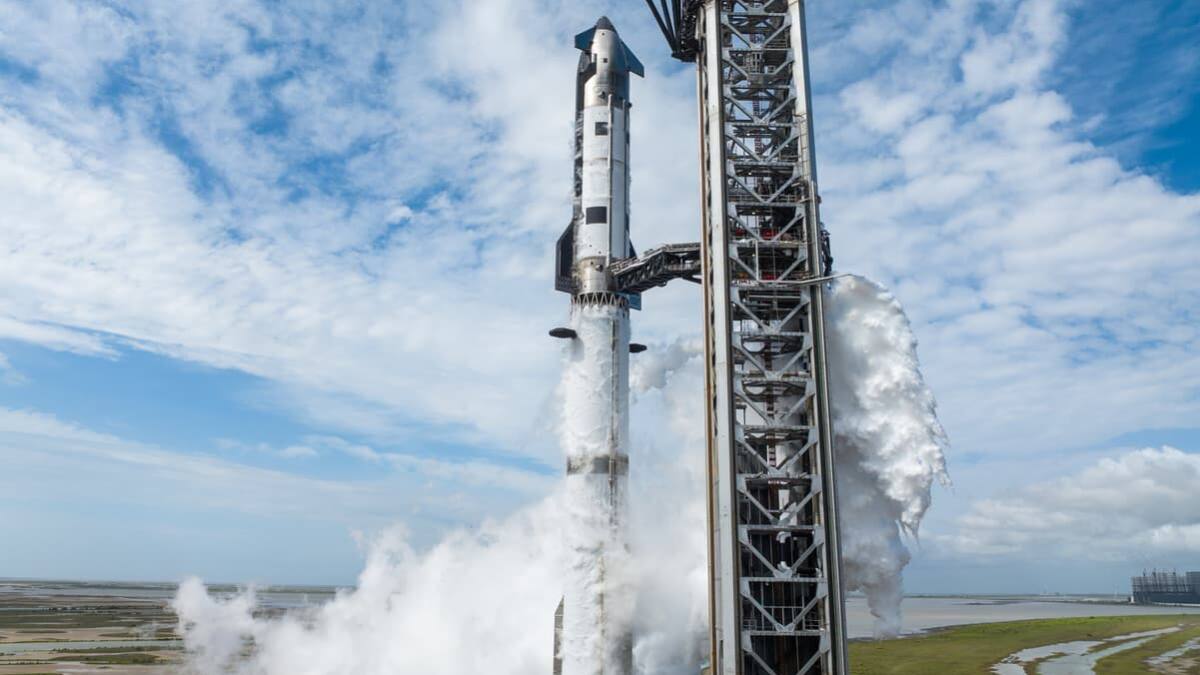
SpaceX has pushed back the 12th Starship and Super Heavy test flight by one day, delaying the first launch of Starship V3 until no earlier than 20 May local time, or 21 May at 01:30 Moscow time. The company says it needs extra system checks before flight – a sensible move for a rocket that is about to try several firsts at once, including its debut from Starbase Pad 2.
That makes the Starship V3 debut bigger than a routine test. Both Starship and the Super Heavy booster have received significant upgrades, so SpaceX is using the flight to check whether the new hardware behaves the way the company thinks it should, rather than the way rockets often prefer to behave.
What Starship will try to do in flight
The upper stage is slated to handle a packed checklist. It will deploy 22 Starlink simulators, each sized to match next-generation satellites, follow the same suborbital path as the ship itself, and perform one in-space restart of a Raptor engine. If that sounds ambitious, it is – but that is exactly the point of a test flight.
- First flight of Starship V3
- First launch from Starbase Pad 2
- 22 Starlink simulators deployed
- One Raptor engine restart in space
Thermal shield tests are the real prize
The last two simulators are the most interesting part of the plan. They will be used to film and analyze Starship’s heat shield, sending images back to operators so SpaceX can judge how ready the thermal protection is for a future return to the launch site. That is the sort of detail that matters more than a flashy liftoff, because a reusable rocket lives or dies on what happens after the fireworks stop.
SpaceX is also following a familiar pattern here: fly, break things in public, learn fast, repeat. Blue Origin and other launch rivals are pushing reusability in their own way, but Starship remains the most aggressive bet in the field, and that means every delay gets scrutinized just as much as every success.
A one-day delay, but a big technical checkpoint
The extra 24 hours will not change the mission profile, but it may improve the odds that SpaceX gets useful data instead of another cautionary data point. The bigger question is whether this version of Starship can clear enough of these tests to make fully reusable operations feel less like a slogan and more like a timetable.