

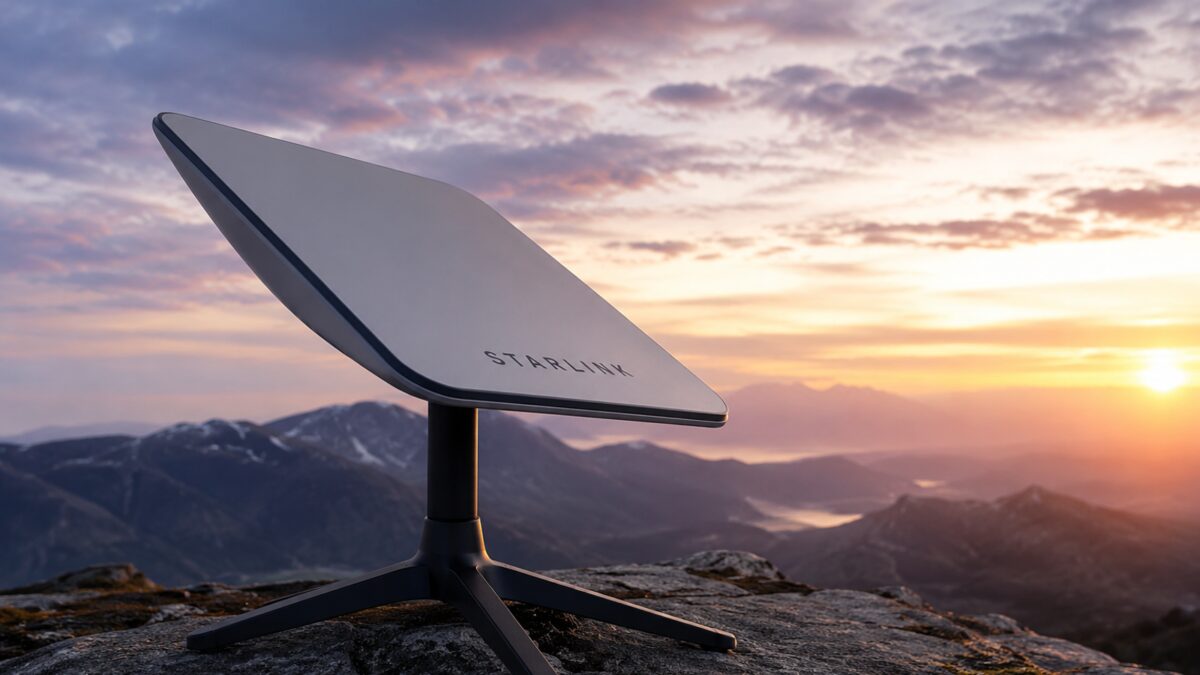
SpaceX is about to pull a quiet but surprisingly useful trick out of Starlink: location data from user terminals. Starting on 20 May 2026, the antenna coordinates will disappear from the Debug Data section of the Starlink app, cutting off a feature that enthusiasts had been using as a rough navigation and timing aid when GPS was jammed or faked.
The change does not mean SpaceX ever marketed Starlink as a GPS replacement. Still, once a tool is in the hands of researchers, hobbyists, and anyone stuck under signal interference, it tends to acquire a second life. Starlink’s appeal here was simple: a strong low-Earth-orbit signal, directional antennas, and a link that is harder to suppress than standard GNSS.
What disappears from the Starlink app
According to Ars Technica, the app’s Debug Data page will no longer expose antenna position details. That sounds niche because it is niche; most Starlink customers will never notice. But for users who relied on the data for positioning or time synchronization, it removes one of the few publicly accessible breadcrumbs SpaceX left in the system.
The timing also fits a broader pattern. Satellite internet firms have spent years tightening what their user tools reveal, partly to reduce misuse and partly to avoid turning consumer hardware into an unofficial navigation network. That’s sensible, if a little unromantic.
Why Starlink was useful in a GPS pinch
Starlink was never as precise as GPS. The standard accuracy was around 10 meters, which is fine for finding a street, not for landing a drone on a charger. But in environments where GPS is intentionally disrupted, that level of accuracy is often better than nothing, and sometimes better than the official alternative.
That is why the feature attracted attention beyond hobbyist circles. Low-Earth-orbit constellations are harder to jam than traditional GNSS signals, and their two-way links make spoofing more awkward. Researchers have also shown that with extra processing, satellite communications data can be squeezed into coordinates accurate to within a few meters.
Who loses the most
Regular Starlink subscribers lose almost nothing. The people who will feel this are the ones who treated the app as a makeshift backup for timing and positioning, especially in places where GPS interference is routine. They now get a smaller toolbox, and they do not get a better official substitute in return.
- Start date for the change: 20 May 2026
- Removed data: antenna location in Debug Data
- Starlink accuracy cited in the source: around 10 meters
The open question is whether SpaceX is simply tidying up an overlooked debug feature, or whether this is a first step toward locking down more location-related data across the service. Given how often satellite connectivity is being pressed into service as an emergency backup for navigation, I’d bet this kind of hidden utility will keep disappearing wherever companies decide the side effects are too interesting for comfort.