

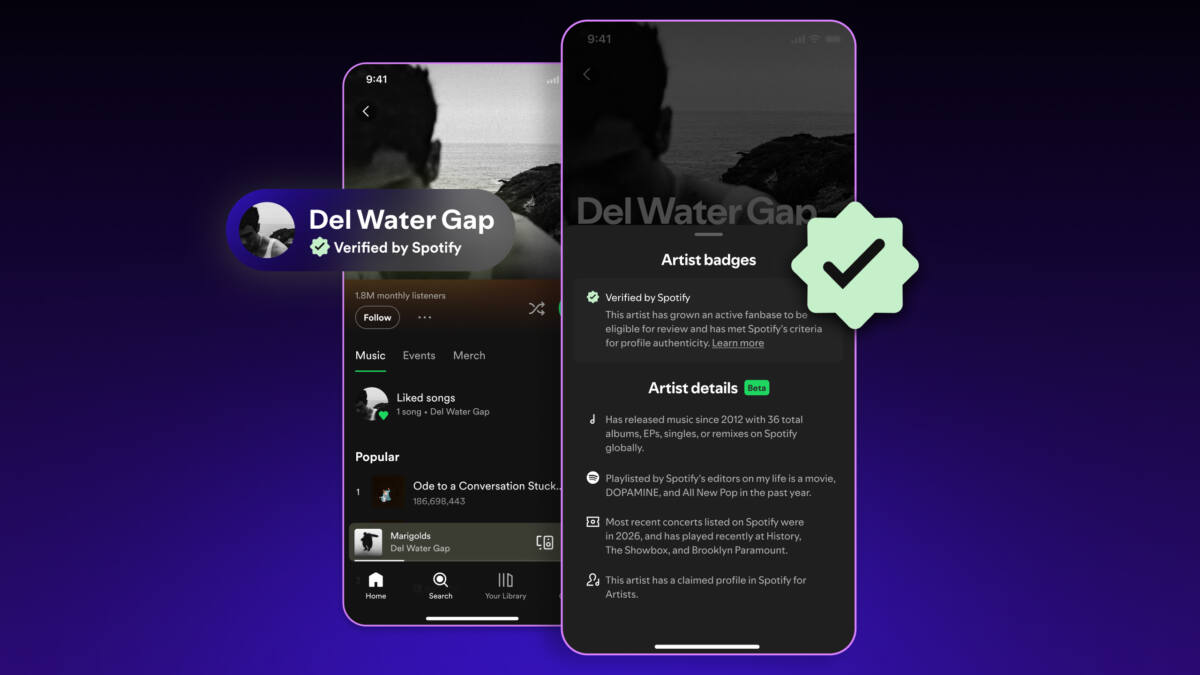
Spotify is putting a green checkmark on artist profiles that look convincingly human, launching a ”Verified by Spotify” badge as AI-made tracks keep clogging music services. The Spotify Verified by Spotify badge is meant to help listeners tell the difference between real artists, AI persona projects, and the swamp of generic content that increasingly passes for music online.
The company says verification will depend on more than a popular name or a sudden viral spike. Artists need an identifiable presence on and off the platform, plus steady listener activity over time. In practice, that means concert dates, merch, linked social accounts, and enough sustained demand to prove there is an actual career behind the profile.
Who gets the Spotify badge
Profiles that mainly represent AI-generated music or AI-persona artists are out. So are acts that only burst into view for a short-lived engagement surge, which is Spotify’s polite way of saying it is not interested in rewarding one-hit algorithm bait. The company says it is prioritizing artists people actively seek out over a sustained period, and that more than 99% of those artists will be verified at launch.
Spotify is also promising the badge will reach listeners gradually over the coming weeks, appearing on artist profiles and in search results next to names. The label will read ”Verified by Spotify” and use a green checkmark, a visual language every platform now borrows from the same trust-and-safety playbook.
A new Spotify profile section shows real-world activity
The badge is only part of the rollout. Spotify is also testing a new profile section across artist pages that will surface career milestones, release activity, and touring activity, even for artists who have not qualified for verification yet. That is a smart hedge: if the badge is the stamp, this section is the evidence file.
The move lands as streaming platforms face a fresh wave of synthetic music and impersonation. Spotify recently began beta testing Artist Profile Protection, which lets artists review releases before they appear on their profiles, while Sony Music said it requested the removal of more than 135,000 AI-generated songs impersonating its artists. Deezer, meanwhile, said AI-generated tracks now make up 44% of all new music uploaded to its service each day.
Spotify draws a line between artists and functional music
There is another tell in Spotify’s policy: it is giving priority to artists with active fan interest and visible contributions to music culture, not so-called ”functional music” creators whose output is built for passive background listening. That distinction matters because streaming platforms have spent years rewarding whatever keeps users from pressing pause, and AI systems are very good at manufacturing exactly that kind of forgettable sludge.
Spotify says the verification program will keep evolving. The open question is whether a badge can do much more than help with search results and profile pages, or whether the real fix will need sharper labeling, better enforcement, and fewer incentives for platforms to treat music like interchangeable wallpaper.