

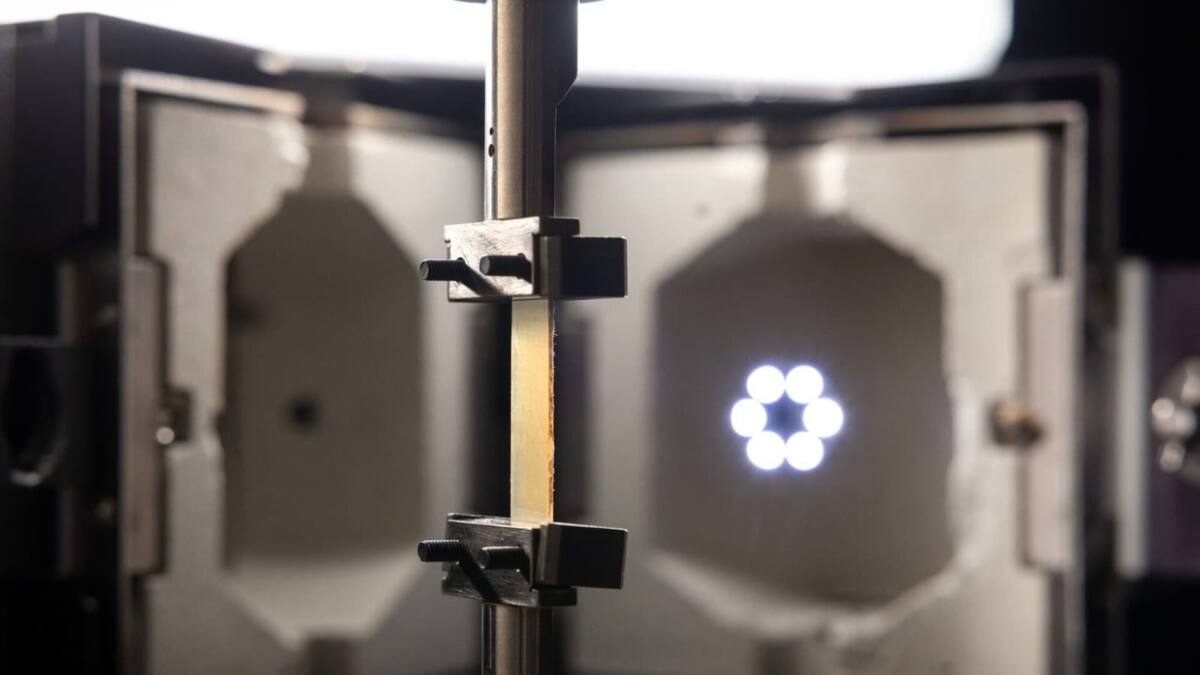
A team of researchers has turned mulberry silk into a tough, transparent biodegradable plastic that comes surprisingly close to Kevlar in strength. The trick is refreshingly low on lab theatrics: align the fibers, then press them under carefully chosen heat and pressure instead of bathing them in a cocktail of chemicals.
That matters because most high-performance materials make an awkward trade-off. They are strong, useful, and stubbornly non-biodegradable, or they are greener but too fragile for serious jobs. This silk-based material tries to split the difference, which is why medicine, sensors, and temporary hardware are suddenly in play.
How the silk plastic is made
The process keeps the silk’s natural structure intact. Under the right conditions, the fibers fuse into a dense, wood-like network with strong bonds between strands, so load is spread more evenly instead of tearing through weak points.
The researchers identified a useful processing window: 125-215 °C and pressure from 1,900 to 9,800 atmospheres. Push it outside that range and you lose the neat balance between strength, transparency, and biodegradability. Industrially, that is the sort of detail that determines whether a breakthrough becomes a product or a poster.
What the tests showed
The resulting material is transparent in the visible range, which opens the door to optical uses and sensors. It also survived ballistic testing in a way that puts it in the same conversation as Kevlar and carbon-fiber composites used in aviation and cars.
- Strength: close to Kevlar
- Appearance: transparent in visible light
- Biology: slowly breaks down in the body
- Processing: no complex chemical treatment required
Medical implants and greener engineering
One of the most interesting uses is temporary medical implants. The fact that the material degrades slowly inside the body is a feature, not a flaw, if you want a device that does its job and then gets out of the way.
There is also a wider industrial angle here. Researchers are trying to scale the method and shape it into more complex parts, which is where natural materials usually hit their first serious obstacle. Still, silk has a better starting position than most bio-based contenders: it already arrives with a reputation for strength, flexibility, and just enough glamour to make engineers look at it twice.
Why this silk upgrade could stick
The real story is not that nature was clever all along. It is that a relatively simple physical process may let manufacturers build useful, high-performance objects without adding toxic chemistry to the bill. If the team can scale it reliably, silk may move from luxury fabric to one of the more elegant candidates for next-generation materials.