

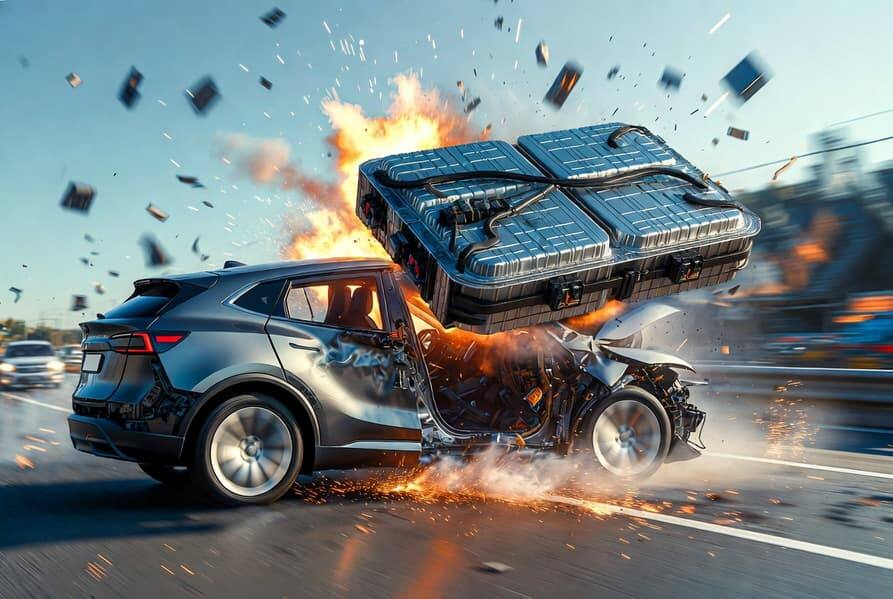
Chinese automaker Seres has patented a battery crash system that could automatically detach the battery pack from the car in a severe crash. The idea is to move the high-voltage pack away from the cabin fast enough to reduce the chance of short circuits, fire, and electrolyte leakage after impact.
The concept sounds half like engineering and half like controlled chaos, but it is rooted in a real concern. Battery fires are harder to deal with than conventional fuel incidents, and automakers have spent years adding layers of protection around the pack rather than trying to make it disappear entirely. Seres is taking the opposite route.
How the Seres battery crash system works
According to the patent description, the setup uses front and rear support elements, plus electric actuators. Once the system receives a crash signal, it unlocks the mounts and the battery pack separates from the vehicle.
The mechanism relies on interlocking elements between the battery housing and the support platform, designed to release quickly and in a controlled way during an emergency. In other words, this is not a random ejection gimmick; it is supposed to be a tightly timed breakup between the pack and the body structure.
Patent timing and Seres’s taste for odd ideas
The patent application was filed in November 2023 and approved on 8 May 2026. That timeline matters because it suggests Seres has been working on the idea for quite a while, even if it still reads like something designed to make safety engineers raise an eyebrow and then ask for the test data.
Seres has also filed for another unusually ambitious feature: an in-car toilet. So yes, this is a company that seems comfortable pushing far beyond the usual ”better crash structure” playbook.
What happens if this reaches production
If Seres ever turns the patent into a real product, the big question will be whether the system can separate the pack without creating fresh hazards on the road or complicating post-crash rescue work. For now, it is an intriguing sign of where EV safety thinking may go next: not just protecting the battery, but deciding what to do when the battery has to leave the conversation altogether.