

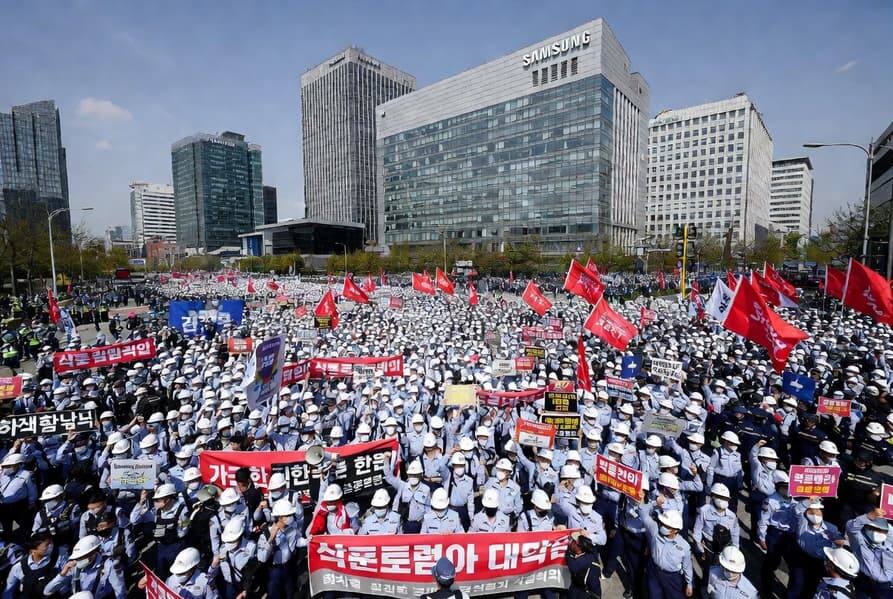
Samsung Electronics is in last-ditch talks with its union to avoid what could become the company’s biggest strike ever, with more than 45,000 workers threatening to walk out for 18 days from Thursday, 21 May. The Samsung strike threat comes as memory chips are in short supply, demand from AI data centers is strong, and Samsung has been enjoying a profit boost it would prefer not to test.
The dispute is over pay, bonuses, and how much of those windfall gains should flow back to workers. That is not a unique argument in tech, but Samsung’s scale makes it more volatile than a standard labor spat. The company is the world’s biggest memory chip maker and accounts for almost a quarter of South Korea’s exports, so a prolonged shutdown would be felt well beyond its own campuses.
Why the Samsung strike threat is so disruptive
The immediate worry is supply. Memory chips sit inside AI servers, smartphones, and laptops, so any meaningful disruption at Samsung would ripple through hardware makers that are already juggling tight component availability. In a year when chip shortages are helping inflate profits rather than crush them, workers see leverage; management sees a threat to a carefully timed upswing.
A South Korean court has already narrowed Samsung’s options by granting part of the company’s request for an injunction. The order requires the union to ensure any strike does not damage production, including by preventing material spoilage and maintaining normal safety and product-protection operations. That sounds tidy on paper and far messier in practice.
Fines may not be enough to stop it
According to the union, the two main labor groups face fines of 100 million won, or $72,000, per day if they fail to comply, while union leaders could be fined 10 million won a day. The union says that threat will not be enough to deter a strike if negotiations fail, which is a fairly blunt way of saying the cost of backing down is already too high.
Samsung declined to comment, which is standard corporate silence but not especially helpful when the stakes include global supply chains and South Korea’s export machine. The last round of government-mediated wage and bonus talks failed last week, leaving both sides staring at a deadline with very little room for face-saving.
What happens if talks collapse
If the talks break down, Samsung could be dragged into a labor confrontation that goes beyond wages and becomes a test of how much pain a highly profitable chip giant can absorb before it starts conceding more than it wants. The more interesting question is whether a labor dispute in memory chips now has enough force to move beyond the factory gates and into the broader AI hardware boom. That would be an uncomfortable reminder that supply chains still run on people, not just on quarterly presentations.