

Salesforce built Agentforce as the answer to AI-hungry buyers who think they can skip the old software stack and let bots do the work. The problem is that the company’s most polished demos are now drawing attention for something less flattering: the real products behind them often look a lot less capable than the marketing suggests.
That gap is starting to matter because Salesforce is not selling a novelty toy. It is trying to defend the logic of enterprise software itself, while rivals push AI assistants, code generators, and agent tools into the same budgets. If the demos are ahead of the product, the pitch gets brittle fast.
Agentforce demos promise more than customers can use
Bloomberg’s latest report points to a growing mismatch between Agentforce promotional material and what customers can actually do today. In one ad aimed at University of Chicago Medicine, the system appears to handle late-doctor notifications, parking guidance, appointment booking, and prescription refills. According to Bloomberg, those functions are still not available.
Instead, patients calling the hospital system are still hearing keypad menus and human schedulers, while the chatbot in the ad remains in testing and hidden from most web visitors. That is not exactly the sort of frictionless automation that gets people to rip out a call center.
- University of Chicago Medicine: ad shows scheduling and refill help; Bloomberg says those features are not live.
- Williams-Sonoma: stage demo showed AI phone shopping; Bloomberg says the phone line is still not using Agentforce.
- Finnair: website FAQ says booking changes are still planned for future development.
Salesforce says the demos are future-facing
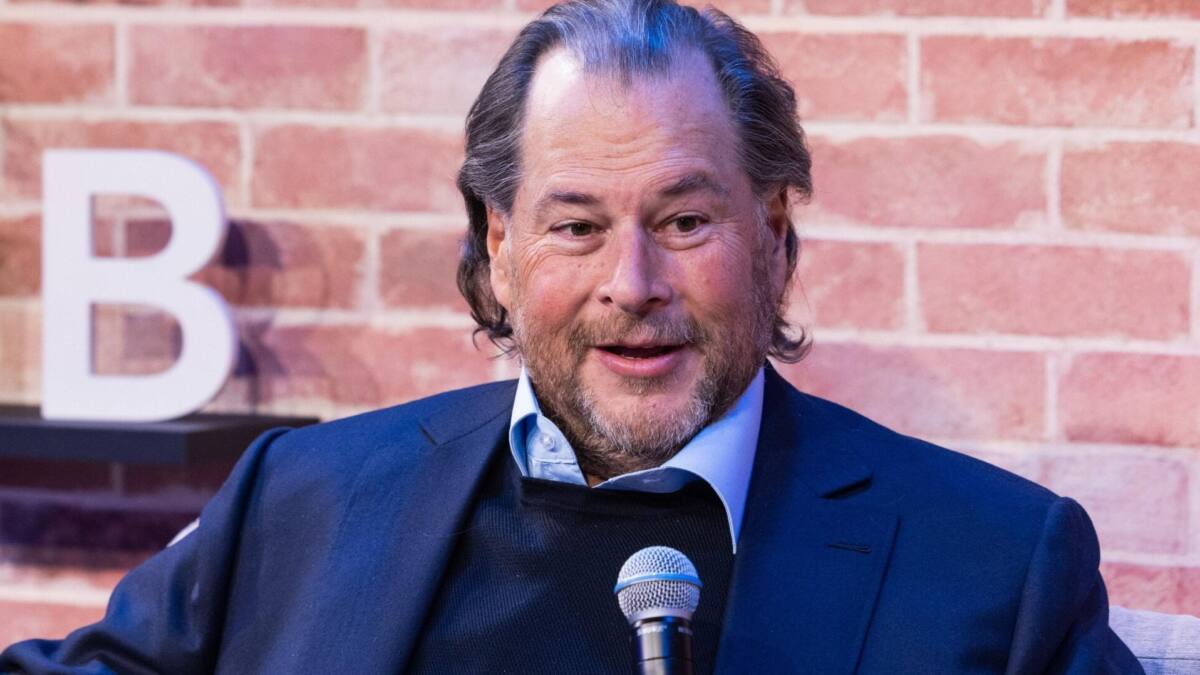
Salesforce chief executive Marc Benioff has argued that the scrutinized materials are future-oriented marketing, and he told Bloomberg the company has always delivered what it has advertised. That is the sort of line every software boss reaches for when reality starts wandering off-script.
There is some evidence Salesforce can deliver useful automation. Bloomberg reports that SharkNinja says Agentforce has helped cut service phone calls by 20%. That is a meaningful result, but it is also a lot less cinematic than an AI that calmly reroutes a canceled flight or books a medical appointment without human help.
The AI ad problem is bigger than Salesforce
Salesforce is not alone in overselling AI through glossy storytelling. Apple faced its own backlash after an ad for a smarter, more personal Siri showed a convenience fantasy that did not match the product people could actually buy, and it later settled a false advertising lawsuit without admitting fault.
That pattern is becoming familiar across tech: a slick demo, a long rollout, and a lot of hand-waving in between. For enterprise vendors, the risk is sharper because CIOs do not buy aspiration; they buy systems that work with compliance, liability, and real customers attached.
Salesforce stock is under pressure too
All of this lands at an awkward moment for Salesforce’s market story. The company’s stock lost almost 21% of its value in 2025, then fell an additional 35% last month before recovering some ground. Investors do not need perfect products to get nervous; they just need the sense that the narrative is running faster than the execution.
The next test is whether Salesforce can turn Agentforce from a polished promise into something customers can actually deploy without caveats. If not, the company may find that the loudest thing AI has done for its CRM business is make every unfinished feature look like a commercial.