

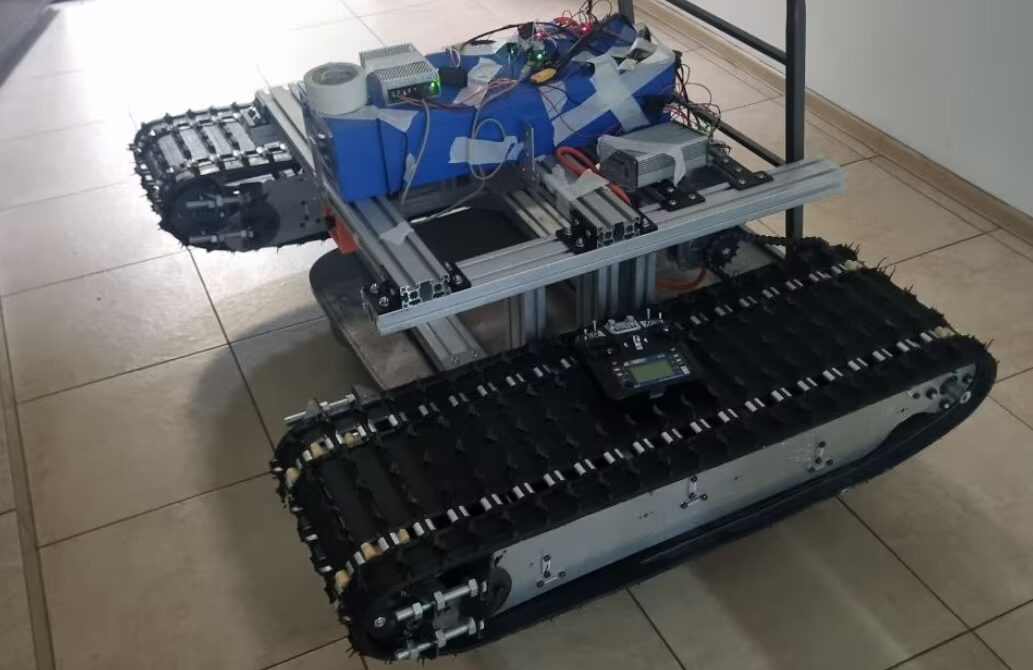
Salacia Robotics, a student startup from Russia’s MIREA – Russian Technological University, has developed a prototype autonomous robot designed to clean sandy beaches without human intervention. The machine sifts sand down to 15 centimeters, collects trash in an onboard container, and navigates obstacles using computer vision. Having passed lab tests, the team is now preparing for real-world trials outside the university campus.
The robot is built on a tracked platform that scrapes the upper layer of the beach sand. Trash is deposited into a container equipped with ultrasonic sensors that monitor fill levels. The startup’s founder, Alexander Rybko, conceived the idea after visiting Egypt, where he noticed manual cleanup often left some litter behind.
Initial trials revealed some weak points: the developers plan to improve the track-tensioning mechanism and enhance navigation around dynamic obstacles like pedestrians and moving objects. Salacia Robotics estimates that, in its fully operational form, their robot could help hotels reduce labor costs for cleaning staff by 15 to 20 percent.
The key selling point of this autonomous beach-cleaning robot is full autonomy. While robotic beach cleaners exist internationally-like the electric BeBot from Poralu Marine, deployed at resorts in France and the US to collect cigarette butts, plastics, and small debris-many commercial machines are simpler. For example, sand sifters like the Barber Surf Rake require a tractor and human operator.
Salacia Robotics plans to pilot the autonomous beach-cleaning robot project in Moscow and the surrounding region before moving to paid trials with two or three hotels along Russia’s Black Sea coast in Krasnodar Krai. The startup also secured university backing through MIREA’s ”Startup as Thesis” program. If field tests validate the robot’s autonomy and cost-cutting potential, the team could land their first commercial contracts in time for next summer’s tourist season.
Russia’s beach-cleaning robotics niche remains relatively young compared to established solutions in Western markets, where environmental regulations and high tourism traffic have driven demand for automation. Salacia Robotics’ fully autonomous approach could set a new standard, especially amid rising labor costs and stricter waste management standards in resort areas.
Going forward, the biggest challenge will be refining navigation amid crowds and varying beach conditions, areas where global competitors still rely on mixed human-machine workflows. Whether Salacia Robotics can deliver a reliable, operator-free solution could define the future of beach maintenance technology in Russia and beyond.