

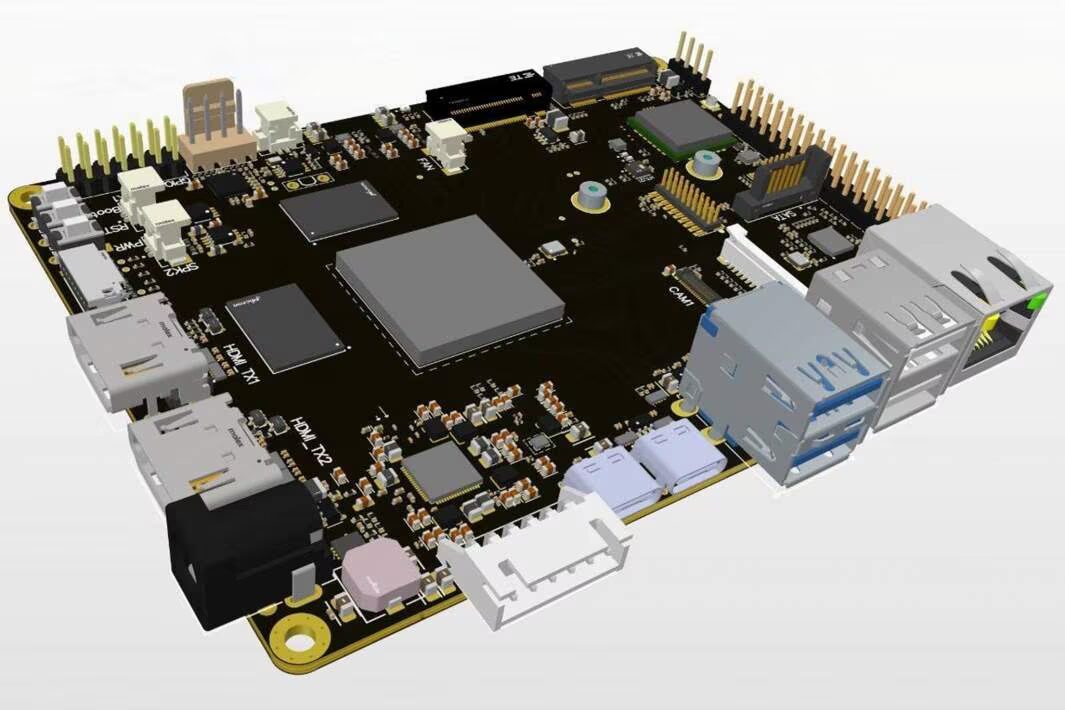
Russian tech firm Aerospace Antenna Systems has introduced Brain Box, a single-board computer designed to combine AI computing modules and flight controllers into one compact platform. The company pitches it as a versatile solution for drones, unmanned boats, ground robots, computer vision systems, and smart cameras. The idea is simple: fewer boards and cables mean faster response times, lower power consumption, and less hardware complexity.
According to NTI Platform’s press team, typical robotic and drone setups split AI processing and control tasks between separate units connected by cables. These connections add weight, introduce latency, and create additional points of failure. Brain Box integrates the AI ”brain” and a specialized chip for hardware acceleration of AI algorithms onto a single board to streamline operations.
Power consumption of Brain Box is rated at 12 watts-significant for onboard electronics but practical enough to maintain battery life and manage heat in compact drones or ground robots. The platform supports a range of peripherals, including cameras, lidars, thermal imagers, and other sensors. It also features built-in Russian encryption technology intended to secure control signals against interception.
Brain Box runs on Linux and, per its developers, can be adapted to Russian operating systems such as Astra Linux, KasperskyOS, Alt, and Aurora. The experimental prototype is currently undergoing near-real-world testing before proceeding to field trials. The toughest hurdle remains proving reliability under vibration, overheating, and unstable connections typical of actual robotic deployments rather than isolated lab conditions.
Single-board AI computers are a crowded space globally. Nvidia’s Jetson line dominates the edge-AI sector in robotics and machine vision, with many users worldwide. In Russia, demand for domestic onboard computing surged following restrictions on imported electronics. Modern drones and ground robots increasingly need real-time video and sensor data processing onboard rather than relying solely on autopilot features. If Brain Box makes it to production, it will compete not just on price but on integration into Russian projects, where compatibility with local software and secure control channels are essential.
The Brain Box launch signals Russia’s effort to catch up in embedded AI computing for autonomous vehicles amid geopolitical supply constraints. Watch for how quickly it can move from prototype to reliable field-ready hardware-and whether it can carve out space against entrenched foreign platforms with well-established ecosystems and developer communities.