

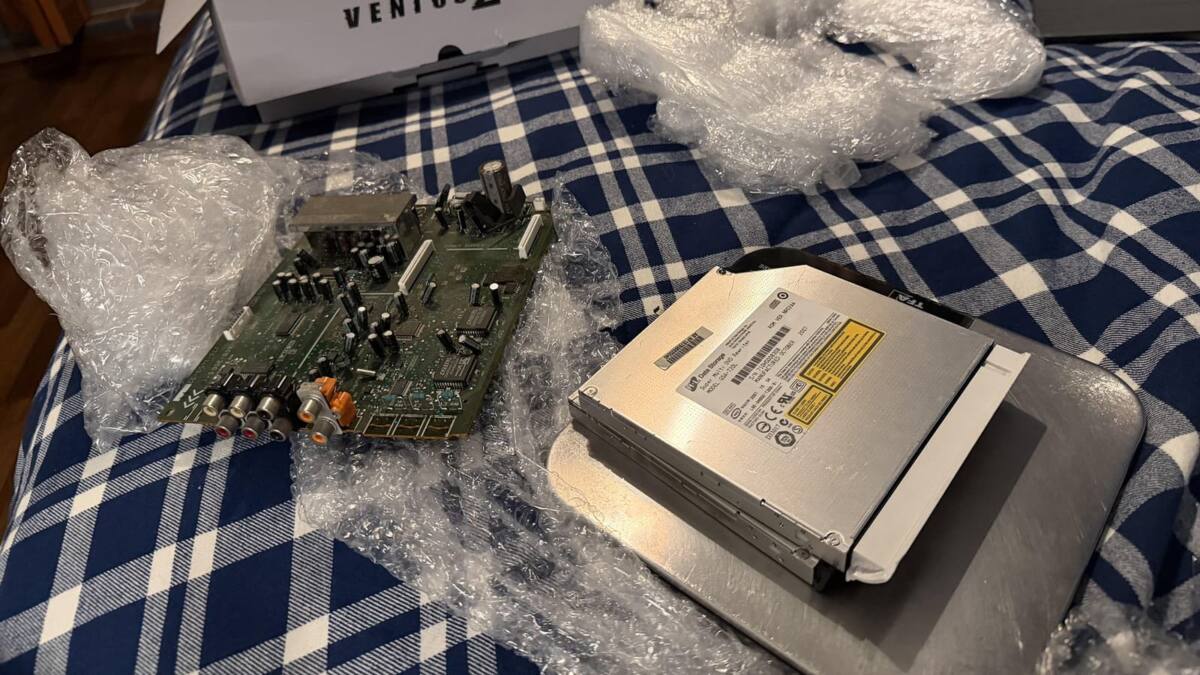
A shopper on Amazon’s German store says he ordered an MSI GeForce RTX 5070 Ventus 2X and ended up with a strange bundle of junk: a faulty board from an old Kenwood AV receiver, a DVD drive, and a mouse pad. The box apparently weighed about the same as the real graphics card, which is the kind of detail that makes return fraud annoyingly effective and painfully ordinary.
The buyer, who posted under the name luutherr on Reddit, says the RTX 5070 cost 700 dollars through Amazon, compared with 850 dollars in a regular store. That 150-dollar saving now looks expensive. If the account is accurate, the customer lost access to a high-demand card and got a pile of mismatched parts instead.
How the RTX 5070 swap appears to have worked
The likely scam is familiar: someone buys an expensive device, removes it, replaces it with items of similar weight, then sends the package back. If the returned box slips through inspection, the next buyer gets the disappointment. Amazon and other marketplaces have been dealing with this sort of problem for years, and graphics cards are especially tempting because they are compact, pricey, and easy to resell.
What makes this case irritating is that the seller was described as Amazon itself, with the purchase tied to MSI’s official store presence on the platform. That does not automatically explain where the switch happened, but it does show why buyers treat ”sold by Amazon” as safer than it really is. Packaging can hide a lot until the tape comes off.
Why GPUs keep getting hit by return fraud
Video cards have become a recurring target because they sit in the awkward zone between consumer electronics and near-luxury hardware. A box full of bricks is easy to spot; a box full of a board, a drive, and a mouse pad with roughly the right weight is harder. That is exactly why these scams keep resurfacing across major online stores worldwide.
- Ordered item: MSI GeForce RTX 5070 Ventus 2X
- Amazon price: 700 dollars
- Regular-store price: 850 dollars
- Received items: Kenwood AV-receiver board, DVD drive, mouse pad
There’s also a broader awkward truth here: the more retailers lean on fast returns and automated resale, the more they invite people to game the system. The next question is not whether another GPU swap will show up, but which marketplace gets caught holding the bag next.