

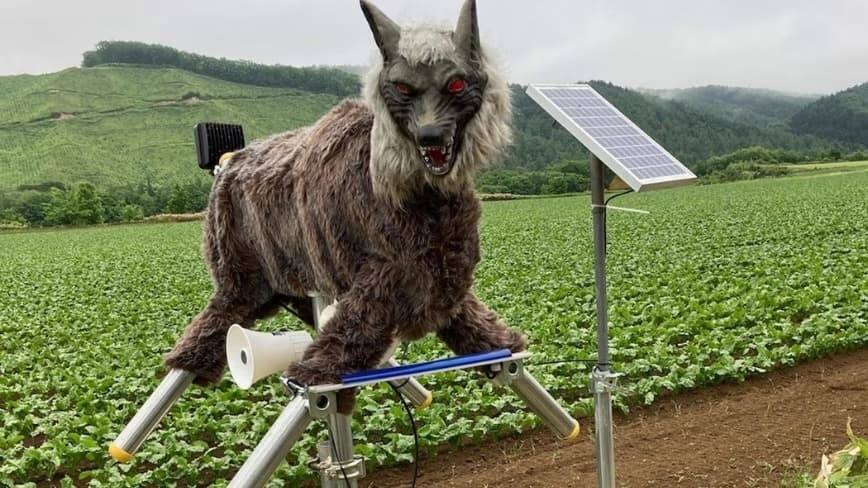
Japan’s latest weapon against its surging bear problem is a machine that looks like a nightmare and sounds like one, too. On Hokkaido and beyond, red-eyed robotic wolves called Monster Wolf are being deployed to scare off wildlife with lights, howls, and other noises, as bear encounters and attacks hit record levels.
What started as a quirky deterrent for boars and deer has turned into a serious piece of rural infrastructure. Demand for the animatronic guardian from Ohta Seiki has jumped this year, with orders piling up while local communities look for anything that can keep bears away from schools, farms, airports, and golf courses.
How Monster Wolf works
The device is built around a metal frame covered in artificial fur, with a snarling wolf head, red LED eyes, and a lit tail. An infrared sensor detects movement, then triggers one of more than 50 sounds, including wolf howls, human voices, and electronic noise. Ohta Seiki says the sound can carry up to a kilometer.
- Base price: about $4,000
- Assembly: manual
- Sounds: more than 50
- Range: up to a kilometer
According to the company, orders in 2026 have already topped 50, more than it usually receives in a full year, and the delivery queue has stretched for months. That makes sense given the numbers Japan is now facing: by March, bears had killed 13 people, more than twice the previous record, while more than 230 people were injured and sightings passed 50,000. In some northern prefectures, reports have risen by more than four times compared with last year.
From crop protection to bear deterrence
Monster Wolf was originally designed to protect crops from boars and deer. Its success in the field pushed it into use by farmers, construction sites, and golf clubs, which is a polite way of saying the machine found a market long before the bears did. Japan’s wildlife problem has simply made the case much stronger.
Ohta Seiki is now developing a wheeled version that can patrol an area and chase animals, plus AI camera systems that identify the species and pick a matching sound profile. A smaller portable model is also in the works for tourists, anglers, and schoolchildren, which sounds absurd until you remember the animals are already showing up near runways and supermarkets.
Japan’s new test for physical AI
The bigger story here is not the wolf mask. It is the rise of ”physical AI” in a country where robotics is being used for immediate, unglamorous problems rather than sci-fi demos. While larger companies chase humanoids and factory automation, this small manufacturer has found a very practical niche: making the wilderness think twice.
If bear numbers keep climbing, expect more hardware like this, not less. The real question is whether Japan’s answer to a wildlife crisis will stay as theatrical as a red-eyed robot wolf, or evolve into a more targeted mix of sensors, cameras, and deterrents that feels a lot less like folklore and a lot more like infrastructure.