

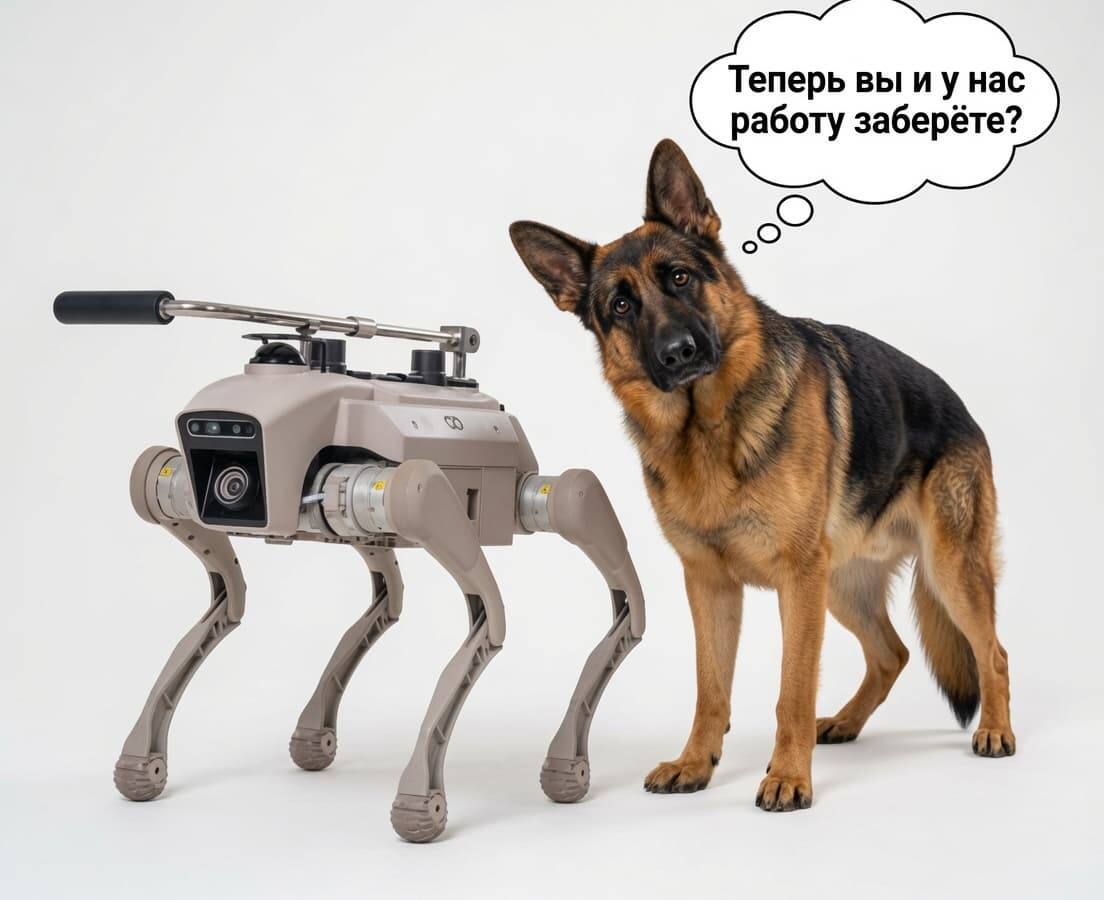
China is turning the idea of a robot guide into something that runs on sensors, software, and a charging dock. In Mianyang, a permanent demo site opens on 30 June where visitors can try the Qiming Q2 robot guide, which uses lidar and AI with automatic recharging to help people navigate streets and obstacles.
The setup is small but telling: two robots will be available, along with instructors. That matters because mobility assist tech usually looks impressive in a promo clip and far less useful on a broken pavement, a crowded crossing, or a staircase. A robot that can handle those real-world annoyances is trying to solve the part of urban movement that smartphones never will.
What the Qiming Q2 can detect
Qiming Q2 carries a mixed sensor stack: lidar, a depth camera, an RGB camera, ultrasonic sensors, and force sensors. Together they give it a 360° view, and the system is designed to spot steps, manholes, traffic cones, and other obstacles within milliseconds while also recognizing pedestrians and vehicles.
As the robot approaches traffic lights, stairs, or slopes, it warns the user in advance with voice prompts. That sort of early warning is the difference between a helpful guide and an expensive sidewalk ornament.
Voice control and route planning
The robot relies on a local AI model for voice control. The user simply names a destination, and Qiming Q2 builds the route and escorts the person there on its own. It is also meant to move across asphalt, cobblestones, grass, and uneven surfaces, and it can climb and descend stairs by itself.
- Sensor suite: lidar, depth camera, RGB camera, ultrasonic sensors, force sensors
- View: 360° obstacle detection
- Battery life: more than 1.5 hours
- Charging: automatic return to the charging station at low battery
Battery life is still the limiter
One charge lasts more than 1.5 hours, which is enough for demonstrations but not exactly marathon territory. That is the familiar trade-off for robotics: the software can look futuristic, but the battery still has the last word. The automatic return-to-base feature helps, though it also underlines how early this category still is.
If the demo draws attention, the bigger question is whether robot guides can become a practical layer of accessibility support, not just a headline-grabber. The best-case future is obvious: more navigation help for people who need it. The harder part is making the machine trustworthy, affordable, and boring in the best possible way.