

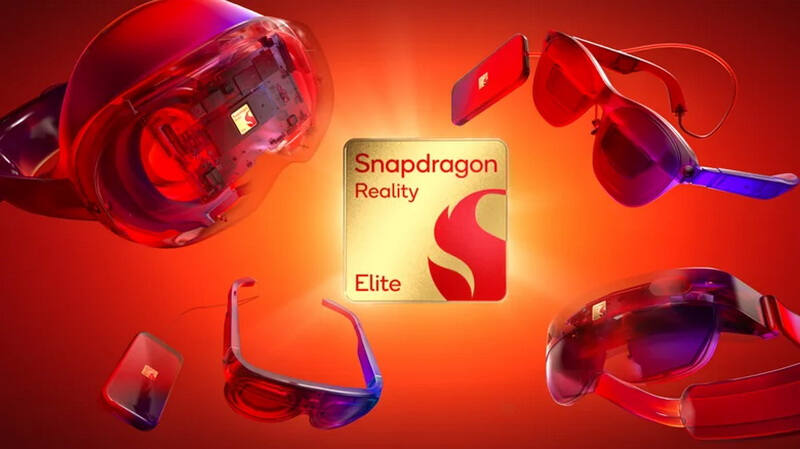
Qualcomm has used Augmented World Expo to rename and upgrade its push into extended reality, unveiling Snapdragon Reality Elite for next-generation AR, XR, and smart glasses. The chip is pitched as a smaller, cooler, and faster platform for headsets and transparent glasses, while a separate START toolkit aims to make AI glasses easier for more brands to ship.
The numbers are familiar Qualcomm bait: up to 4.4K per eye at 90 frames per second, plus claims of 60% higher graphics performance, up to 30% higher CPU performance, and up to 160% higher NPU performance versus Snapdragon XR2+ Gen 2. The company also says devices based on the new chip can run up to 20% longer and stay up to 12 degrees Celsius cooler. That is the sort of pitch that matters in wearable hardware, where battery life and heat often kill the dream before the demo does.
Snapdragon Reality Elite is Qualcomm’s new top XR chip
Until now, Qualcomm’s mixed-reality chips have lived under the XR label. Reality Elite is the new top-end name, and Qualcomm is clearly trying to signal a shift from bulky headsets toward thinner, more transparent devices with more on-device generative AI. That tracks with where the category is going: the winners are not just the companies with the sharpest panels, but the ones that can cram decent performance into something people might actually wear for more than 10 minutes.
Qualcomm says the chip can work in standalone devices or in products that rely on a wired connection to a separate compute module. The first announced product using it is Xreal Aura, which falls into that second camp. In other words, the industry is still splitting between self-contained headsets and lighter glasses that outsource some of the heavy lifting. That compromise is becoming the default design choice.
START is Qualcomm’s shortcut for AI glasses makers
The second announcement may be the more interesting one. Qualcomm’s START platform is an OEM kit for makers of smart glasses and other AI wearables, built around the AR1+ chip and bundled software, including companion apps for iOS and Android. The idea is to hand brands a ready-made starting point instead of forcing every eyewear company to become a systems integrator overnight.
That matters because smart glasses have a habit of stalling at the prototype stage. By offering prebuilt designs, Qualcomm is trying to lower the barrier for fashion brands and niche hardware players that want AI features without building everything from scratch. British eyewear company Inspecs is the first partner on the project, and Qualcomm says the lineup will range from audio-focused frames to full glasses with built-in displays.
- Snapdragon Reality Elite: up to 4.4K per eye at 90 fps
- Up to 20% longer battery life than XR2+ Gen 2-based devices
- Up to 12 degrees Celsius lower temperature than XR2+ Gen 2
- START platform: AR1+ chip, software, and iOS/Android companion apps
The real fight is for the next wave of wearable AI
Qualcomm is making a quiet but obvious bet: the next consumer wearable boom will not be won by the most polished headset, but by the broadest ecosystem of glasses that can do useful AI tricks locally. Competitors such as Apple, Meta and Samsung have all been circling the same territory in different ways, which makes Qualcomm’s hardware-plus-platform approach look less like a product launch and more like an attempt to own the plumbing.
The open question is whether brands will use START to launch genuinely useful glasses, or simply yet another wave of ”AI-ready” frames with a microphone and a lot of marketing gloss. Qualcomm has given them a faster chip, a reference path and a cleaner story. Now the harder part starts: convincing people to wear the thing.