

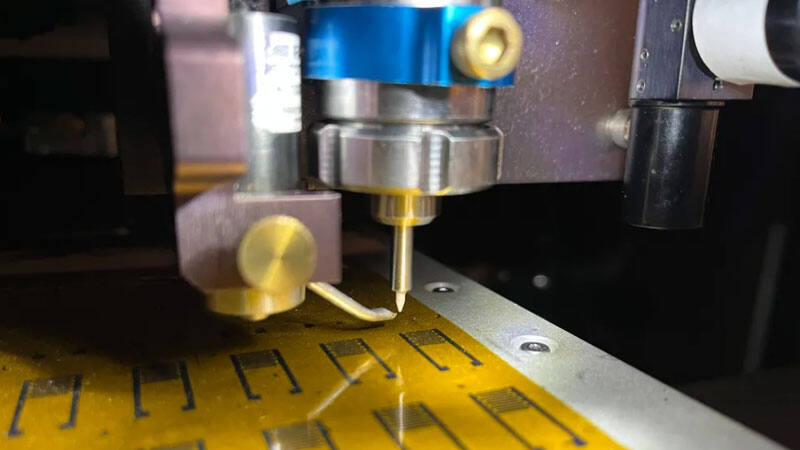
Researchers at Northwestern University have built artificial neurons with a twist: the cells are printed, but their electrical signals look enough like the real thing that living mouse brain tissue accepted them as its own. That is a much bigger claim than ”bio-inspired hardware” usually gets to make, and it nudges the field closer to a usable brain-computer interface rather than another lab demo with nice slides.
The team says the printed devices generate electrical pulses with the same shape and timing as biological neuronal activity. In tests, they were connected to slices of mouse cerebellum, where the living cells reacted as if the incoming signals were their own and kicked off neural circuits. That matters because earlier organic and electronic substitutes tended to miss the mark in the same way bad dub tracks do: too slow, too fast, or just plain off-beat.
How the printed neurons are made
The recipe combines inks made from molybdenum disulfide nanoflakes and graphene, which are deposited onto a flexible polymer substrate by inkjet printing. A current is then applied to partially break down the material, while some of the binding polymer is deliberately left behind. That leftover binder is the trick: it helps form fine conductive filaments that shape the current into neural-style spiking and burst patterns.
There is a broader industrial angle here too. The race to copy brain-like efficiency is not just academic, because modern AI systems burn enormous amounts of energy compared with biological computing. The researchers say the brain can be up to five orders of magnitude more efficient than classical computers, which is exactly why neuromorphic hardware keeps attracting attention from chipmakers that would love to do more with less power.
Where the printed neurons could go next
If this approach scales, it could feed into next-generation brain-computer interfaces and neuroprosthetics for hearing, vision, and movement. It also hints at a more practical path for neuromorphic machines, where the goal is not to copy the brain perfectly, but to borrow just enough of its electrical behavior to stop wasting so much energy. The real test now is whether the printed neurons can move from thin slices of tissue to something closer to a living, messy nervous system.