

Researchers at Idaho National Laboratory have discovered a rare quantum state-a Kondo topological insulator-in plutonium hexaboride (PuB6). This compound behaves as an insulator in its bulk but conducts electricity on its surface, exhibiting strong electron correlations. The study provides a new experimental platform for probing actinide materials, which are essential to nuclear fuel properties and reactor technologies.
What makes PuB6 a unique Kondo topological insulator
Plutonium remains one of the most challenging elements in solid-state physics due to its 5f electrons, which can act as both localized states and mobile charge carriers. This duality leads to a complex phase diagram with six allotropes at ambient pressure. Predicting electronic behavior in plutonium compounds like PuB6 has long defied straightforward theoretical models.
Kondo topological insulators are extremely rare. The best-known example is samarium hexaboride (SmB6), which has been extensively studied for over a decade. Within the actinide series, examples like PuB6 are almost nonexistent, primarily because of strict safety requirements for handling radioactive materials and the complex experimental challenges involved. PuB6 is particularly interesting because it is structurally similar to rare-earth hexaborides, frequently used to test quantum models.
Experimental methods and computational findings on PuB6
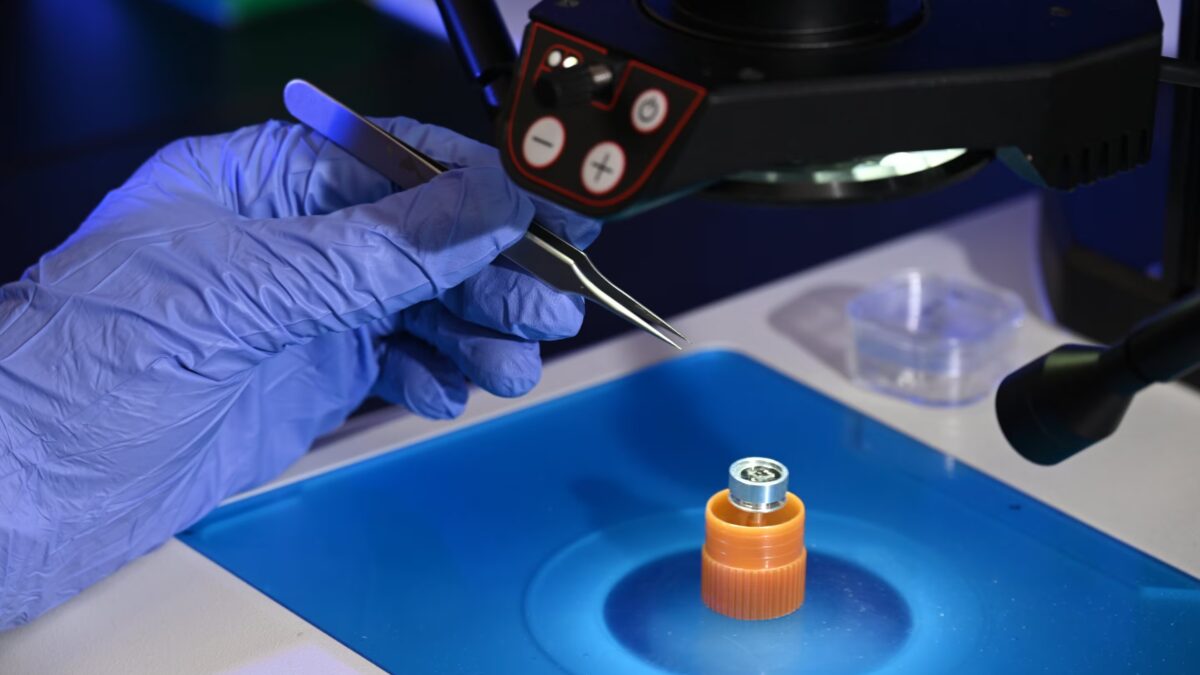
Researchers fabricated microscopic PuB6 samples using focused ion beam techniques and tested their properties at ultra-low temperatures to amplify quantum effects. Experimental data closely matched computational models developed in collaboration with Columbia University. These simulations confirmed that PuB6 hosts topological surface conduction along with collective phenomena typical of the Kondo effect.
Implications of PuB6’s electronic structure for nuclear materials
The electronic structure of actinide materials like PuB6 influences critical properties such as thermal conductivity, magnetism, radiation tolerance, and long-term degradation. These factors are vital for predicting the lifespan of nuclear fuel, storage containers, and reactor components. Additionally, the unique surface states of PuB6 may provide platforms for quantum sensors and specialized computing architectures.
Future research directions on Kondo topological insulators in actinides
The logical next step is to determine whether similar Kondo topological insulating states exist in other actinide compounds. Discovering a new class of materials that combines complex quantum topology with the physics of heavy elements could revolutionize both fundamental research and nuclear industry applications. With over 400 nuclear reactors operating worldwide, advancing the understanding and prediction of material behavior under extreme conditions remains one of the most important and costly challenges in the sector.