

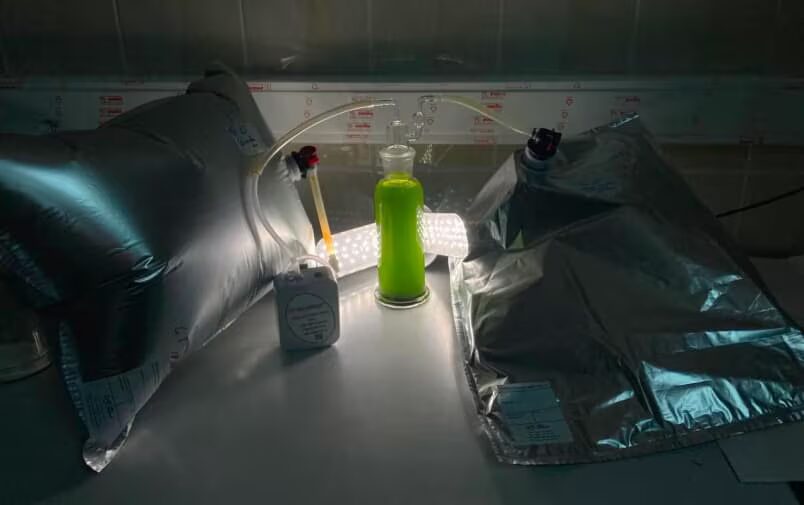
Researchers at Perm National Research Polytechnic University have found a way to recycle industrial flue gas by using it to grow microalgae, which can then be converted into fertilizer. When applied to rapeseed, this approach pushed germination rates as high as 97%, with seedlings growing 13% longer and heavier. Instead of releasing carbon dioxide into the atmosphere, some of it feeds the algae, transforming CO₂ from a waste product into a valuable input.
Typically, microalgae cultivation relies on ambient air, which has too little CO₂ to optimize growth, or on costly commercial CO₂ injections. The Perm team tested a different method: they used actual industrial flue gas as the carbon source. They compared a pure commercial microalgae strain against a natural community sampled from freshwater ecosystems. After growing the microalgae on flue gas, the resulting biomass was mixed into soil alongside rapeseed seeds.
Microalgae grown on industrial flue gas improves rapeseed germination
The pure algae culture outperformed its natural counterpart. Besides achieving a 97% germination rate, it sped up sprouting by 6%. The scientists attribute this to the algae’s nutrient profile, which includes nitrogen, phosphorus, potassium, micronutrients, amino acids, and plant hormones. Notably, growing the algae on flue gas doubled or tripled its magnesium and phosphorus content compared to conventional growth methods.
Benefits of microalgae fertilizer from recycled CO₂ emissions
This fertilizer offers practical benefits for industrial plants. The researchers emphasize that the microalgae biomass is free from pathogens, antibiotics, and toxins. It doesn’t acidify soil and decomposes quickly. For factories, this means reduced expenses on supplying CO₂ to bioreactors while turning harmful emissions into a usable product.
Comparison with other global CO₂ recycling initiatives
Similar initiatives exist worldwide but tend to focus on producing biofuels, animal feed additives, or wastewater treatment rather than direct fertilizer production. The appeal of Perm’s method is clear: industrial CO₂ emissions make up about a quarter of global output, according to the International Energy Agency. Technologies that can cut emissions while creating marketable goods change economic dynamics.
Scalability and future outlook for biofertilizer from industrial flue gas
For agriculture, this research fits into a broader trend. The market for biostimulants and biofertilizers is growing faster than traditional agrochemicals, driven by tighter environmental regulations and concerns over soil health. If Perm’s process can be scaled from the lab to pilot plants at power stations, cement factories, or chemical plants, its future hinges on cost-efficiency and consistent biomass quality across batches.