

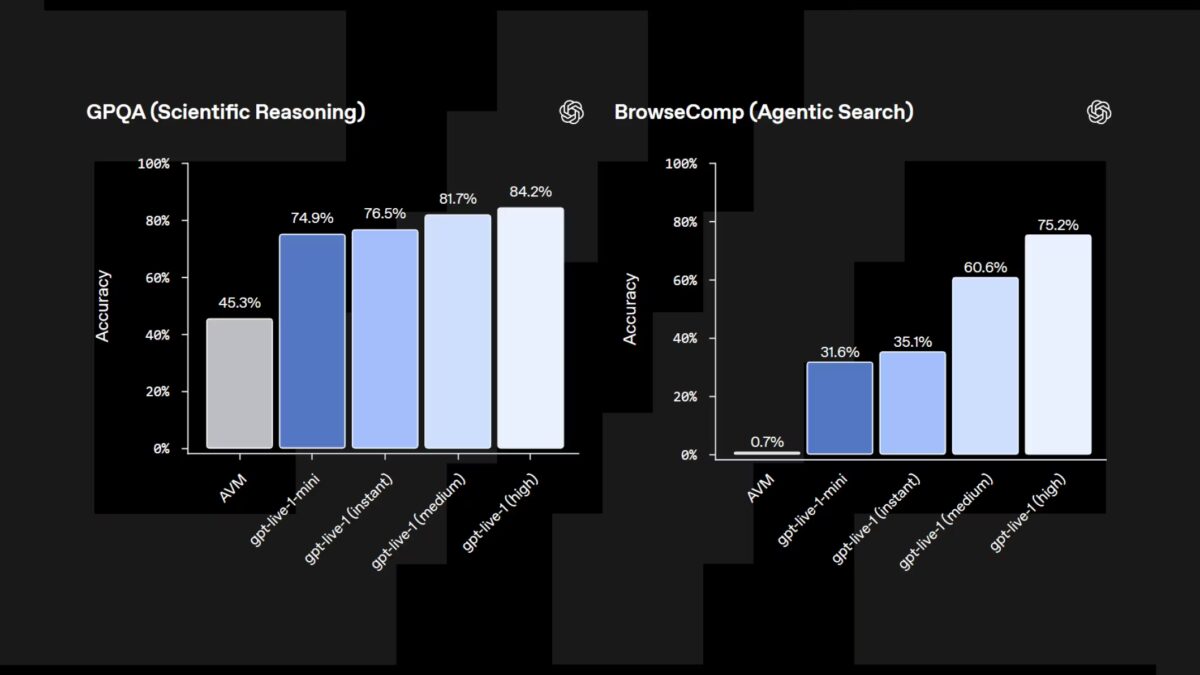
OpenAI’s latest GPT-Live voice models have transformed ChatGPT’s conversational flow by allowing it to listen and respond simultaneously-no more awkward pauses waiting for silence or jumps caused by background noise. Paid subscribers get access to the full GPT-Live-1 model, while free users receive the lighter GPT-Live-1 mini version.
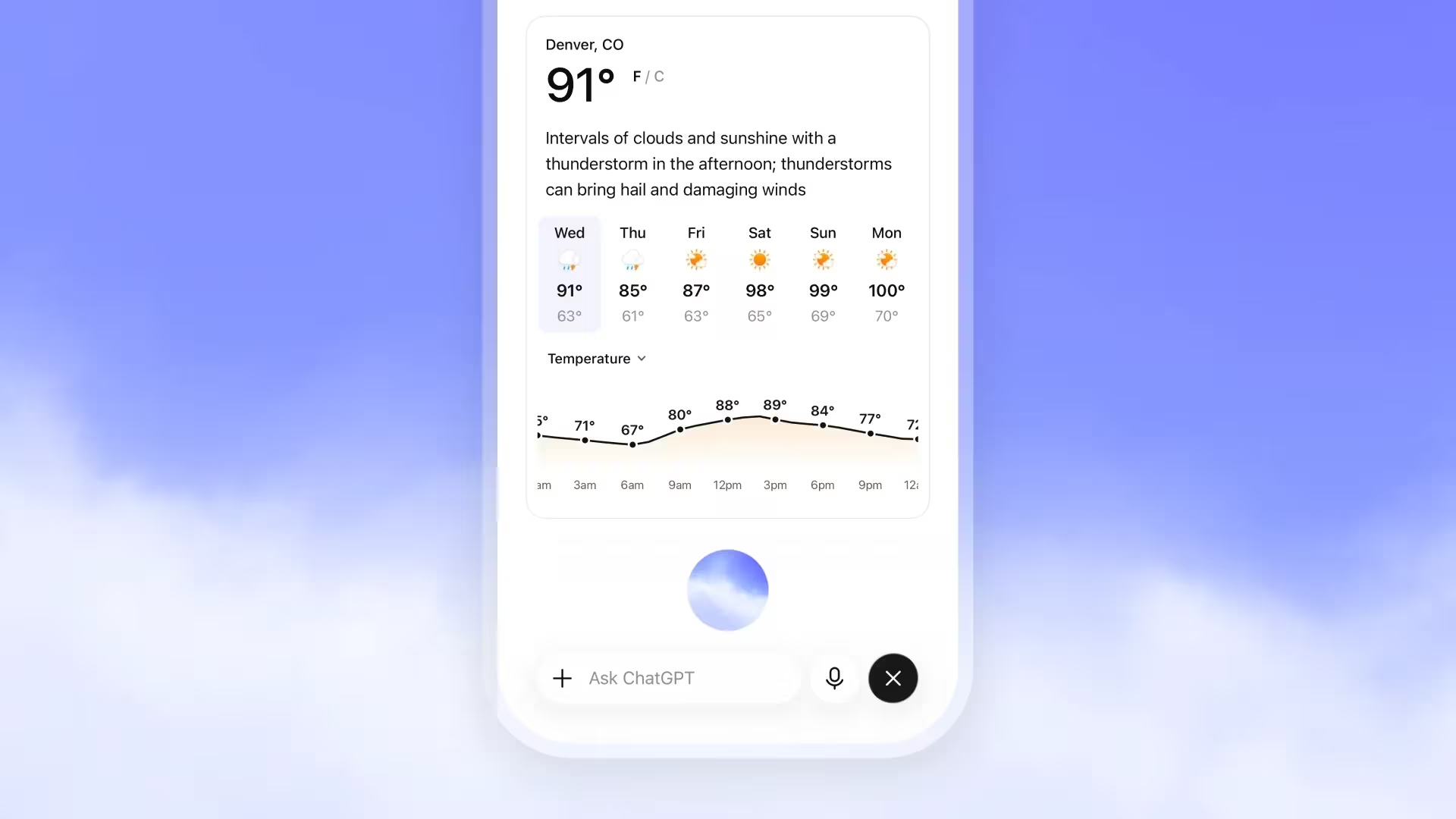
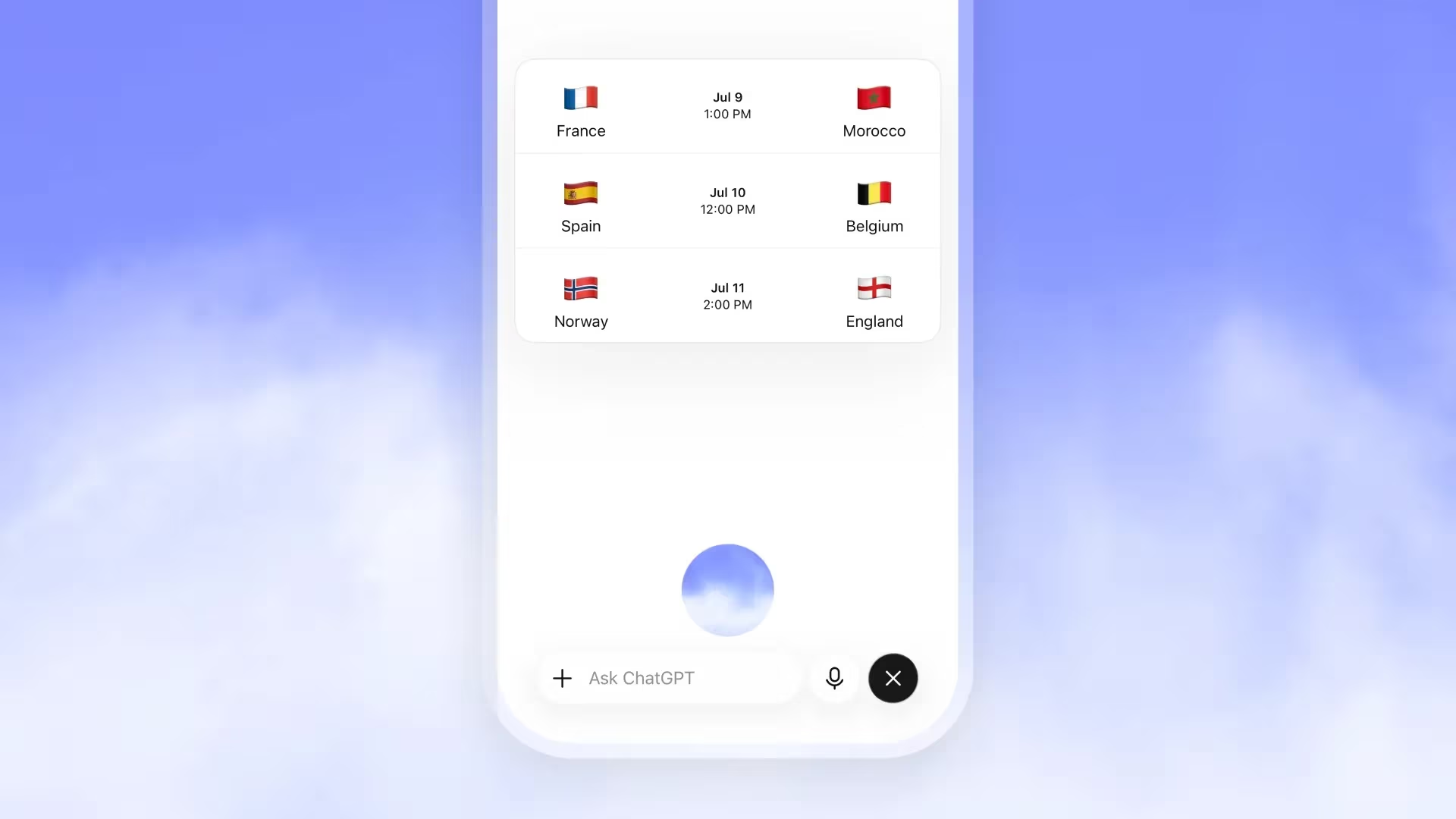
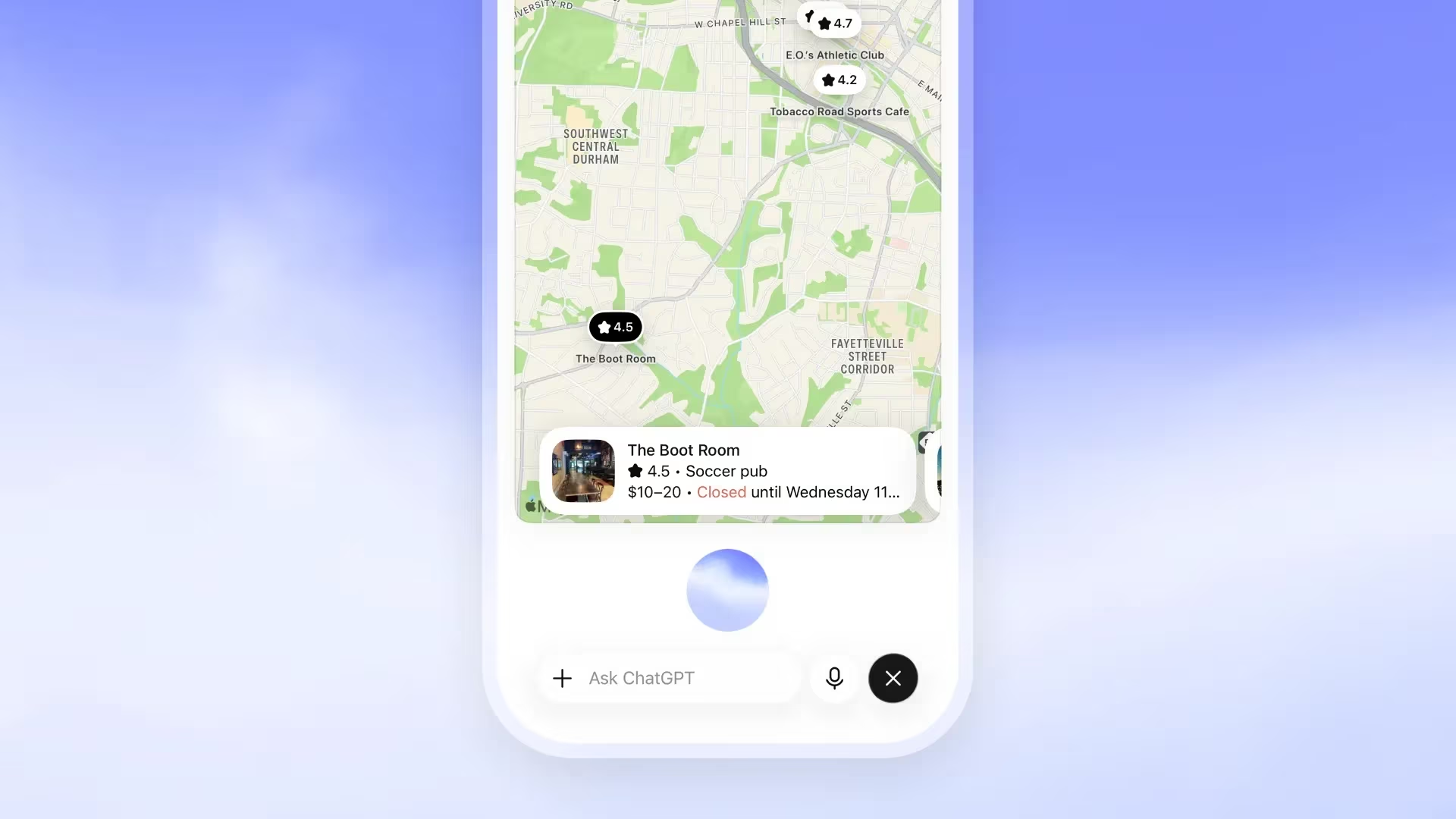
Alongside continuous speech, ChatGPT now integrates visual info cards on the fly. Users can see weather updates, sports scores, stock prices, or route maps right in the conversation without leaving voice mode. This mirrors how Google Assistant and Apple’s Siri handle voice plus screen-based context-voice commands combined with relevant on-screen visuals.
OpenAI also claims GPT-Live has improved noise filtering, tackling a perennial problem for voice assistants. Noisy environments-from busy rooms to cars-often confuse speech recognition. Over the last two years, heavy investments from Amazon, Google, and Anthropic have pushed voice AI toward better noise resilience and more natural conversational pauses-priorities that matter more for everyday use than flashy demos.
Evolution of ChatGPT voice mode
ChatGPT’s voice feature first arrived in September 2023 as a patchwork of different systems-a separate speech recognition model, a text-generating model, and a text-to-speech component. The result worked but felt clunky, with long delays and robotic intonation that quickly gave away the artificial nature of the conversation.
In May 2024, OpenAI introduced the Advanced Voice Mode, which sounded much livelier and responded faster by processing audio more holistically. Still, it waited for users to finish speaking, sometimes interrupting if the user hesitated or if background noise caused confusion. GPT-Live aims to erase these delays by enabling seamless speaking and listening at the same time.
OpenAI isn’t alone in pushing simultaneous voice interaction. Google’s Gemini Live, Microsoft’s Copilot voice features, and efforts from Anthropic and Meta are all moving toward multimodal dialogues-combining spoken language with visual elements. The voice assistant space is heading toward assistants that do more than just read text aloud. The winners will be those who maintain fluid conversations without awkward pauses and quickly surface relevant data on screen.
GPT-Live’s launch isn’t just a minor upgrade-it’s OpenAI catching up to industry standards for real-world voice assistant usability.
That said, GPT-Live currently doesn’t support video or screen-sharing scenarios; those features remain with the previous ChatGPT Voice versions. OpenAI also acknowledges challenges with accents and languages that have irregular speech patterns or distinct local intonations. This is a tough hurdle since, according to Statista, most AI service users live outside English-speaking regions where such quirks are more common and immediately noticeable.
OpenAI has also ramped up safety measures. GPT-Live underwent specific testing for sensitive audio scenarios involving self-harm, psychosis, and emotional dependency on AI. The model can now gently steer conversations away from risky topics or end chats when necessary. For teenagers, there are stronger restrictions and parental controls. After complaints about voice assistants feeling too ”personal” or intrusive, these safeguards are becoming standard for major players.
The next big milestones for GPT-Live likely hinge on API availability and reintroducing video features under its new architecture. That will reveal whether OpenAI intends to polish its voice assistant or build a platform for versatile voice interfaces that can simultaneously listen, speak, search, and display relevant results. If deployments go smoothly, competition in the voice AI space could get significantly fiercer by the end of 2026.
* Meta, mentioned in this article, is designated as an extremist organization in Russia and banned there.