
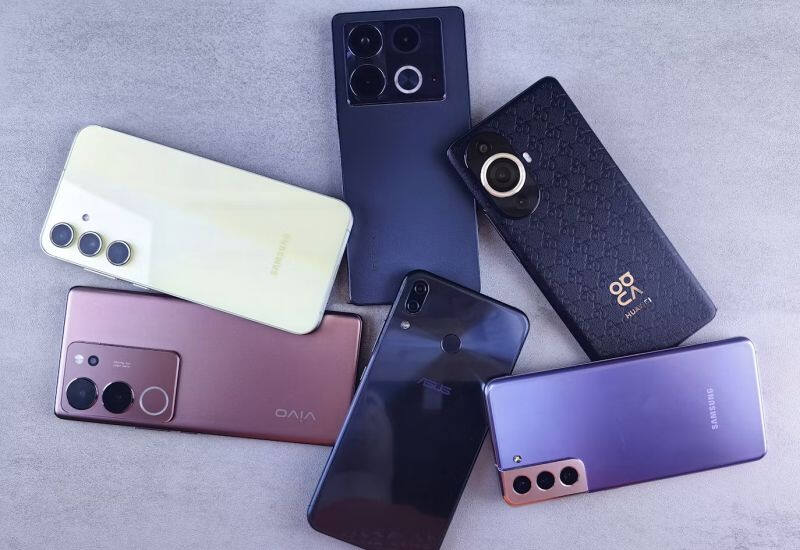
Old smartphones are usually treated as e-waste, but researchers at the University of California, San Diego have shown they can be repurposed into low-cost data center building blocks. By stripping handsets down to the motherboard and linking them into Linux-managed clusters, the team found a surprisingly practical use for hardware most people would otherwise swap out every few years.
The idea is not to replace mainstream servers overnight. It is a clever answer to a very specific problem: how to compute cheaply when memory is tight and budgets are tighter. For schools and labs, that trade-off can be more attractive than paying for cloud hosting or buying a new rack server that does far more than the workload requires.
What the smartphone cluster can do
In testing, a cluster built from 25 to 50 used smartphones could keep up with a server CPU in single-threaded applications. A setup with 20 old phones was also able to support an application used in classrooms with more than 75 students. That is not exactly hyperscale wizardry, but it is more than enough for routine educational workloads.
- 25 to 50 smartphones: competitive with a server CPU in single-threaded apps
- 20 smartphones: enough for an app used by more than 75 students
- Linux-based cluster: the software glue that makes the hardware useful
Why this works for schools, not server farms
The economics are the real hook here. A pile of discarded phones is cheaper than a brand-new server, and it can also sidestep recurring cloud fees. That makes the concept appealing in education, where workloads are often predictable and performance needs are modest. In enterprise data centers, though, predictability wins, and new server gear still has the edge on reliability and coordination.
The researchers are already thinking bigger, planning to connect 2,000 used smartphones into a data center capable of serving 100 classrooms at once. That is a neat proof of concept, but it also underlines the limits of the approach: it is a reuse strategy first, and a serious industrial platform second. Expect more experimentation in labs and schools before anyone tries to sell this as the next cloud revolution.