

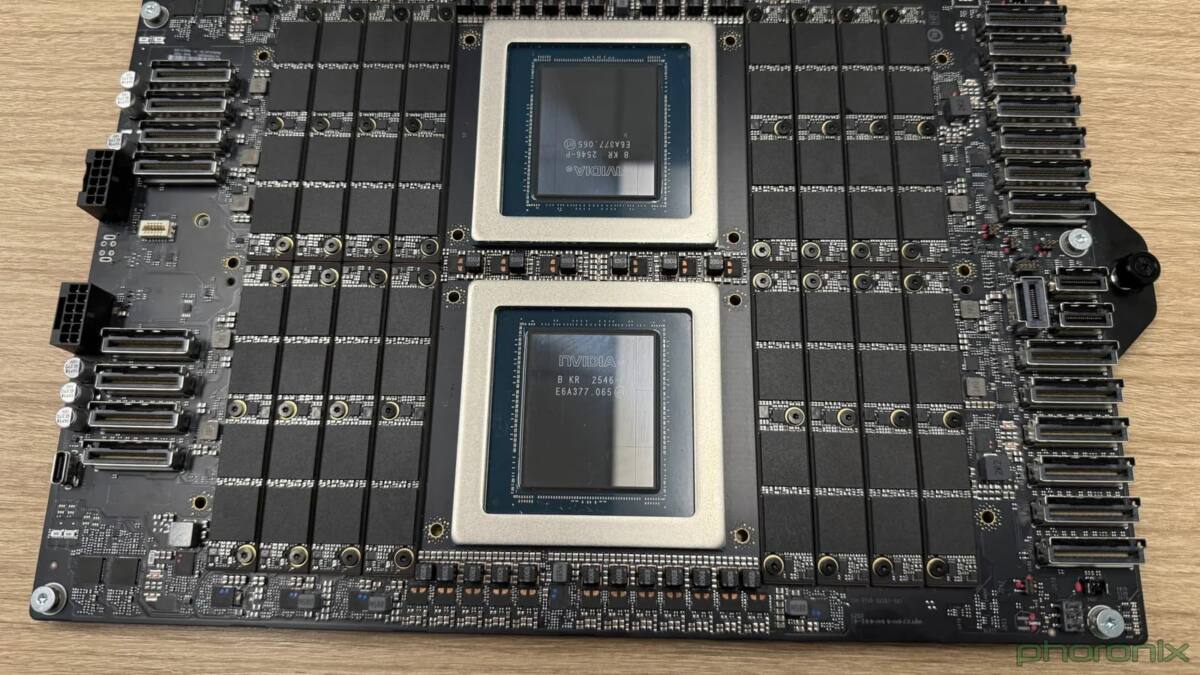
Nvidia’s new Vera CPU has pulled off an awkward little flex: in Phoronix testing, the 88-core Arm server chip outran every rival in the limited benchmark set, including some heavyweight x86_64 parts. That is not the sort of result you expect from a company better known for GPUs, but Nvidia is clearly trying to make Vera more than a sidekick for its AI accelerators.
Vera is built around 88 Olympus cores on the Armv9.2 ISA and supports FP8 along with multithreading. Nvidia says the chip can draw up to 450 W at peak, which is a very server-grade way of saying ”bring serious cooling.” The catch: full-power testing was not allowed, and the benchmark suite itself was restricted, so this is a strong showing rather than a clean-room coronation.
What Phoronix saw in Nvidia Vera
Even with those limits, the numbers were loud. Phoronix said it had never seen an Arm64 processor compete this well against x86_64 chips, and Vera came out ahead of the systems it was tested against. That puts Nvidia in unusual company: Arm server CPUs have steadily improved, but they still tend to be judged against the entrenched dominance of AMD EPYC and Intel Xeon, not to mention the custom silicon arms race in cloud data centers.
- CPU: 88 Olympus cores
- Architecture: Armv9.2 ISA
- Peak power: up to 450 W
- Target: Nvidia Vera Rubin accelerators and external customers
Why the benchmark chart looks strange
The results are impressive, but they also come with the kind of caveat that benchmark nerds love and sales teams quietly hate. The limited test set produced some oddities, including a 64-core Epyc 9575F beating a 128-core Epyc 9755 from the same family, which is a reminder that short benchmark runs can flatter some chips and punish others. Still, Vera’s more than 1.5x jump over Nvidia’s previous Grace CPU, which had 72 cores, suggests this is not just a paper win.
That matters because Nvidia is entering a market where buyers are no longer impressed by core counts alone. The real fight is for server racks attached to AI systems, and if Vera can hold this kind of performance in broader workloads, it gives Nvidia another lever against the classic x86 incumbents. The bigger question is whether third-party customers will get a CPU that performs this well outside carefully curated tests – and whether the power bill will still look tolerable once the full story is allowed out.