

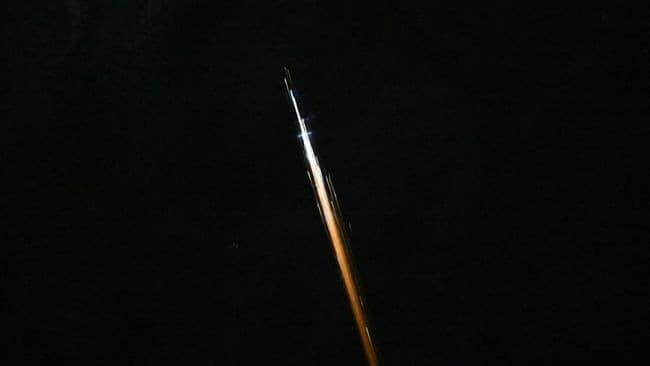
A NASA astronaut has captured a striking fireball streaking through the upper atmosphere just below the International Space Station, and the most likely explanation is either space junk or a discarded rocket stage burning up on reentry. Chris Williams says he saw the object while monitoring the arrival of the Russian cargo craft Progress MS-34, a reminder that low Earth orbit is now crowded enough to produce its own brand of pyrotechnics.
Williams said the event happened on 27 April at about 22:40 GMT as the station crossed over West Africa. From the Cupola module, he watched a bright object dive into the atmosphere, trail a long glowing streak, and then break into multiple flashes as it fragmented. He described it as a ”bright light show” – which is polite astronaut language for ”something up here is definitely disintegrating.”
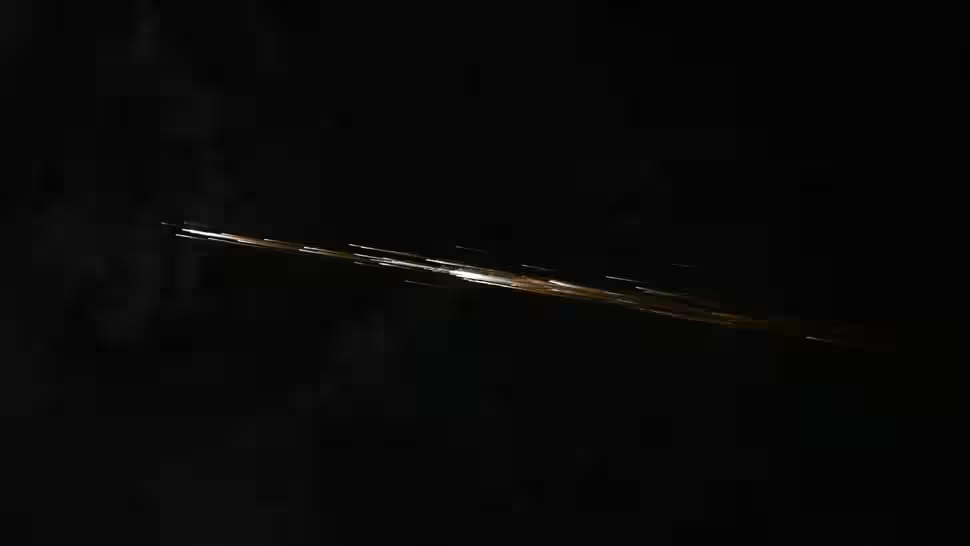
What Williams saw from Cupola
The cargo ship itself launched on 25 April and docked with the ISS two days later, carrying food, hardware, and research experiments. After roughly seven months in orbit, Progress MS-34 will be deorbited and burned up in the atmosphere, which is standard practice for these disposable supply vehicles.
That timing is why the bolide may have been linked to the launch system rather than the station freight ship itself. One theory is that the upper stage of the Soyuz rocket used to send up Progress 95 reentered during the same window, creating the bright trail Williams saw from orbit.
A crowded sky over West Africa
The sighting also fits a broader pattern: as orbital traffic grows, reentries are becoming more visible, more frequent, and harder to misread as natural meteors. Astronauts aboard the ISS get a privileged view of these events, but for everyone else they can look like a random fireball unless the timing is matched to a launch or a planned deorbit.
Williams is still early in an eight-month mission. He arrived at the station on 27 November aboard Soyuz with Sergei Kud-Sverchkov and Sergei Mikaev, and now serves alongside the SpaceX Crew-12 team that arrived on 13 February. If the explanation for this flash proves to be rocket hardware, expect more such surprises as launch cadence keeps rising and the debris problem keeps writing its own light show.