

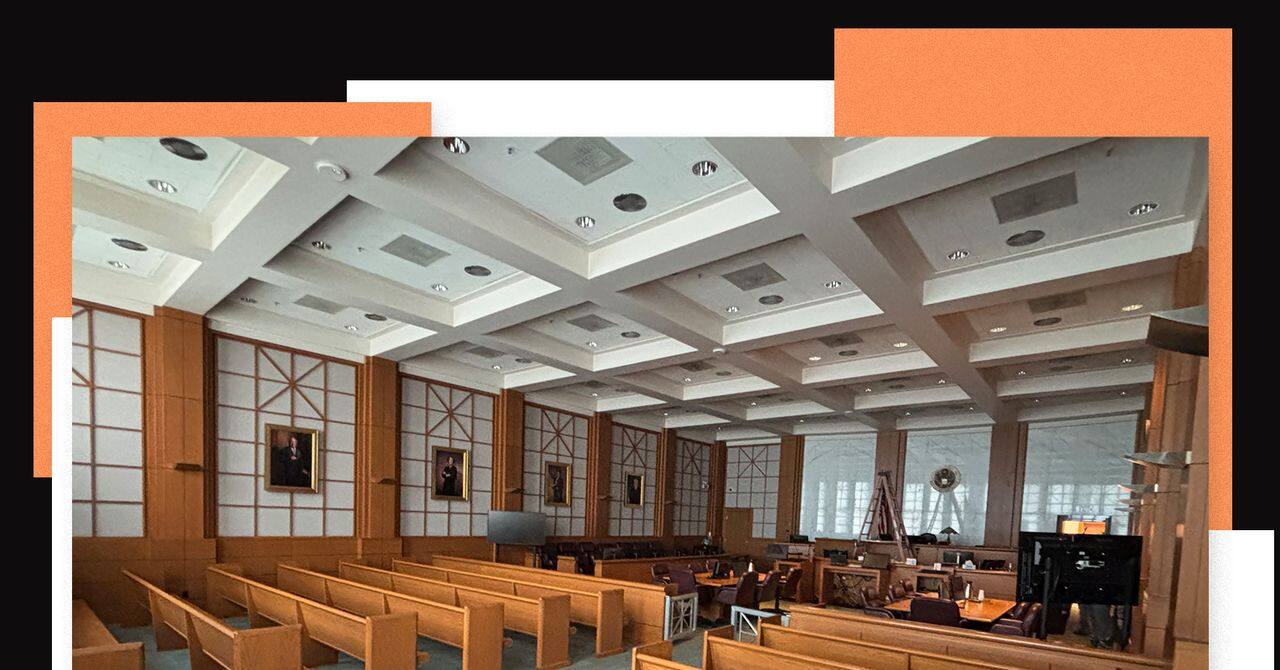
Nearly three weeks into the Musk v. Altman trial, the most visible luxury in Judge Yvonne Gonzalez Rogers’ courtroom is not for the lawyers in tailored suits or the executives sparring over OpenAI’s future. It’s the padding. The benches are so punishing that attendees have quietly turned to cushions and pillows, a minor rebellion that says as much about the marathon pace of the case as any witness statement.
That might sound silly until you remember that the dispute is dragging through hours-long hearings in a packed room, with roughly 150 people squeezed into a space built for far less comfort. Litigation of this scale tends to produce absurd rituals: in Silicon Valley, apparently, one of them is deciding whether your lower back can survive without imported support.
OpenAI’s side has turned cushioning into strategy
On the defense side, several OpenAI and Microsoft attendees have been using thick black seat cushions, including versions that appear to resemble Purple cushions sold at Target for $120. OpenAI CEO Sam Altman and general counsel Che Chang have been among them, while OpenAI president Greg Brockman and his wife, Anna, have been spotted with white pillows that appear to be from Coop, which sells a two-pack for $35.
There is a very unglamorous logic to all this. When a trial stretches across days and days of testimony, comfort stops being a perk and becomes operational equipment. The bigger signal is that even elite legal teams are improvising like people at a delayed airport gate.
Courtroom benches are the real villain
The core litigators sit in better leather chairs, though even those show wear. Everyone else gets the wood benches, and those benches are doing what hard courtroom benches have always done: punishing the body just enough to make time feel longer. A longtime technology lawyer told WIRED that cushions are not exactly customary, but also not bizarre for a hearing this long.
That tracks with the broader pattern in major tech trials. The Epic Games v. Apple proceedings in 2021 had their own discomforts, but crowding was limited by Covid restrictions, so there was more room to sprawl. Here, with the room nearly full, the human body has become one more thing this case is grinding down.
Reporters have started to give in too
The cushion arms race did not stop with the parties. One New York Times reporter eventually gave in, and the courtroom artist has been sitting on a brightly colored cushion of their own. I briefly considered joining them after an hour on the benches on my first day, then tried to tough it out for six miserable days before finally bringing in a less-than-ideal ”cooling” cushion that turned out to be too thin to help much at all.
- Microsoft has so far spent over $100 billion on its partnership with OpenAI.
- The courtroom is filled nearly to its maximum capacity, about 150 people.
- Some of the most popular cushions are black seat pads and white pillows, including products from Purple and Coop.
So yes, the next big question in the trial is about potential penalties. But the more immediate one is whether anyone in that room can survive the week without a better cushion, a better back, or both.