

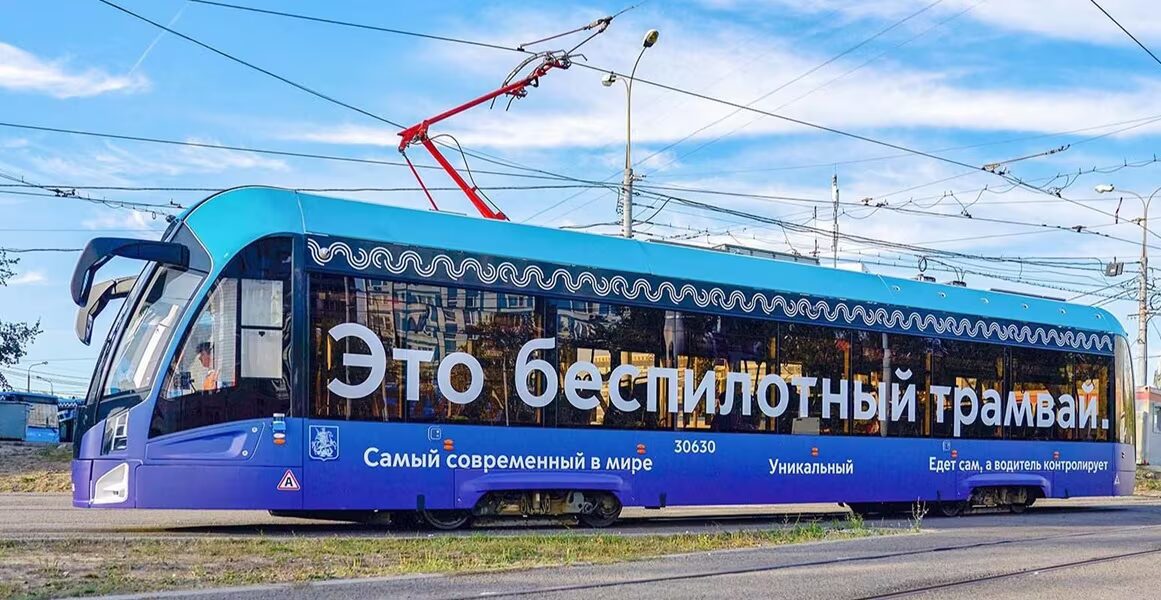
Moscow is fast-tracking its experiment with autonomous urban transit, aiming to roll out 15 self-driving trams on city routes by the end of the year, Deputy Mayor for Transport and Industry Maksim Liksutov revealed. Currently, four self-driving trams operate in autonomous mode within the capital.
The city chose to start with autonomous trams intentionally, according to Liksutov. Unlike buses or cars, trams run on dedicated rails but still navigate complex urban environments filled with cars, pedestrians, and delivery workers. This scenario presents unique challenges for autonomous technology. In contrast, enclosed transit systems separated from city traffic pose fewer hurdles for automation.
Self-driving tram expansion and challenges in Moscow
Alongside self-driving trams, Moscow is also trialing autonomous metro trains. The ”Moscow-2024” train currently operates on the Bolshaya Koltsevaya Line without passengers, but with a human driver on board to comply with safety regulations and legal requirements. Authorities plan to advance to a new phase by year-end, testing fully driverless trains running without passengers on regular schedules.
Comparison with global autonomous transit systems
While fully automated metro lines have been operational for years in cities like Dubai, Copenhagen, and parts of Paris, driverless trams navigating dense urban settings remain relatively rare worldwide.