

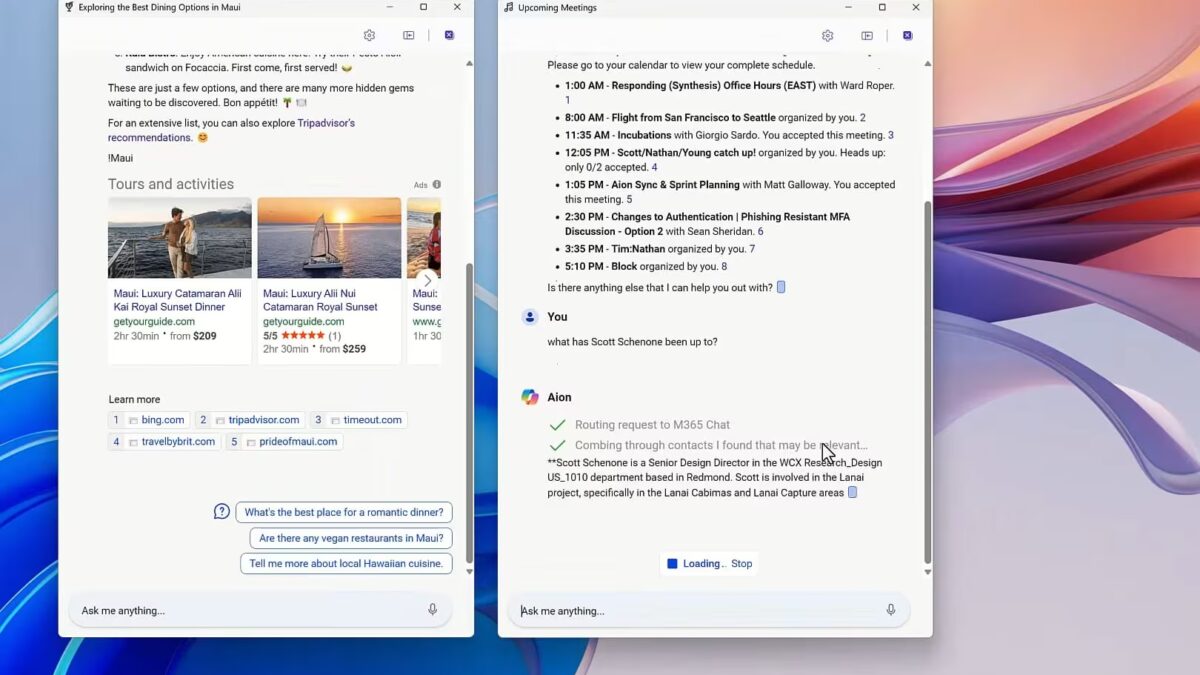
Microsoft has been quietly developing an internal prototype operating system named Aion in 2024, built around its AI assistant Copilot and web applications, according to Windows Central. Designed as a ”cloud Windows” experience, Aion aims to retain the familiar Windows desktop interface but without support for traditional desktop software. Instead, it runs entirely on web technologies, streaming a full Windows desktop via Windows 365 when heavier apps are needed.
The leaked materials show Aion as a web-based shell layered over a customized version of the Edge browser. It mimicked the classic Windows desktop look, complete with a Start menu, taskbar, and resizable app windows. The prototype reportedly could run atop Windows 11 as a replacement shell, or on Android’s AOSP platform. Another less-promoted variant called Win3 was mentioned – a stripped-down Windows build without legacy components.
Unlike typical Windows, Aion is not intended for running standard desktop apps locally. Users operate through websites and web apps, while heavy desktop software is accessed remotely via Windows 365 – Microsoft’s cloud PC streaming service launched in 2021 with an eye toward turning Windows into a subscription-based cloud platform primarily for businesses.
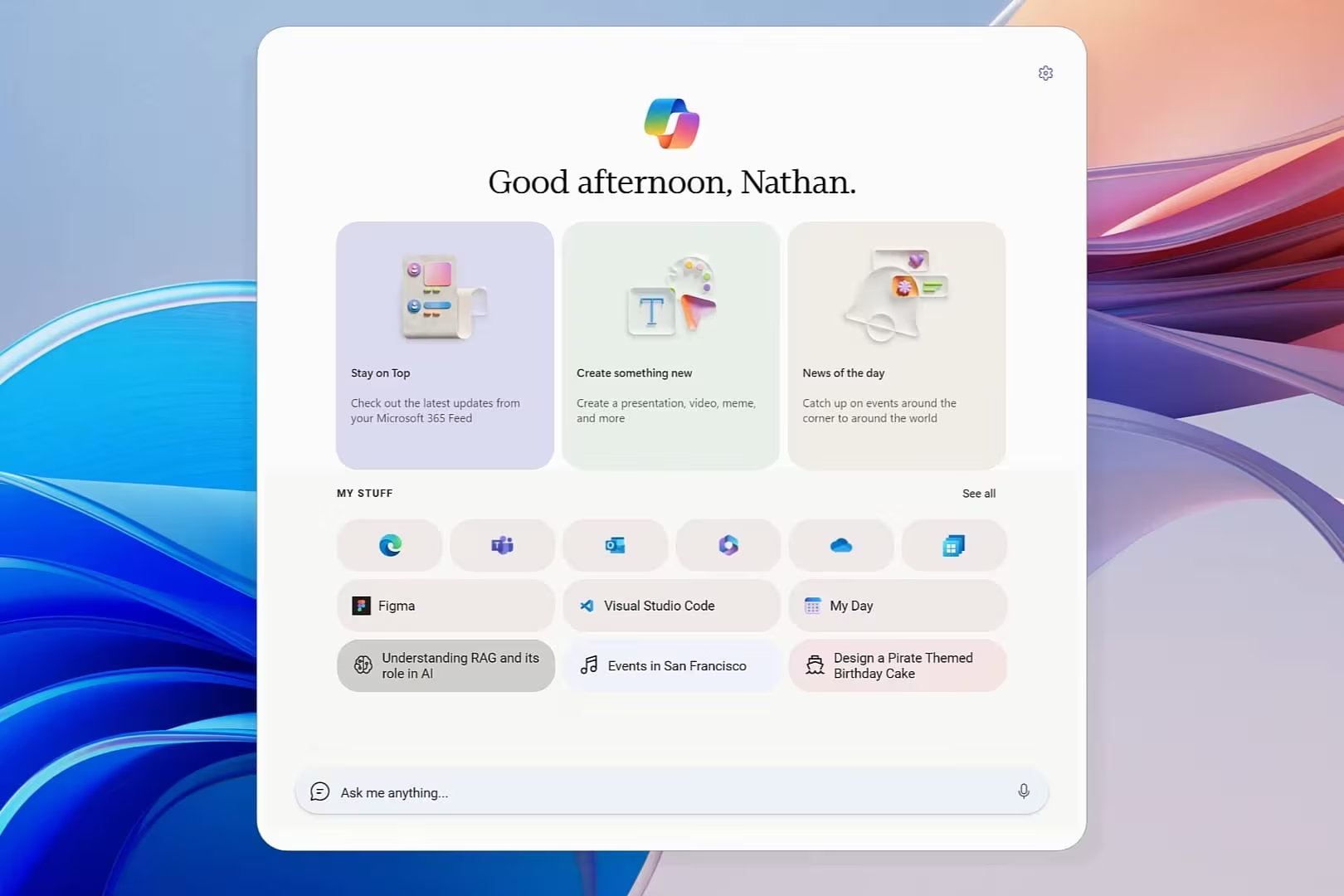
In Aion, the traditional Start button is replaced by Copilot itself. Instead of a classic menu, the OS features an omnibox for searching files, launching websites, initiating AI chats, and opening web apps. Copilot also groups the user’s recent activities into ”Spaces” – blocks of related tasks that can be resumed quickly. This approach is common in browsers and mobile OSes but had not been fully embraced in desktop Windows before.
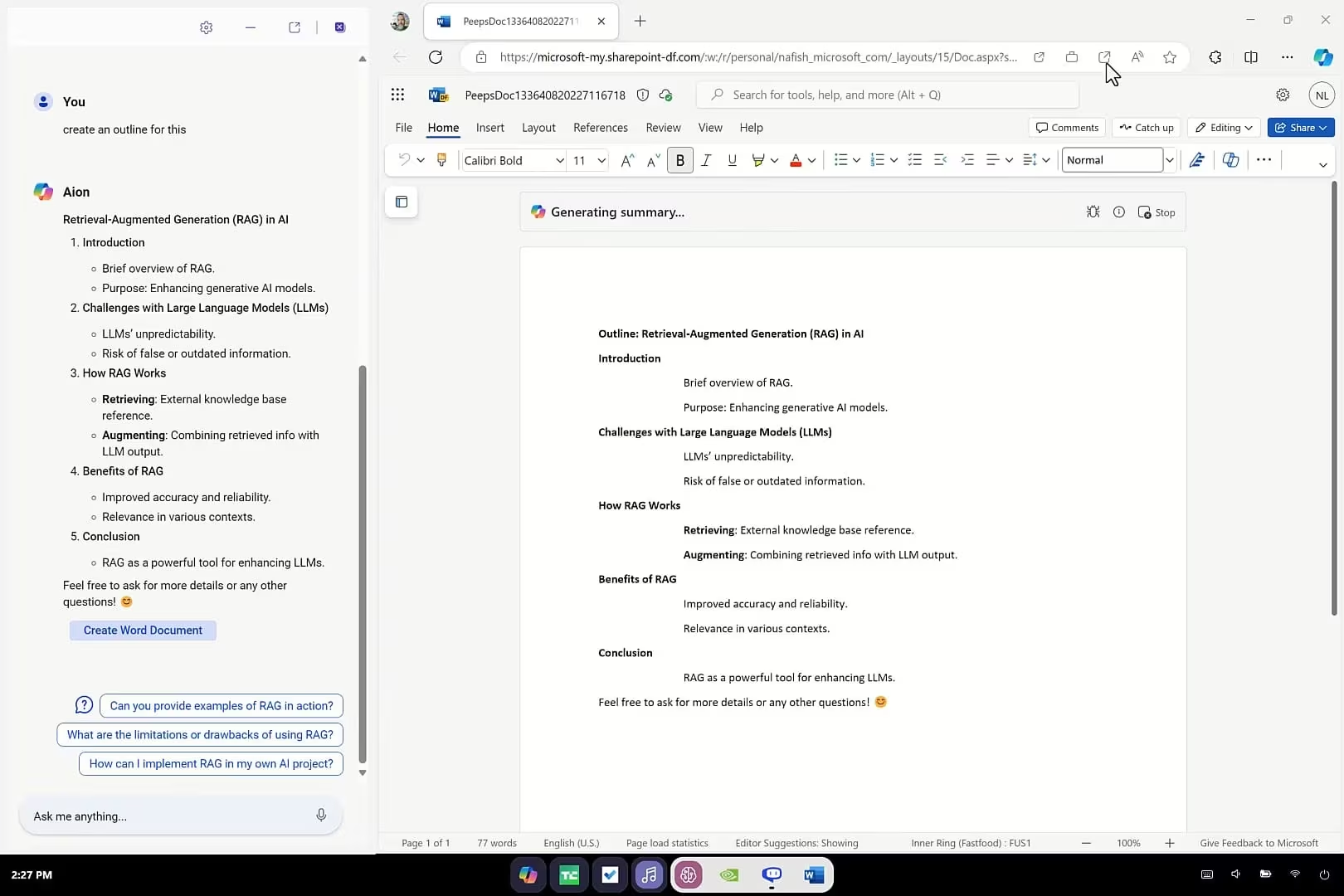
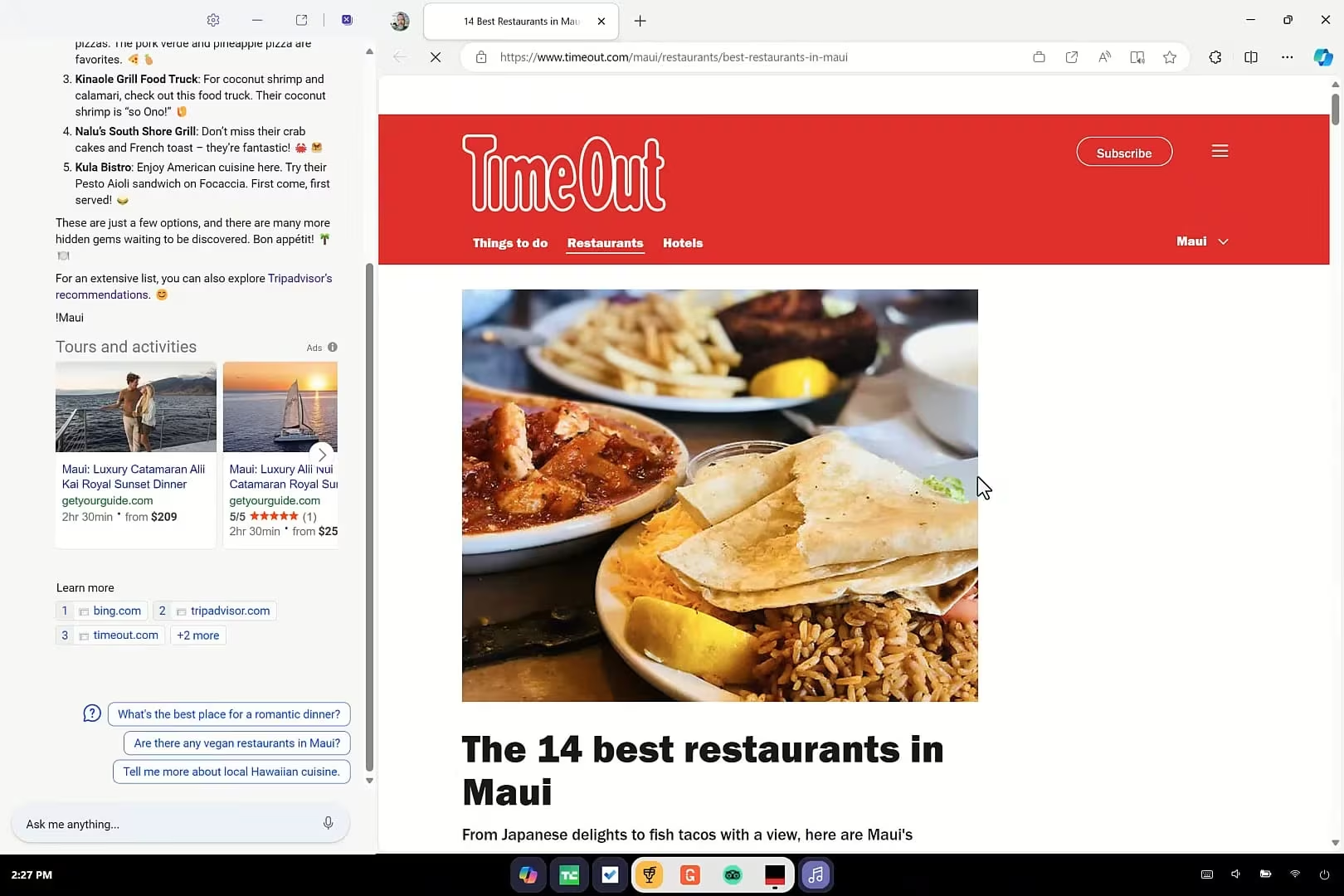
By shifting to a web-centric model, Copilot gains a holistic context that classic Windows lacks. Since all apps run inside a controlled environment, the assistant can see tab and window contents, then act on behalf of the user. For example, a leaked demo showed Copilot sending an email containing a summary of the currently open page – without the user toggling between apps. It’s closer to the ”agent” AI model being developed by OpenAI, Google, and Microsoft itself.
A history of lightweight cloud Windows attempts
Microsoft isn’t new to the idea of lighter Windows versions. Back in 2017, Windows 10 S debuted with strict restrictions, allowing only apps from the Microsoft Store to run. Intended for improved security and simplicity, the OS was quickly watered down after lukewarm reception.
Later came Windows 10X – targeting dual-screen and budget devices – pitched as a modernized, lighter Windows. But Microsoft canceled it before release, folding some ideas into Windows 11. Against this history, Aion looks like another bid to shed the decades-old Win32 legacy that keeps Windows bulky and backward-compatible but resistant to radical redesigns.
By comparison, Google’s ChromeOS has long proven that a browser-based desktop OS can secure significant footholds in education and enterprise. IDC reports that while Chromebook sales dipped after the pandemic peak, they still hold a double-digit share in certain PC market quarters, especially in US schools. Microsoft counters with affordable Windows laptops paired with its cloud services, making its own web-based OS concept less of a gimmick and more a strategic response to a persistent device category.
Another angle is Microsoft’s dual AI strategy. In 2024, it pushed PCs with local AI features powered by dedicated NPUs under the ”Copilot+ PC” initiative. Aion, on the other hand, leans heavily on web and cloud computing. There’s no contradiction here – Microsoft is clearly pursuing two separate tracks: local AI and Windows 11 for premium devices versus a lightweight, cloud-centric environment for mainstream and enterprise users.
Microsoft has not officially confirmed the existence of Copilot OS or Project Aion. If the prototype isn’t shelved, it’s more likely to surface partially integrated into Windows 365, Edge, or future cloud PC hardware rather than as a standalone OS. The cloud PC market is growing steadily, with Gartner estimating public cloud services in the hundreds of billions of dollars worldwide. A subscription-based Windows fits better into this evolving ecosystem than the traditional perpetual license model that has mostly faded.
What to watch next is how Microsoft balances these two visions of Windows’s future – local AI-enhanced desktops and cloud-native, browser-driven systems. Will Aion’s cloud-born concepts reshape the Windows experience for everyday users, or remain a niche for business subscriptions? The answer could redefine how we think about Windows in a cloud-first world.