

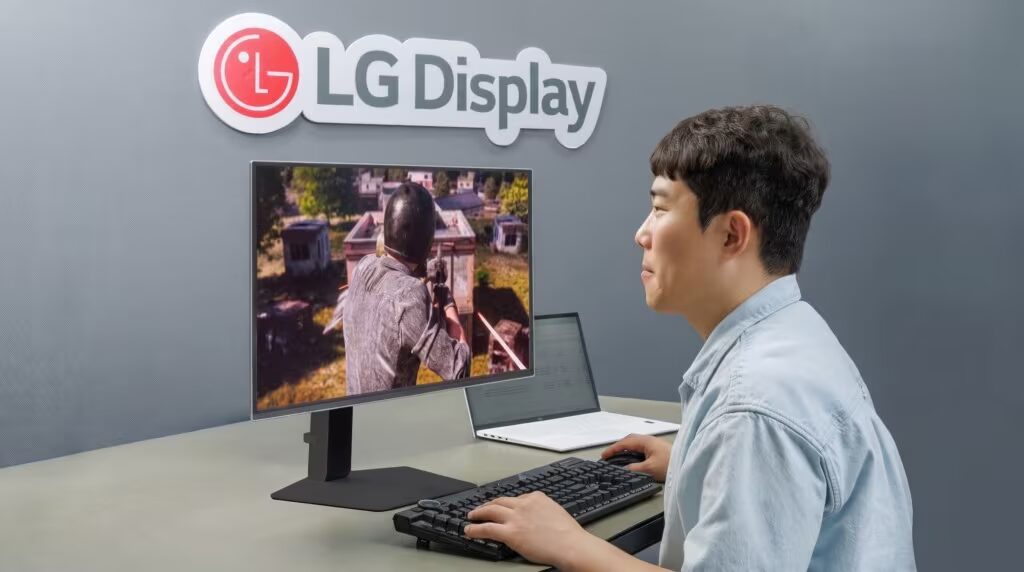
LG Display has revealed research showing that higher refresh rates don’t just feel smoother-they actually improve performance in first-person shooters. On OLED monitors running at 480Hz, players landed 38% more hits compared to 60Hz. They also reacted faster and tracked moving targets more effectively.
The study was presented at an international scientific conference and involved 31 adult gamers without professional esports experience. Each player tested screens running at 60, 240, 360, and 480Hz. Researchers measured hit accuracy, reaction time from target appearance to shot, and collected subjective feedback on image quality.
The most significant performance jump occurred between 60Hz and 480Hz, with successful hits increasing by 38%. Even beyond 240Hz, boosting to 480Hz brought an additional roughly 10% gain. Players consistently reported the image felt smoother, and fast-moving targets were easier to keep in view.
LG Display attributes these improvements to two key factors: reduced input lag-the gap exceeded 10 milliseconds between 60Hz and 480Hz during tests-and clearer, sharper motion without noticeable blur. OLED panels play a key role here, thanks to their inherently rapid pixel response times.
While the study has limitations-it’s a small sample size and originates from a panel manufacturer-the direction is clear. Gaming monitors have been pushing refresh rates higher for years. ASUS has showcased 540Hz esports models using TN panels, Alienware offers 500Hz IPS displays, and LG and Samsung are advancing OLED as a pricier but faster alternative with superior image quality.
Building on this momentum, LG Display’s 27-inch OLED panel capable of dynamic 540Hz and 720Hz refresh rates earned Display of the Year from the Society for Information Display in May. High-refresh-rate displays above 480Hz are no longer theoretical-they’re already materializing in hardware.
Looking ahead, the big question is how these ultra-high refresh rates will reshape the gaming monitor industry and whether OLED’s premium picture quality combined with speed can carve out a dominant spot against established LCD technologies. Expect competition to intensify as manufacturers race beyond the 500Hz barrier.