

- CPU: AMD Ryzen 5 8400F, six cores, 12 threads, Zen 4
- GPU: Radeon RX 9060 XT with 8 GB GDDR6
- Memory: 16 GB RAM, expandable to 128 GB
- Storage: 500 GB NVMe SSD, plus two SATA slots
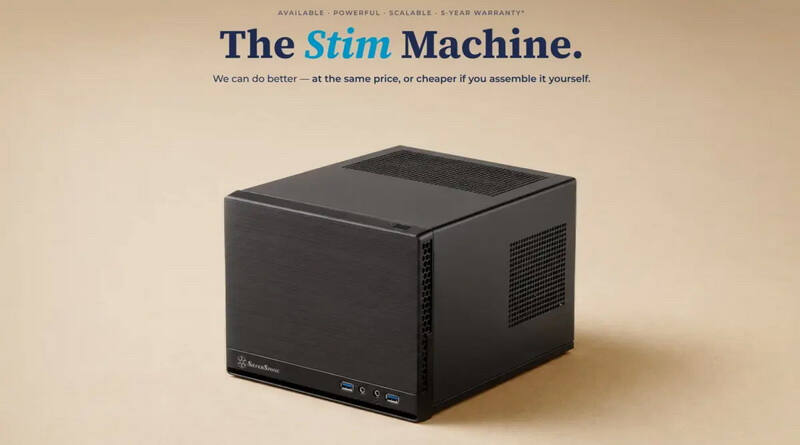
- Platform: AMD B650 motherboard in a SilverStone Sugo SG13B-Q case
Why LDLC thinks its box has the edge
The retailer’s real jab is modularity. Stim Machine uses off-the-shelf parts, so the CPU, GPU, RAM, and storage can be swapped later without begging a custom platform for mercy. Valve’s Steam Machine, by contrast, uses integrated CPU and GPU silicon on a proprietary motherboard, leaving only the SSD and memory as realistic upgrade targets.
There is also a more subtle dig in the graphics choice. LDLC’s Radeon RX 9060 XT is based on RDNA 4 and supports AMD’s newer AI features, including native FSR 4.1 support. Valve’s machine uses a custom GPU based on the older RDNA 3 architecture, which does not currently support FSR 4, so the French machine gets to wear the newer badge whether or not that matters to every buyer.
SteamOS versus a blank slate
The biggest trade-off is software. Because this is pitched as a Steam Machine rival rather than a normal desktop, LDLC ships it without Windows and provides instructions for installing SteamOS. You can still put Windows on it if that is your idea of fun, and some people do enjoy turning a simple purchase into a weekend project.
Valve still has the cleaner living-room story: SteamOS out of the box, HDMI-CEC support, and a matching controller option. But LDLC has spotted the awkward truth at the center of compact gaming PCs: once prices get this close, buyers start counting upgrade paths, not branding.
The part Valve can still win
That does not mean the Stim Machine automatically beats Steam Machine. Valve’s hardware is designed as a tightly integrated console-like device, and for some buyers that simplicity will matter more than replaceable parts and a slightly flashier GPU spec sheet. The open question is whether the market wants a living-room PC that behaves like a console, or one that merely borrows the shape and lets you tinker after dinner.
Valve has not even put Steam Machine on sale yet, and a French retailer is already turning the idea into a joke with a shopping cart. LDLC has launched the Stim Machine, a compact gaming PC whose name is basically a wink at Valve’s box, and the punchline is simple: for about the same money, it ships with more conventional hardware that looks far easier to upgrade.
LDLC is openly comparing the two systems, and on paper the France-based mini PC does have a strong case. That is partly because Steam Machine’s appeal is as much about Valve’s ecosystem as the hardware itself, while the Stim Machine is just a standard Windows-capable PC without the usual proprietary baggage.
Stim Machine price and core specs
The LDLC machine costs €999.99 as a self-build kit or €1039.99 fully assembled. That puts the finished system at exactly the same price as Valve’s official European Steam Machine with a 512 GB SSD, though Valve’s version does not include a controller in that figure. The bundled controller version is priced at €1108.
- CPU: AMD Ryzen 5 8400F, six cores, 12 threads, Zen 4
- GPU: Radeon RX 9060 XT with 8 GB GDDR6
- Memory: 16 GB RAM, expandable to 128 GB
- Storage: 500 GB NVMe SSD, plus two SATA slots
- Platform: AMD B650 motherboard in a SilverStone Sugo SG13B-Q case
Why LDLC thinks its box has the edge
The retailer’s real jab is modularity. Stim Machine uses off-the-shelf parts, so the CPU, GPU, RAM, and storage can be swapped later without begging a custom platform for mercy. Valve’s Steam Machine, by contrast, uses integrated CPU and GPU silicon on a proprietary motherboard, leaving only the SSD and memory as realistic upgrade targets.
There is also a more subtle dig in the graphics choice. LDLC’s Radeon RX 9060 XT is based on RDNA 4 and supports AMD’s newer AI features, including native FSR 4.1 support. Valve’s machine uses a custom GPU based on the older RDNA 3 architecture, which does not currently support FSR 4, so the French machine gets to wear the newer badge whether or not that matters to every buyer.
SteamOS versus a blank slate
The biggest trade-off is software. Because this is pitched as a Steam Machine rival rather than a normal desktop, LDLC ships it without Windows and provides instructions for installing SteamOS. You can still put Windows on it if that is your idea of fun, and some people do enjoy turning a simple purchase into a weekend project.
Valve still has the cleaner living-room story: SteamOS out of the box, HDMI-CEC support, and a matching controller option. But LDLC has spotted the awkward truth at the center of compact gaming PCs: once prices get this close, buyers start counting upgrade paths, not branding.
The part Valve can still win
That does not mean the Stim Machine automatically beats Steam Machine. Valve’s hardware is designed as a tightly integrated console-like device, and for some buyers that simplicity will matter more than replaceable parts and a slightly flashier GPU spec sheet. The open question is whether the market wants a living-room PC that behaves like a console, or one that merely borrows the shape and lets you tinker after dinner.