

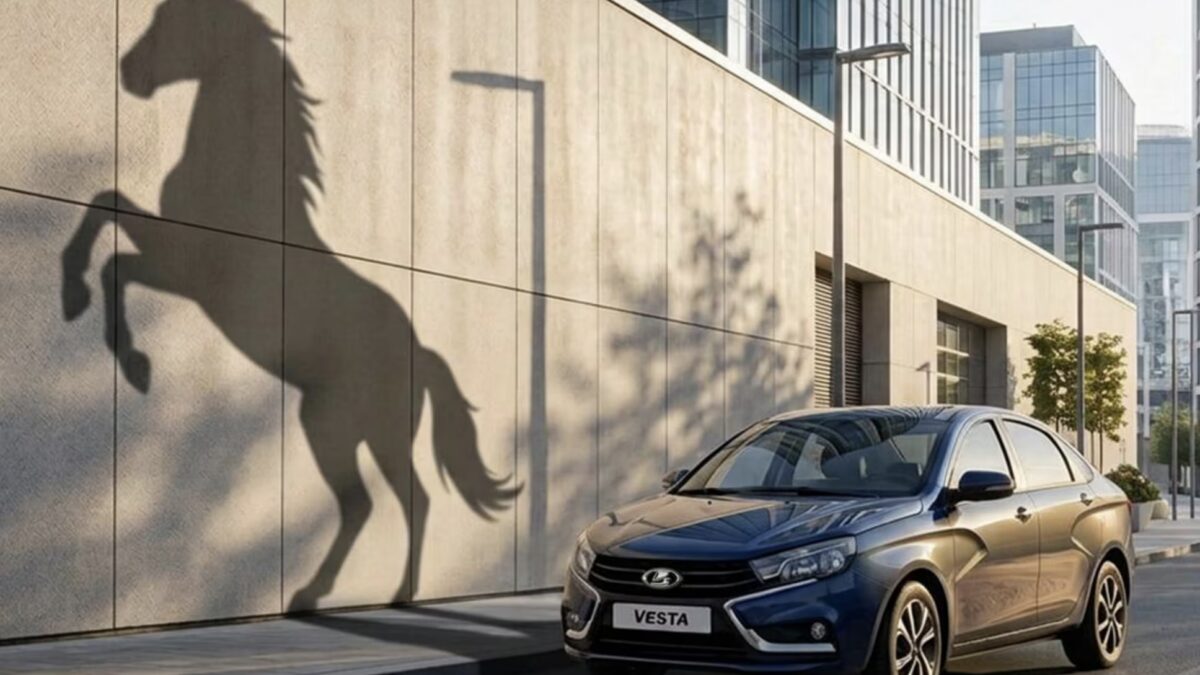
AvtoVAZ believes the biggest reason drivers pick the Lada Vesta isn’t fancy multimedia or a lengthy option list, but the car’s rugged suspension. According to the manufacturer, it soaks up bumps, dirt roads, and cracked asphalt with minimal harsh jolts.
The company credits this smooth ride to the Vesta’s complete design package: a stiff body, a reinforced subframe, and a shortened steering rack. On smooth pavement, the car drives composed, but its real strength shows on rough terrain where the suspension prevents harsh impacts from rattling passengers.
Practicality also plays a key role in the Vesta’s appeal. With a 500-liter trunk and a cabin that feels spacious for a B-segment sedan, the Vesta is marketed not only for city driving but also for fully loaded trips outside urban areas. This aligns with Russia’s auto sales trends, where Lada reclaimed the top brand spot for 2025, and the Vesta remains one of the most popular models alongside the Granta, according to market data from AutoStat.
AvtoVAZ hasn’t ignored electronics-they recently launched a version equipped with automatic climate control and the LADA Connect Start telematics system on July 1, enabling owners to remotely monitor their cars’ status. For the Russian market, this is still a relatively fresh feature set, contrasting with just a few years ago when cars were often sold without digital add-ons.
Lada Vesta suspension outperforms competitors in rough road conditions
Looking at competitors like Geely Emgrand, Changan Alsvin, and Kaiyi E5, which hover in a similar price range, marketing tends to emphasize infotainment screens and transmission types. AvtoVAZ’s strategy underlines a grounded, local selling point: the Vesta’s suspension lets it keep going where the road ends.
Why Lada Vesta’s rugged suspension suits Russia’s challenging roads
As Russia’s roads remain challenging outside major cities, prioritizing suspension durability over flashy tech is a sensible move. It’ll be interesting to see if AvtoVAZ continues focusing on this rugged reliability to stay ahead, even as rivals boost digital features and urban comfort. The Vesta’s success suggests there’s still strong demand for cars built to handle real-world driving conditions rather than just showroom specs.