

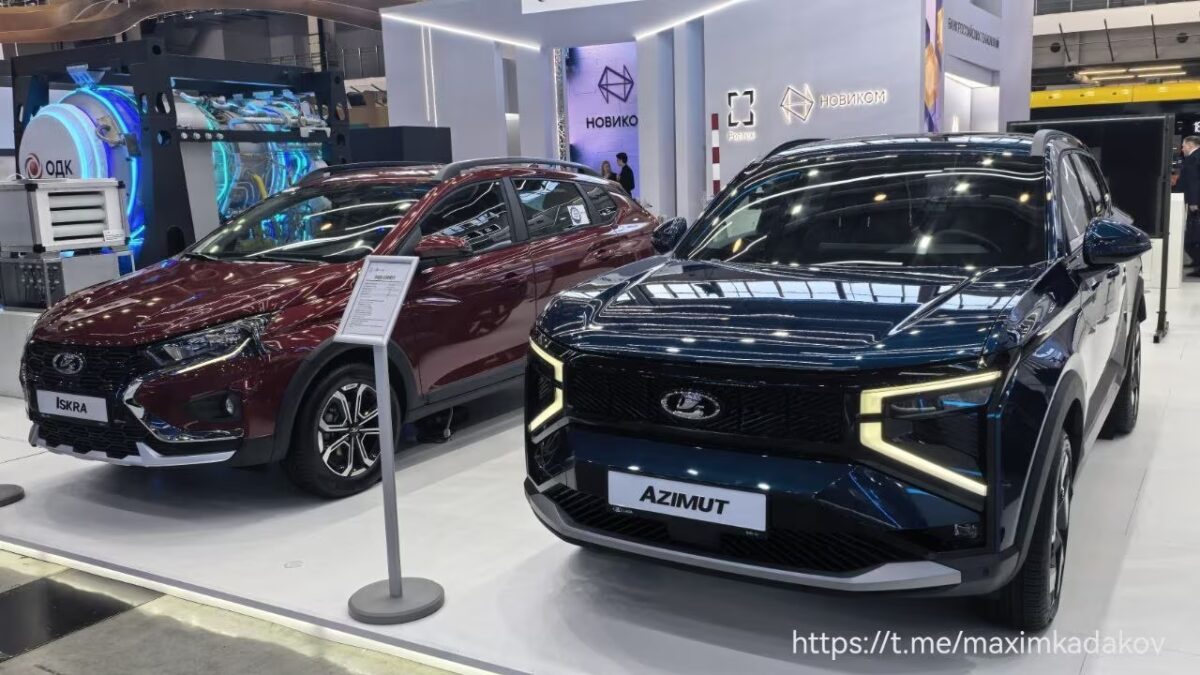
At the Innoprom 2026 expo in Yekaterinburg, Russian automaker AvtoVAZ unveiled the Lada Azimut crossover in a fresh ”Serenade” blue paint. The real eye-catcher isn’t just the car itself but the color combo: a deep blue body paired with a silver rear pillar that strongly recalls the two-tone styling of earlier Russian-made Hyundai Creta models. For AvtoVAZ, this move makes sense-Azimut is stepping into a segment where standout looks on the showroom floor can be as important as the features list.
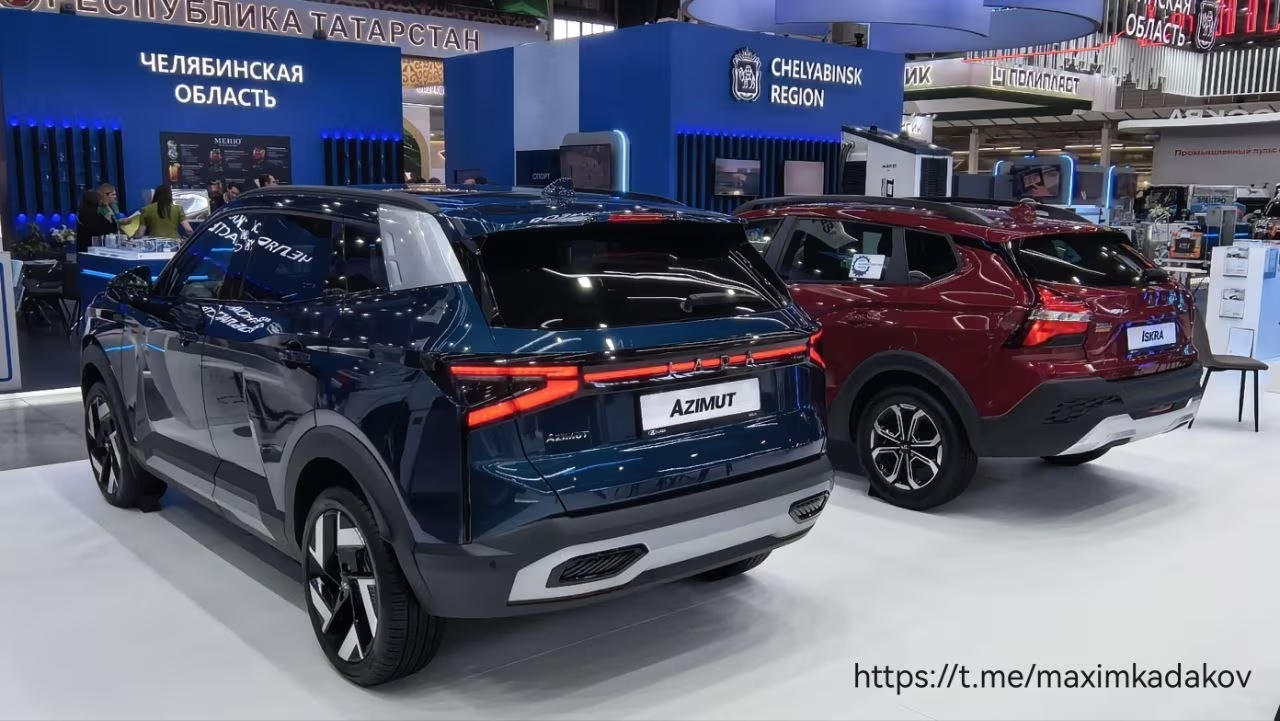
Lada plans to start selling the Azimut in Q4 2026. AvtoVAZ President Maksim Sokolov previously revealed that the crossover will launch with three gasoline engines: naturally aspirated 1.6- and 1.8-liter units delivering 122 hp and 135 hp, respectively, plus a new 1.5-liter turbocharged engine rated at 150 hp. This lineup sticks to conventional, familiar powertrains rather than electrification, aiming squarely at the mainstream compact crossover market.
The comparison to Hyundai Creta is no coincidence. Before Hyundai withdrew from Russia, the locally assembled Creta was one of the most prominent players in the compact crossover segment, with two-tone color schemes that left a lasting impression. Now AvtoVAZ seems to be pursuing a similar strategy: making the Azimut not just a new vehicle but a recognizable statement on the showroom floor and in photos.
AvtoVAZ is also developing a more ambitious hybrid variant of the Azimut with all-wheel drive. Sokolov said this version could deliver around 390 horsepower (290 kW), sprint from 0 to 62 mph (100 km/h) in 5.7 seconds, and offer an impressive range of up to 1,100 km (683 miles) without refueling. If it reaches production, this hybrid Azimut would stand out as one of the few Russian models showcasing serious engineering ambitions beyond basic mobility.
As the Azimut’s launch approaches, AvtoVAZ has yet to reveal pricing and trim details. That will determine whether the ”Serenade” blue remains a striking showpiece or helps the Azimut seriously compete for buyers who once considered the Creta, Haval Jolion, and other mainstream compact crossovers.
The Azimut’s introduction comes amid a transitional period for Russia’s car market, especially as local production ramps up to fill gaps left by foreign brands. AvtoVAZ’s focus on conventional engines and bold styling signals an attempt to capture buyers seeking familiarity with a touch of flair, instead of chasing electrification too early. How well this approach resonates will be an early test of whether legacy Russian brands can recapture lost ground in the compact crossover segment.