

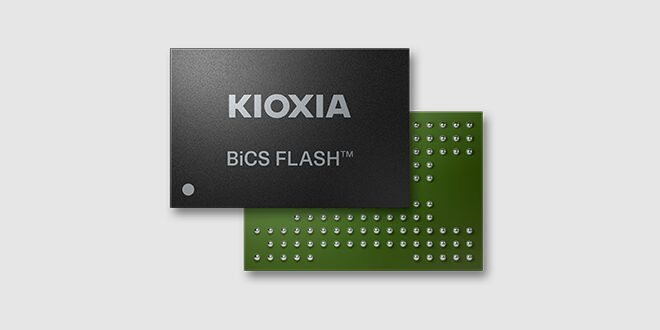
Kioxia has done the unthinkable in Japan’s public markets: the NAND flash maker briefly became the country’s most valuable listed company, edging past Toyota Motor before the car giant reclaimed first place. The swap was short-lived, but it says plenty about where investors think the next wave of value is being created – and it is not on four wheels.
On June 12, Kioxia’s market capitalisation climbed above 44 trillion yen, or about $300 billion, while Toyota was valued at roughly 43 trillion yen at the same point in trading. That kind of move would have sounded absurd a few years ago, when memory chips were mostly treated as a cyclical commodity business. Now they are being priced like infrastructure for the AI era.
AI demand is driving the memory trade
The catalyst is obvious enough: AI services, cloud platforms, and large data centres need ever more storage and memory, and that pushes demand for NAND chips higher. The market has been rewarding the companies that sit closest to that demand, from memory makers to equipment suppliers, while traditional industrial champions have been pushed into the background for a change.
Kioxia’s rise also fits a broader pattern in global equity markets, where chip-related firms have repeatedly outperformed legacy manufacturers whenever a new computing cycle takes hold. In other words, this was not just a quirky domestic milestone; it was another sign that investors are willing to pay up for picks-and-shovels exposure to AI.
From Toshiba spin-off to market heavyweight
Kioxia was formed in 2018 after Toshiba spun out its memory business, and that origin story matters. A business once tucked inside a sprawling industrial conglomerate is now powerful enough to challenge Toyota, a company that has defined Japanese corporate prestige for decades.
For Toyota, losing the top spot even temporarily is hardly a crisis. But for Japan’s market narrative, it is a useful reminder that the most valuable companies are increasingly those tied to semiconductors, data storage, and the systems powering AI – not necessarily the brands that dominated the last industrial era.
What investors are watching next
The obvious question is whether Kioxia can stay near the top if AI spending keeps climbing and memory pricing remains firm. Toyota will not disappear from the conversation, but if Japan’s market keeps rewarding chip exposure over manufacturing scale, this brief handover may end up looking less like a blip and more like a warning shot.