

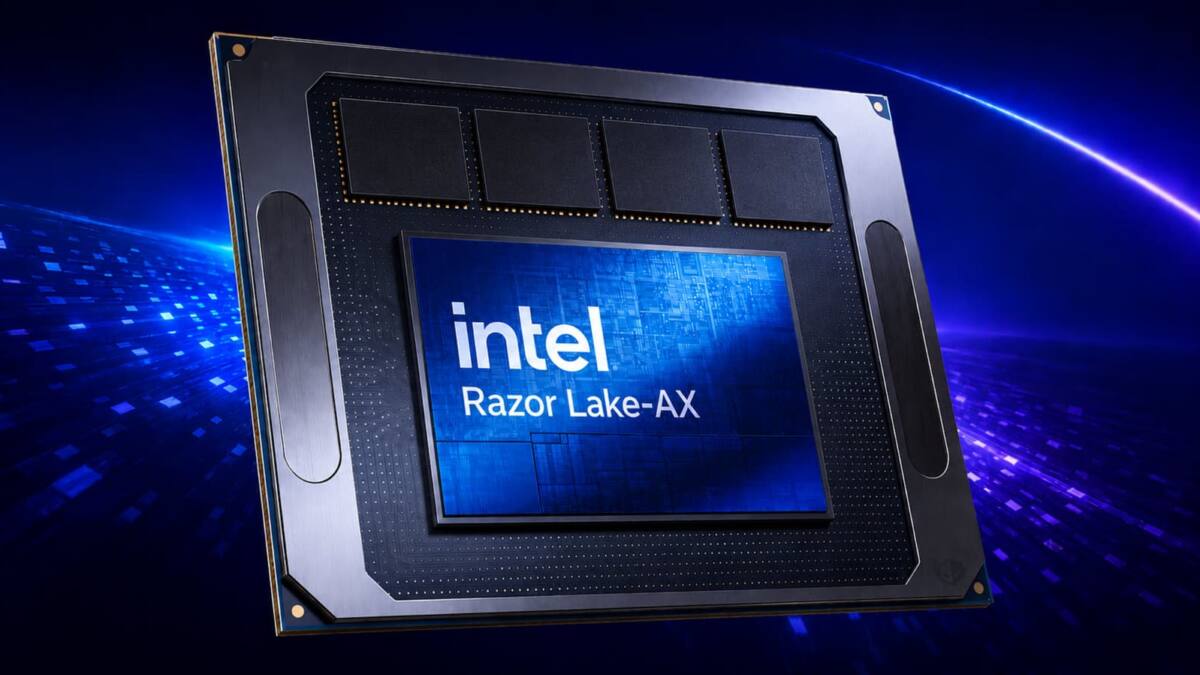
Intel is preparing Razor Lake-AX, a higher-end follow-up to its next client CPU family, and the hook is familiar: memory placed right next to the processor inside the same package. That kind of packaging trick can shave latency and boost bandwidth without changing the laws of physics, which is handy when integrated graphics keeps getting more ambitious and more hungry.
The idea is not new for Intel. Lunar Lake already used on-package memory, but that platform was aimed at energy-efficient mobile chips. Razor Lake-AX is the company’s move to push the same basic concept into premium laptops and more performance-focused mobile systems, where extra bandwidth matters even more.
Intel Razor Lake-AX memory: LPDDR5X or LPDDR6
Intel has not said which memory standard will be used, but the likely candidates are LPDDR5X and LPDDR6. Since the platform is expected around 2028, LPDDR6 sounds like the smarter bet; by then, it should be the more natural fit for a premium package built around efficiency and speed.
- Memory placed next to the processor inside one package
- Target segment: premium notebooks and high-performance mobile systems
- Likely memory options: LPDDR5X or LPDDR6
What the Razor Lake lineup is supposed to look like
Razor Lake itself is said to build on Nova Lake, adding Griffin Cove performance cores, Golden Eagle efficiency cores, and a next-generation integrated GPU. The AX version is the beefed-up sibling: more cores, stronger graphics, and a larger cache, all aimed squarely at the kind of machines that want desktop-like ambitions without actually being desktops.
The standard Razor Lake chips are expected in 2027 for desktop and mobile PCs, while Razor Lake-AX arrives later, around 2028. That timing puts Intel into a direct fight with AMD’s future Medusa Halo platform, which is being developed for the same class of powerful laptops. If Intel can pair higher-bandwidth memory with a more capable iGPU, the company may finally have a cleaner answer to AMD’s halo mobile push.
AMD Medusa Halo is the real target
This is less about a single chip feature than a familiar race: whoever best balances memory speed, power draw, and integrated graphics gets to define the premium mobile class. Intel has the packaging idea already in its toolbox. The question is whether Razor Lake-AX can turn that into a platform advantage before AMD does the same thing, but better.