

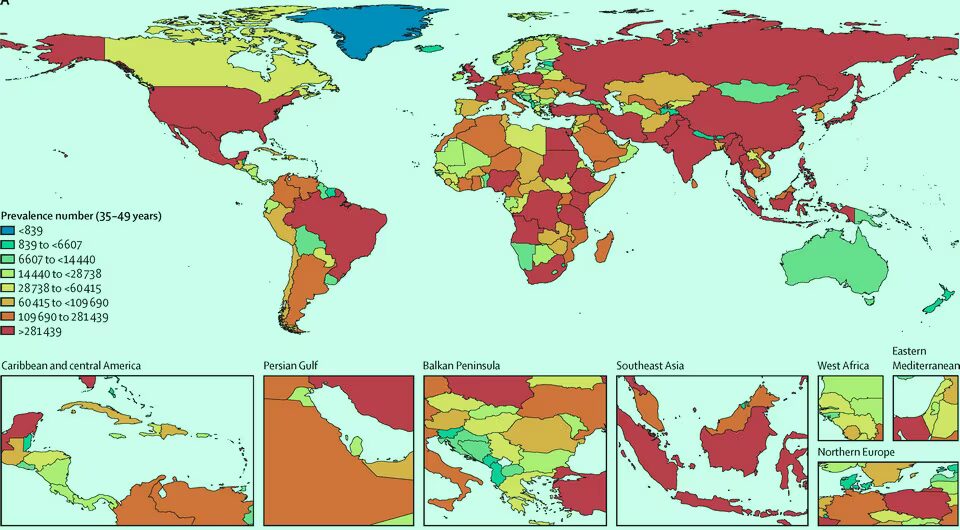
Infertility among women aged 35 to 49 is on the rise and could increase by nearly 50% by 2036 compared to 2023, according to a sweeping international study. Researchers analyzed data from the Global Burden of Disease project covering 204 countries between 1990 and 2023. Their findings, published in The Lancet Obstetrics, Gynaecology, & Women’s Health, warn of a growing reproductive health crisis facing older women worldwide.

Between 1990 and 2023, the age-standardized prevalence of infertility in women aged 35 to 49 grew by an average of 0.45% annually, rising from 6,001 to 6,907 cases per 100,000 women. In absolute numbers, this means that 53.6 million women in this age group were affected by infertility in 2023 alone.
The overall burden of infertility, measured in disability-adjusted life years (DALYs), which account for years lived with disability, also climbed steadily. The rate increased 0.47% per year on average, from 31.31 to 36.29 DALYs per 100,000 people. Interestingly, the gap in infertility burden between high-income and low-income countries decreased by 23.1%, signaling that the issue is spreading across diverse economic environments.
Looking ahead, projections suggest an even more severe increase over the next decade. If current trends hold, infertility prevalence among women aged 35 to 49 will jump by 48.6% by 2036 compared to 2023, with DALYs increasing by nearly 50%. This trend echoes broader global shifts: the World Health Organization estimates that about one in six adults worldwide will face infertility during their lifetime, and the average age of first-time mothers in many European countries has already surpassed 30 years.
Rising infertility rates among women aged 35 to 49
Typically, rising infertility rates prompt increased emphasis on early diagnosis, access to assisted reproductive technologies, and disease prevention strategies targeting fertility-related conditions. However, the study also delivers a sobering insight: even in the absence of dramatic demographic changes, infertility among women over 35 is steadily increasing. This persistent upward trend forecasts a significantly heavier strain on healthcare systems in the coming decade.
Global trends and healthcare responses to delayed childbearing
For comparison, leading Western countries have long grappled with the fertility impacts of delayed childbearing but often combine fertility preservation advances with active public health responses. The global reach and steady growth of infertility rates highlighted by this study underscore the urgency for coordinated international efforts addressing reproductive health, particularly as populations age and family-building patterns shift.
Challenges for healthcare systems in addressing infertility growth
The coming years will reveal how healthcare infrastructures worldwide adapt to this expanding challenge. Will increased investment in reproductive health services, innovation in fertility treatments, and preventative public health policies keep pace with demand? The trajectory presented here suggests that without intervention, infertility among women over 35 will become an even more pressing global health concern.