

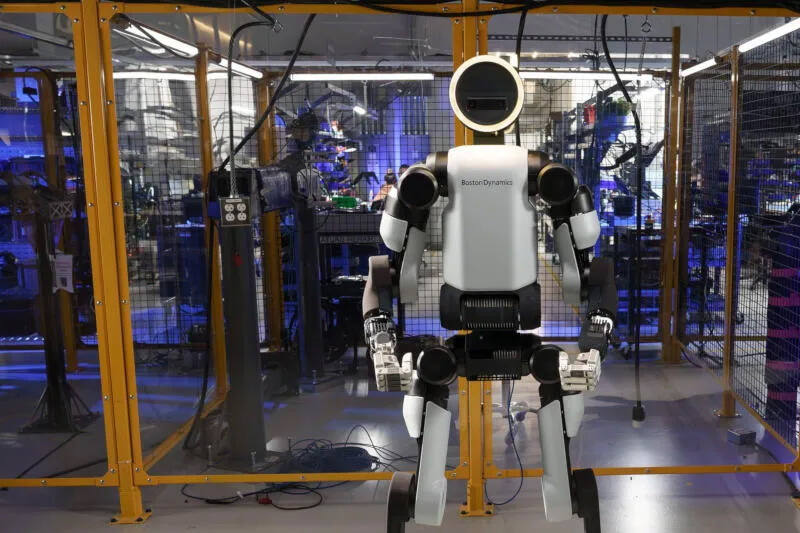
Hyundai Motor Group is about to take full ownership of Boston Dynamics, buying the remaining 9.65% stake from SoftBank for $325 million. If approved on 22 June, the deal will leave Hyundai with 100% of the robotics company, just as Atlas is moving from demo prop to commercial product, and just as the humanoid robot race gets messier by the week.
This is a tidy end to a deal that started in 2021, when Hyundai paid about $880 million for 80% of Boston Dynamics. The valuation math has changed, but the strategic logic has not: Hyundai wants a robot it can actually deploy inside its own factories, not just a flashy machine that tours conferences and collects applause.
Atlas is becoming a factory tool, not a science project
Boston Dynamics showed a commercial version of Atlas at CES in Las Vegas on 5 January 2026. The robot stood up, walked on stage, and was controlled remotely during the demo, but the real message was the deployment plan behind it. Hyundai expects the production version of Atlas to begin work at its EV plant in Georgia by 2028.
That timeline matters because humanoid robots have spent years looking impressive and very little time being useful. Boston Dynamics has already proven it can sell one robot, Spot, which is now used for inspection and monitoring at industrial sites. Atlas has a much harder job: it has to survive the dull, repetitive reality of manufacturing, where existing automation already does a lot of the easy stuff.
Hyundai is buying supply-chain control too
One of the quieter advantages here is hardware control. Hyundai Mobis, the group’s components arm, is tied to the production of actuators for Atlas, keeping a key part of the robot close to Hyundai’s industrial base. That kind of integration is exactly what big manufacturers want: fewer external dependencies, faster iteration, and less begging a supplier to prioritize your next prototype.
- SoftBank stake being sold: 9.65%
- Price of the stake: $325 million
- Hyundai’s 2021 purchase: 80% for about $880 million
- Atlas factory target: Hyundai’s Metaplant in Georgia
- Planned shift to more complex work: 2030
SoftBank is cashing out for a different robot bet
SoftBank is not abandoning robotics so much as changing the venue. The company wants to redirect capital toward OpenAI, where it has already invested $41 billion, while also pushing new AI-and-robotics efforts aimed at physical infrastructure. It is a cleaner bet on the infrastructure layer: data centers, energy, land use, and construction, all areas where automation can be sold as necessity rather than novelty.
That leaves Hyundai and Boston Dynamics facing a simpler short-term question: can Atlas become reliable enough to earn a permanent place on the line? Boston Dynamics chief executive Robert Playter said earlier this year the robot would need to learn new factory tasks in a day or two and reach 99.9% reliability before it becomes genuinely useful. In other words, the robot still has to grow up fast.
The humanoid robot race is getting crowded
Hyundai is not alone in chasing humanoids. Tesla has shifted part of its Fremont production toward Optimus robots, Figure AI has already put humanoids into BMW factory trials, and Unitree is shipping lower-cost humanoid models. But for now, Boston Dynamics does not need to win the entire market; it only needs to make Atlas work inside Hyundai’s own plants first.
If that happens, the rest of the industry gets a harder benchmark than a polished stage demo: not can a humanoid walk, but can it sort parts, keep pace with a factory, and do it without constant hand-holding. That is where the real race starts.