

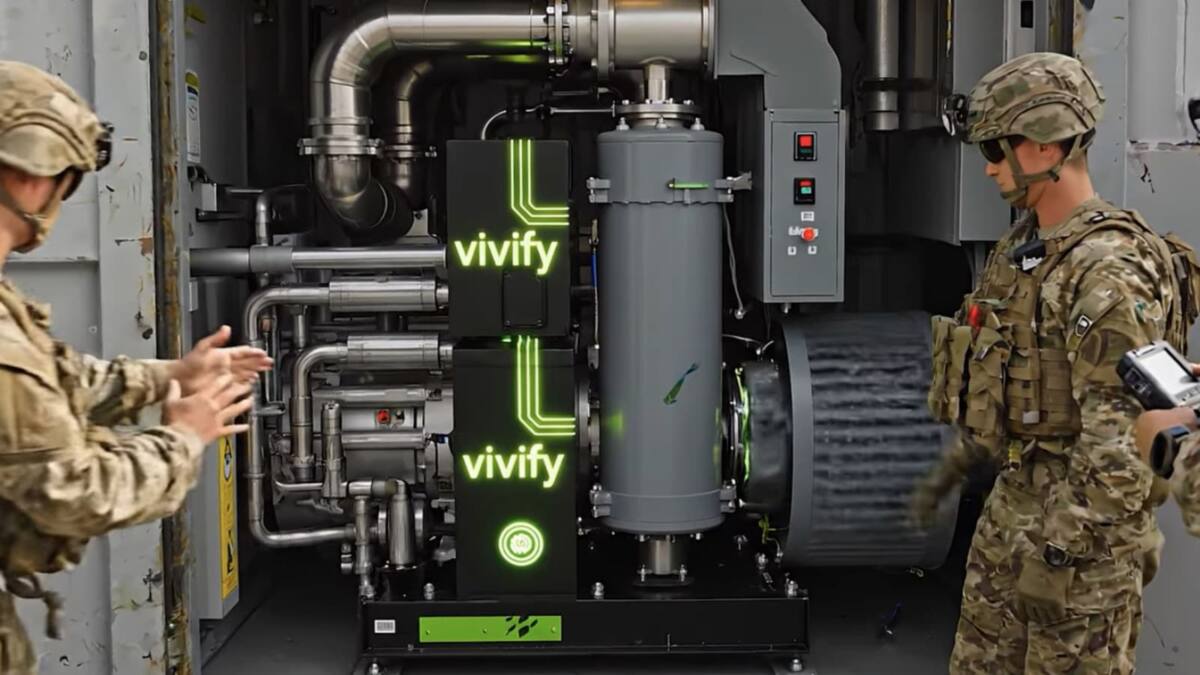
VIVIFY Technology has unveiled Flying Pig, a containerized 1 MW hydrogen power system aimed at places where the grid is either absent or inconvenient. The pitch is broad enough to catch the eye of AI data centers, remote industrial sites, and disaster zones – three markets that all need reliable power yesterday, not a lecture about energy transition.
The company says the setup is fully modular, so several containers can be linked together to raise output quickly. That is the kind of claim investors and site operators love, because it turns power capacity into something more like stacking shipping crates than building a conventional plant.
How VIVIFY’s hydrogen power system works
Flying Pig is based on VIVIFY’s HOG platform, short for Hydrogen Oxygen Generator. Its closed-loop approach is the hook: instead of moving compressed or liquefied hydrogen around, the system is filled with about two tons of water at the factory, then produces hydrogen on site through an integrated Pulsar array.
That hydrogen is then burned in multistage turbines to produce electricity and heat. VIVIFY says the process is 99% ”green,” a tidy figure that will invite questions from engineers but still lands well in a market where diesel generators remain the default backup plan.
AI data centers and remote sites are the target
The timing makes sense. AI data centers are hungry for power, grid connections are slow, and emergency response teams need something deployable without a month of infrastructure work. In that sense, Flying Pig is less a science-fair curiosity than a direct challenge to diesel, battery backup, and other stopgaps that are easier to ship than to love.
VIVIFY also says a five-year operating-cost forecast shows the system running far cheaper than grid-tied energy setups or industrial diesel generators. That is an aggressive claim, but not an implausible one if the company can keep maintenance and fuel handling as simple as it suggests.
A longer-term role in lunar base power networks
The company is already framing the technology beyond Earth, saying scalable systems like this could eventually support lunar base power networks. That is a long way from a container parked outside a data hall, but it does underline the real bet here: portable hydrogen systems could become one of the few serious alternatives to diesel when power has to travel to the mission instead of the other way around.
The open question is whether the economics survive contact with real-world deployment, especially once water logistics, turbine upkeep, and certification enter the picture. If the numbers hold, Flying Pig could find a niche fast; if they do not, it will join the long list of clean-energy ideas that looked terrific in a render and less impressive on a muddy job site.