

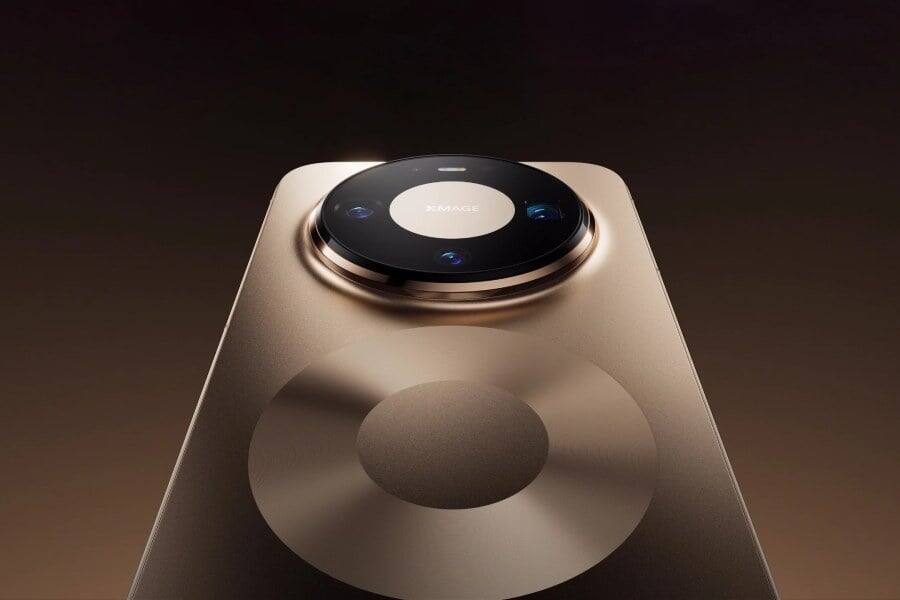
Huawei may be taking its camera hardware obsession one step further with the Mate 90 series. Fresh leaks suggest the phones could support dedicated external teleconverters, a move that would push the lineup closer to a modular imaging setup rather than just another flagship with a better zoom spec.
The claim comes from a Weibo leaker, who says Huawei is working on accessories for the Mate 90 family and has also changed suppliers for the external teleconverters. If that pans out, the add-ons may end up looking and behaving differently from earlier versions. That fits Huawei’s pattern: the company has been trying to build its own camera ecosystem instead of leaning on the usual ”bigger sensor, better zoom” routine that most rivals still sell as innovation.
Huawei Mate 90 camera setup could add teleconverter support
A teleconverter is a clip-on optical accessory that extends focal length, giving users true optical zoom rather than a digital crop dressed up with software tricks. Huawei’s Pura 90 series was its first official attempt to create a first-party ecosystem around that idea, and the Mate 90 could now inherit the same approach. The rumor also says the Mate 90 series will get a fresh design to make room for the expanded camera setup, which sounds less like a cosmetic tweak and more like a hardware compromise made in the service of zoom bragging rights.
That camera push may not stop with external accessories. Earlier leaks pointed to the Mate 90 Pro Max and Mate 90 RS getting dual periscope telephoto cameras, with one prototype reportedly under test using a 10x optical zoom lens. If Huawei follows through, the company could end up offering both built-in long-range zoom and external optical extensions, which is a much louder statement than the incremental telephoto upgrades most phones get.
Kirin chip details point to a bigger leap
Huawei’s silicon plans look just as ambitious. The 2026 Kirin processor expected for the Mate 90 series is rumored to use a new LogicFolding architecture, stacking key logic circuits vertically instead of depending only on smaller transistor nodes. According to the leak, that could lift transistor density by as much as 53.5 percent, while performance is said to be approaching Intel’s 18A process and early-generation TSMC 3nm technology.
The numbers attached to the chip are aggressive: power efficiency on performance cores could improve by 41 percent, and peak clock speeds may rise by 12.7 percent. If even part of that sticks, Huawei would have a stronger story for the Mate 90 than camera theatrics alone. The real question is whether the company can deliver both the hardware ambition and the volume production needed to make it matter outside the rumor mill.
Fall launch timing keeps the wait short
Huawei has already hinted at a fall 2026 launch for the Mate 90 series, which lines up with the Mate 80 series arriving in November. That timing suggests the company is keeping its flagship cadence tight and possibly trying to use the Mate line to showcase its latest camera ecosystem and chip design in one shot. If the teleconverter rumors are real, expect Huawei to lean hard into zoom as the headline feature, because it gives the brand something rivals can’t easily copy with software and marketing glue.
- External teleconverter support is tipped for the Mate 90 series.
- The accessories may come from a new supplier.
- Leaked prototypes point to dual periscope telephoto cameras on the Mate 90 Pro Max and Mate 90 RS.
- The rumored Kirin chip could use LogicFolding architecture and boost transistor density by as much as 53.5 percent.
Huawei has made a habit of turning camera hardware into a platform story, and the Mate 90 series may be the next proof point. If the accessory ecosystem, dual telephoto setup, and new Kirin design all land together, the bigger issue won’t be whether the phones can zoom. It’ll be whether anyone else can answer without borrowing the same playbook.