

Huawei says its high-performance chips could reach transistor density comparable to 1.4 nm-class technology within five years, a bold claim that puts China’s most visible chipmaker squarely in the race to shrink the gap with TSMC and other leading foundries. The company floated the target at the IEEE International Symposium on Circuits and Systems in Shanghai, but stopped short of offering independent measurements or a roadmap for how it plans to get there under tight export controls.
That omission matters. In advanced semiconductors, density claims are only as convincing as the process details behind them, and Huawei has every incentive to sound aggressive while staying vague. Still, the benchmark itself tells you where the pressure point is: the fight is no longer just about making chips faster, but about proving China can keep advancing even when access to cutting-edge lithography gear is constrained.
Huawei’s 1.4 nm chip density target
Huawei framed the goal as a high-level density milestone for its future performance chips, not as a disclosed manufacturing process. That leaves plenty unanswered, but the ambition is clear enough. If the company can move closer to that class of transistors, it would signal progress in one of the few areas where China still faces a painful technology gap against the best global manufacturers.
The timing is interesting, too. TSMC already uses 2 nm in mass production and says it plans to move to 1.4 nm technology by 2028. Huawei is essentially telling the market that it wants to compress that gap with sanctions in place, which is either a serious engineering roadmap or a very expensive piece of industrial theater.
Logic Folding and Kirin 5G chips
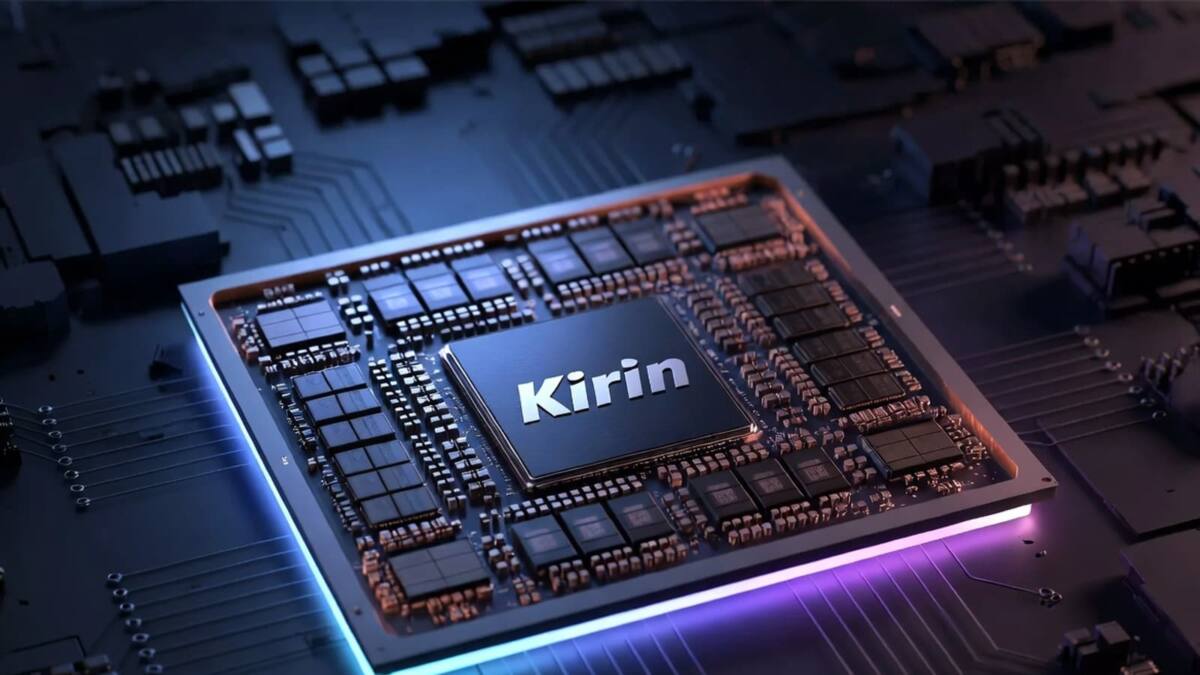
The company has already been teasing a different route to better performance: ”Logic Folding,” a technique Huawei says will help improve Kirin 5G processors this year. One of Huawei’s executives previously said the next-generation Kirin SoC using that approach is due in autumn 2026, suggesting the company is trying to squeeze more out of architecture and design as much as raw process shrink.
- Huawei’s stated target: chip density comparable to 1.4 nm-class technology within five years.
- TSMC: 2 nm already in volume production, with 1.4 nm planned by 2028.
- Huawei’s near-term play: Kirin 5G processors with ”Logic Folding,” due in autumn 2026.
The bigger question is whether Huawei is setting expectations too high for a market that has learned to separate announcements from manufacturing reality. If the company can show even partial proof of the density gains it is hinting at, pressure will build on rivals and policymakers alike. If not, the gap between headline and hardware will do what it usually does: widen quietly, then embarrass somebody later.