

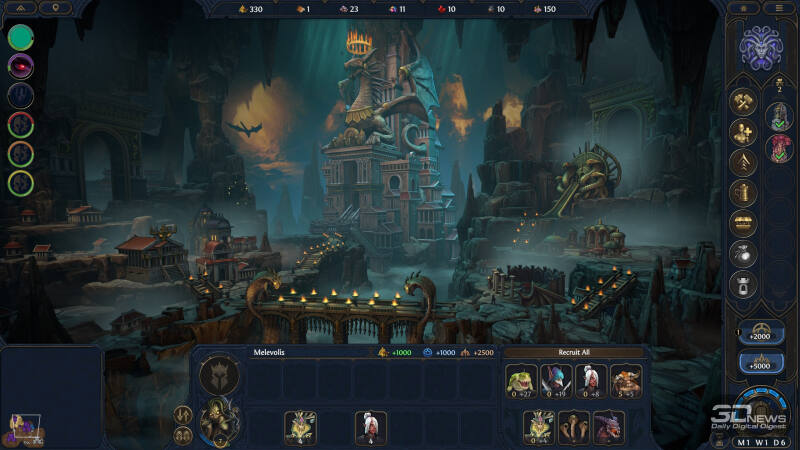
Heroes of Might and Magic: Olden Era is trying to do the hardest thing in strategy gaming: bring back the feeling of Heroes of Might and Magic 3 without simply embalming it. In this Heroes of Might and Magic: Olden Era preview, the game looks like a project that knows exactly what fans miss, then quietly tweaks enough systems to stop it from feeling like a museum exhibit.
The pitch is familiar: build towns, gather resources, recruit creatures, roam the map, and smash rivals in turn-based combat. But Olden Era adds enough new machinery to make every familiar decision a little sharper, from faction-specific laws to a split between battlefield magic and adventure-map spells. That is the smart part. The risky part is that early access balance is still wobbling, which means some factions can feel brutally efficient while others are still waiting for their tuning pass.
Faction laws and city planning
City management still revolves around the classic triangle of income, army production, and magical growth, but Olden Era layers in systems that push each faction toward a clearer identity. A city or hero can generate law points, which are spent on faction-specific upgrades: Necropolis can lean harder into necromancy, increase daily gold income, or buff creature stats. Some laws go further, like ”Fields of Death,” which forces battles into home territory and hands Necropolis another home-field advantage.
The town buildings also have more personality than pure spreadsheet logic. Necropolis can convert captured creatures into undead of the matching tier, while the Roy faction – yes, the Inferno-alike you will instinctively call Inferno – can reset a hero to level 1 for a permanent stat bonus. Dungeon gets a spy network that removes fog of war entirely and doubles weekly creature growth, which is the sort of bonus that sounds mild until it wins you the map.
Battlefield magic and concentration
Magic has been split in a way that feels overdue rather than ornamental. Adventure magic covers mobility and map tricks such as City Portal, Shadow Flight, and Dimension Door, while combat spells now sit behind a more deliberate progression path. To learn battlefield magic, you first need the right mage guild, then you buy the spell with resources such as gemstones, emeralds, or ore. Higher-level spells cost more, which means your city build order suddenly matters in a much less abstract way.
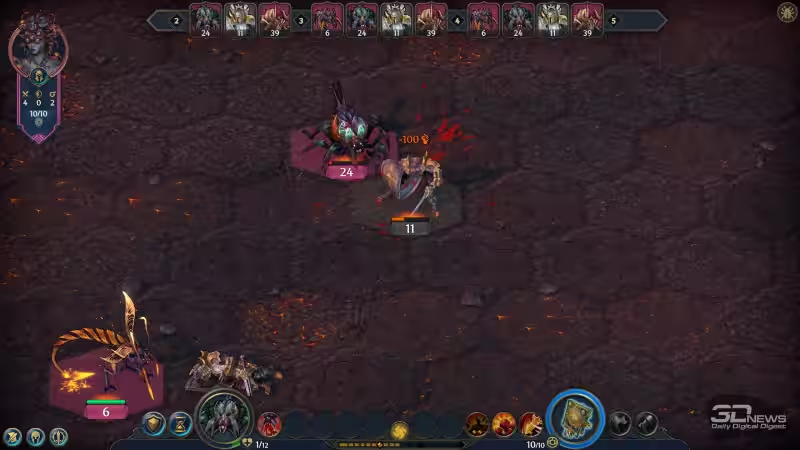
Combat itself adds concentration, a resource earned when troops attack or take damage. Six points convert into one charge, and that charge can power special actions such as a hero strike on a chosen enemy. Some factions get stranger toys: Roy heroes can lay an egg cluster and later hatch another allied unit, while troops can spend concentration on stronger abilities. It is a decent modern twist because it rewards staying active instead of waiting for the perfect spell and then hoarding it until the heat death of the universe.
Units, modes, and early-access rough edges
Creature design sticks close to the series formula but adds more branching than before. Units have traits that govern damage, defense, counterattacks, multi-target attacks, and immunity to certain effects, and each town offers seven tiers of creatures with two upgrade paths. That means a Dungeon cave dragon can become either a black dragon or an ash dragon, and the choice is not cosmetic; the branch changes stats and abilities, and you can later move a creature to the other evolution path if needed.
There is a good amount of game here already: a nonlinear campaign, scenario maps, the classic conquest mode, a single-hero challenge variant, and a dedicated arena for prebuilt fights against AI or another player. Multiplayer is present too, including hotseat. The catch is that early access still shows its seams – online sessions can disconnect, the AI can be aggressively rude even on easier settings, and balance is uneven enough that some runs can end in the first week. Developers are patching regularly, which is exactly what early access is supposed to look like when the plan is serious.
Heroes of Might and Magic: Olden Era release date and PC requirements
Heroes of Might and Magic: Olden Era is scheduled for 30 April 2026 on PC, with text localization and an age rating of 13+. Minimum specs are Intel Core i3-10300 or AMD Ryzen 3 3100, 8 GB of RAM, a DirectX 12 graphics card with 4 GB of memory such as GeForce GTX 1650 or Radeon RX 5500 XT, 8 GB on SSD, internet access, and Windows 10 or 11. Recommended specs climb to Intel Core i5-12400T or AMD Ryzen 5 5500, 16 GB of RAM, and a DirectX 12 GPU with 6 GB of memory such as GeForce GTX 1660 or Radeon RX 5600.
The one thing that feels less convincing than the systems is the story presentation. The illustrated cutscenes with animated flourishes do the job, but they look cheap beside the rest of the game. Still, the bigger picture is encouraging: this is not a clone that worships the past from a distance. It borrows the old rhythm, then keeps adding knobs to turn. If the balance team can tighten the rough spots, Olden Era may end up doing what few successors to Heroes ever have: giving fans a reason to stop replaying the old one for a while.