

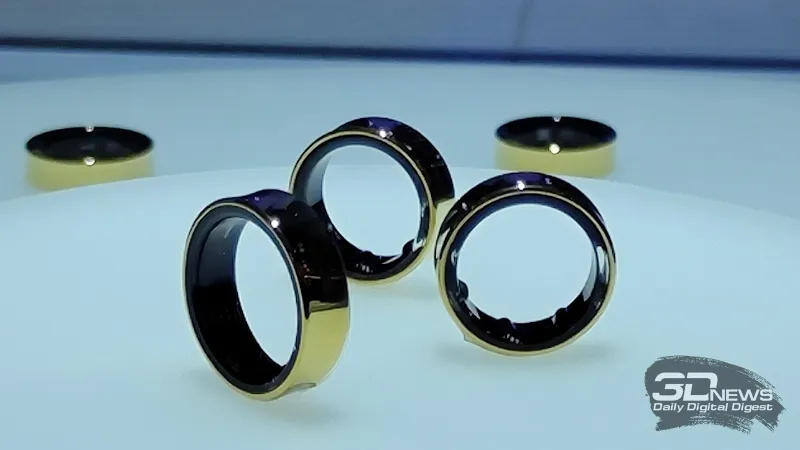
Samsung has finally acknowledged that Galaxy Ring 2 is in the works, and the company is already signaling that the next smart ring will try to stand out less through sensors and more through software. That is a sensible move in a category where the hardware inside competing smart rings is starting to look frustratingly similar.
The confirmation came from Hon Pak, senior vice president and head of Samsung’s digital health team, in an interview with Forbes. He did not give a launch date or spell out new features, but he said Samsung sees services and software as the real differentiator for wearables like this. In other words: the ring may track you, but the ecosystem is what Samsung wants to sell.
Galaxy Ring 2 will lean on services, not just sensors
Pak’s point was blunt. If competitors are using similar sensors, then the winner is the one that layers the most useful services on top. That lines up with Samsung’s broader playbook across phones, watches, and health features: keep users inside the family, then make the software feel like the reason to stay there.
The first Galaxy Ring already fits that strategy. It works with most modern Android phones, but some features are reserved for Samsung Galaxy devices, which is a tidy way of saying cross-brand generosity is not the priority. Apple’s iPhone support remains absent for now, though Pak did not shut the door on it completely.
iPhone support is still the awkward question
That unanswered iPhone question matters because the smart ring market is still young enough that every platform decision shapes adoption. Rival makers have already shown that ultra-small wearables live or die on app quality, battery life, and how annoying they are to set up, not just on a spec sheet that sounds good in a keynote.
Pak’s hints suggest Samsung may keep Galaxy Ring 2 tightly tied to its own ecosystem at first, then decide later whether broader compatibility is worth the trade-off. If that sounds familiar, it is because Samsung has done this dance before with other devices: launch inside the fence, then consider opening the gate once the product has enough momentum.
What Samsung is signaling for the next ring
- Galaxy Ring 2 is confirmed to be in development.
- Samsung is positioning software and services as the main selling point.
- iPhone support has not been confirmed, but it has not been ruled out either.
- The original Galaxy Ring still works best inside Samsung’s own ecosystem.
The interesting part is what Samsung is not saying. A 2027 launch had already been mentioned by unofficial sources, and the company still has not contradicted that timeline. So the safest bet is that Galaxy Ring 2 arrives as a more polished health device with stronger app logic, rather than a dramatic hardware rewrite. For Samsung, that may be enough; for everyone else, the waiting game continues.