

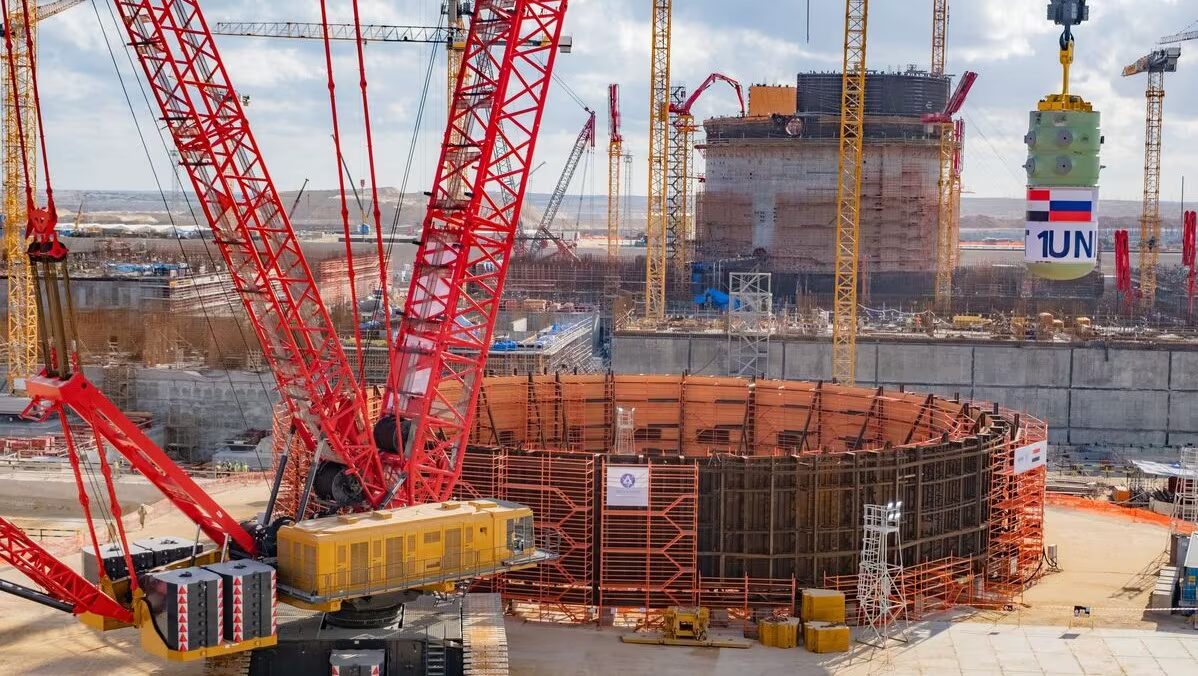
Rosatom plans to deliver nuclear fuel to Egypt’s El-Dabaa power plant in the first half of 2027, with grid connection scheduled for 2028. The announcement came from Rosatom CEO Alexey Likhachyov while discussing progress on the plant’s second reactor unit. This project marks Egypt’s first entry into atomic power generation and represents another major overseas deal for Rosatom’s VVER-1200 reactor technology.
The workforce at the El-Dabaa construction site is expected to grow to 30,000 workers in the coming weeks, Likhachyov added. Meanwhile, production and delivery of key equipment-reactor pressure vessels, steam generators, and other components-are underway, with Russian factories fabricating parts simultaneously for the second, third, and fourth units.
The plant sits on the Mediterranean coast about 300 kilometers northwest of Cairo. It will house four 1,200-megawatt units powered by Generation 3+ VVER-1200 pressurized water reactors, totaling 4.8 gigawatts of installed capacity. This represents a significant boost to Egypt’s power generation, which the International Energy Agency notes is rapidly growing due to population increases, industrial expansion, and soaring demand for air conditioning.
For Rosatom, El-Dabaa is another key export milestone. The VVER-1200 reactors are already operational at Belarus’s Ostrovets plant, and beyond Russia, Rosatom is building similar plants in Bangladesh, Turkey, and Hungary. Egypt’s project stands out not only for its scale but also its financing structure: the main portion of the estimated $25 billion construction cost is backed by a Russian state loan.
If the timeline holds, Egypt will produce its first nuclear-generated electricity about a year after the fuel arrives. Historically, the commissioning phase and grid connection are the most challenging parts of bringing VVER-1200 units online, a process that will begin with preparations for the physical start-up of the first unit in 2027.
El-Dabaa will join a select group of countries operating nuclear plants with advanced Generation 3+ technology, reflecting Egypt’s ambitions to diversify its energy mix and meet rising demand. Monitoring Rosatom’s management of this complex overseas project could offer insights into the company’s ability to compete with Western and Asian nuclear suppliers amid shifting global energy geopolitics.