

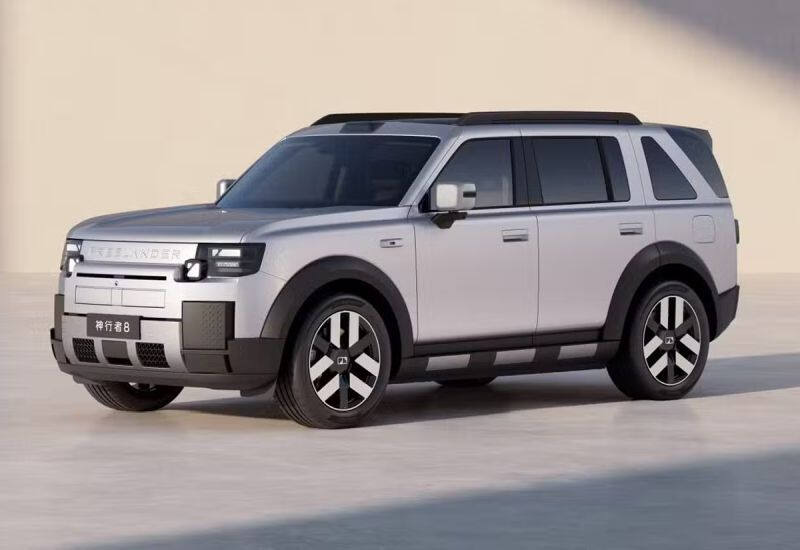
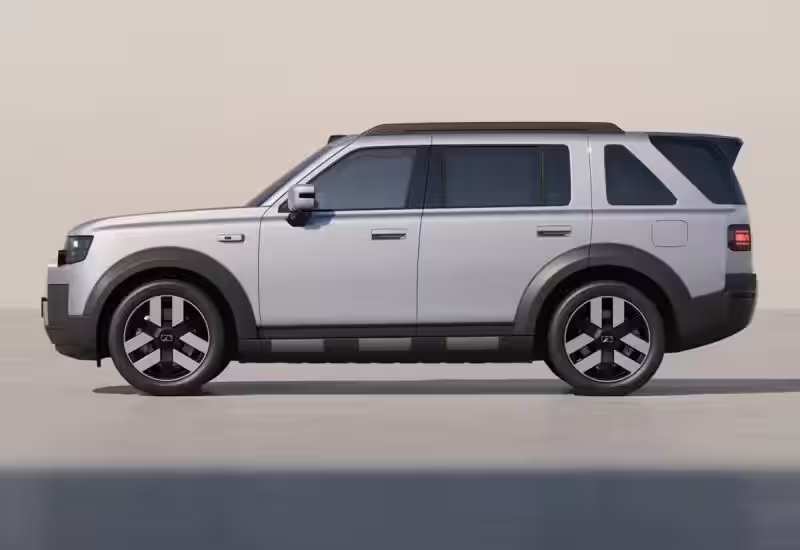
Jaguar Land Rover is bringing back the Freelander name in China, but the badge now points to something very different: a standalone electric SUV line built with Chery and powered by a small army of Chinese and American tech suppliers. The first model, Freelander 8, is due in the second half of this year, and it is being pitched straight at the premium off-road EV crowd.
That is already the interesting part. Freelander used to sit under Land Rover; now it is being reborn as its own brand, which is a neat way of saying JLR gets to keep some heritage without pretending this is the old model with a fresh paint job. In China, where local partnerships and fast-moving EV launches matter more than nostalgia, that is probably the smarter play.
The new Freelander family will ride on the iMax platform, which can support different powertrains, so internal-combustion versions are also on the menu. Even so, the lineup is being designed around battery-assisted propulsion, and the styling of Freelander 8 echoes the Freelander Concept 97 shown in Beijing this week.
CATL battery, Huawei software, and Qualcomm silicon
The supplier list reads like a tech expo guest list. CATL is handling the traction battery and has adapted it to the customer’s specification; the pack supports 350 kW charging and, on the claims given, can recharge in about 10 minutes on an 800 V architecture.
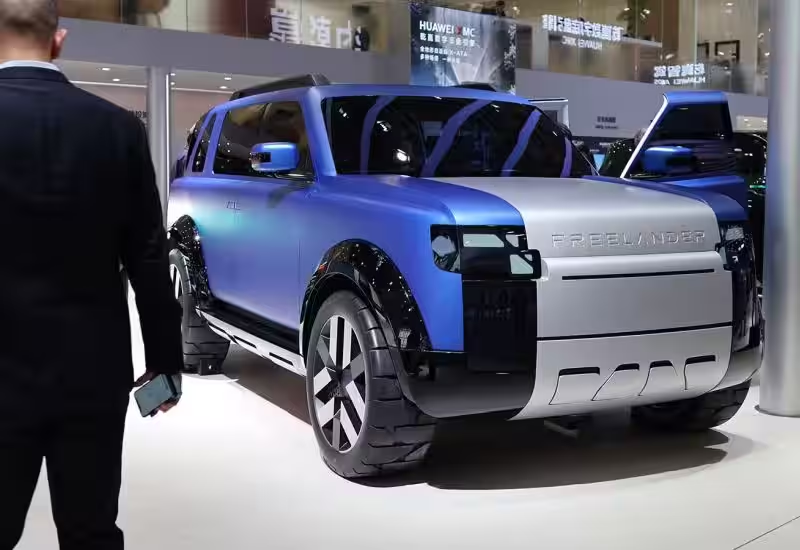
Huawei is responsible for the electronic systems and software, including a 96-channel lidar for driver-assistance functions. The company is also expected to provide more advanced automated driving modes for off-road use, which sounds sensible on paper and slightly terrifying in the real world if the terrain gets ambitious. Qualcomm, meanwhile, is supplying the Snapdragon 8295 processor.
Six Freelander models are planned for the next five years
The bigger plan is more revealing than the first car itself: the revived marque wants six new models for China over the next five years, with exports also on the table. That is a sign this is not just a nostalgia exercise, but a proper attempt to carve out a premium EV sub-brand in the world’s most competitive auto market.
It also shows how far the industry has moved. Five years ago, a reborn British off-roader might have leaned on heritage and diesel credibility. Now it leans on 800 V charging, lidar, and a battery partner that can keep up with the pace of Chinese EV buyers. That is not subtle, but subtle rarely wins in this segment.