

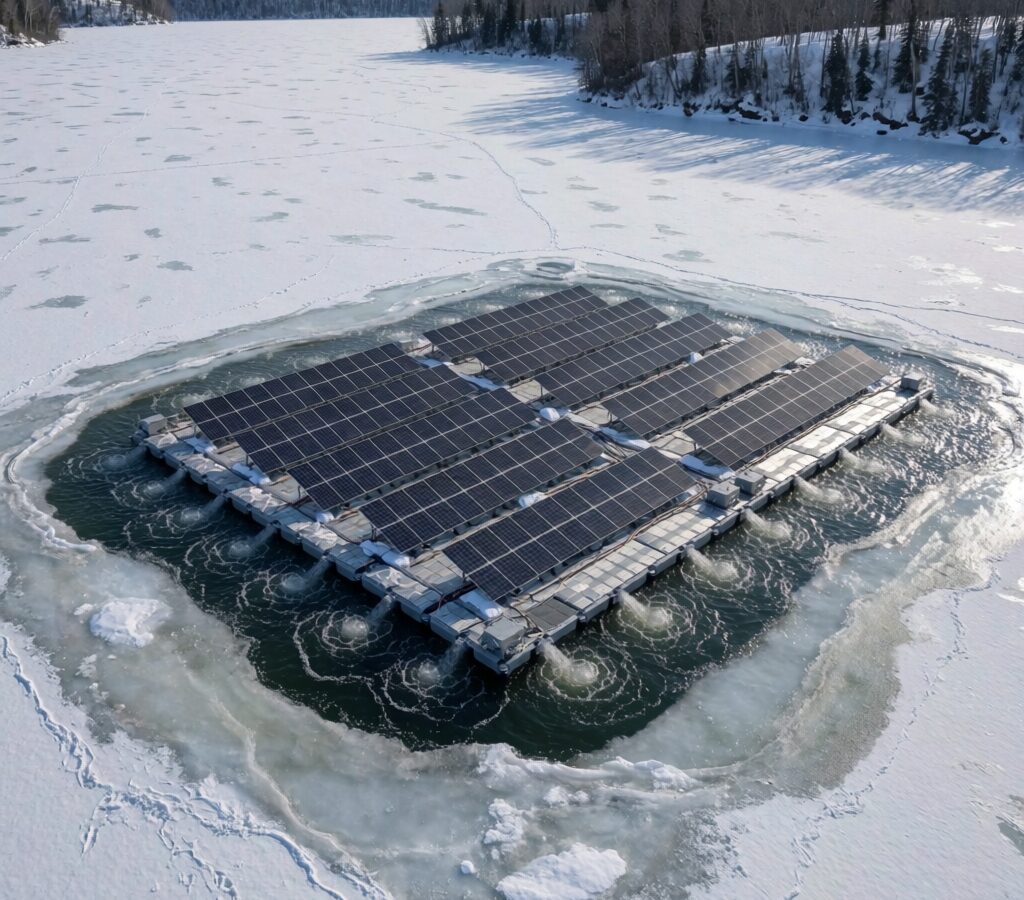
Canadian researchers have built an ice-proof floating solar array that keeps working on frozen water by pairing flexible panels with waterproof foam and a simple trick borrowed from aquaculture: pumping air from below to keep a patch of water from freezing over. The experimental setup in Ontario produced 7.7 MWh over a year, cost very little to keep alive, and could point to a practical path for solar in places where winter ice has been the deal-breaker.
The idea is refreshingly low-tech for a problem that has tripped up a lot of more ambitious hardware. Instead of relying on heavy plastic platforms that can crack under ice, the system uses buoyant sheets of foam as the base for the panels, while rising bubbles mix the water and bring warmer layers upward. The pump itself consumes only about 0.02% of the energy generated by the solar panels, which is the sort of efficiency ratio that makes engineers smile and accountants relax.
How the ice-proof floating solar array works
Floating solar has been growing for years because it saves land and can reduce evaporation, but cold climates have always been the awkward exception. Ice can damage the raft-like structures that hold conventional systems together, and once that starts happening, the economics get ugly fast. The Canadian team’s answer was to keep a small area of the water moving, which prevents the surface from locking up around the panels.
The result is a system that can survive winter conditions without turning into an expensive seasonal ornament. Tests in Ontario showed it kept producing electricity through freezing weather, and the researchers say it was about 2.7% more efficient than traditional floating solar platforms. That may not sound dramatic, but in energy engineering small gains matter when they come with lower hardware stress and fewer winter failures.
A side benefit: less water lost to the air
There is another reason water utilities and farm operators may care about this design: it covers part of the surface from sun and wind, which cuts evaporation. The researchers estimate that if half of a small pond were covered with the system, hundreds of cubic metres of water could be saved every year. That is the kind of unglamorous number that often decides whether a clean-energy project gets taken seriously outside the lab.
For now, the technology is aimed at northern regions where ice has made conventional floating solar hard to justify. The next test is obvious: larger bodies of water and commercial sites, where maintenance, scaling, and winter durability will matter more than a neat lab result. If those trials go well, the bubbles may end up doing more for solar than a lot of glossy hardware ever has.