

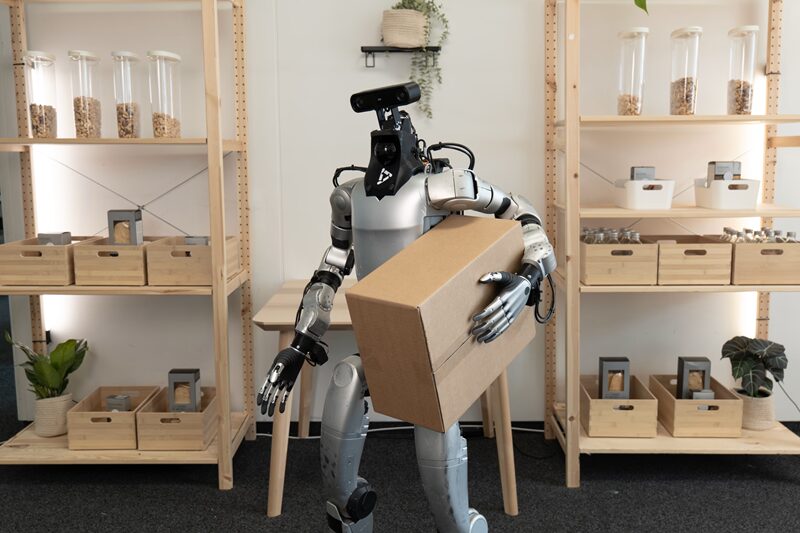
Swiss startup Flexion Robotics thinks humanoid robots do not need humans standing behind them like nervous driving instructors. Its pitch is simple: teach robots the building blocks of work in simulation, let AI figure out how those skills fit together, and skip most of the teleoperation that still dominates many flashy demos.
That is a cleaner idea than the usual robot marketing parade of backflips, dance routines, and marathon runs. The real prize is not entertainment; it is repetition. Warehouses, offices, and factories are full of dull tasks that are hard for robots precisely because they are ordinary.
How Flexion Robotics trains humanoids in simulation
Flexion’s approach combines several AI layers. One model studies video of people doing a job and works out the action plan, while the software matches simulated skills to those videos and then applies them in the physical world. If the target is the office post room, the system can infer that the robot needs to open specific doors and use the elevator rather than just ”go there somehow”.
The same stack also handles balance, movement, and limb control. That is important, because a humanoid that can identify a task but faceplant on the way to the shelf is still a very expensive mistake.
Why simulation beats teleoperation for routine jobs
Most robot demos that look impressive have been trained with teleoperation, where a human guides the machine through the motion. Flexion argues its method is more efficient and more reliable because it relies on simulation first and keeps human input to a minimum.
That matters because humanoid robotics has a scaling problem, not a headline problem. Training each new behavior by hand is slow and expensive, while simulation can generate far more practice runs than a human operator ever could. It is the same logic that pushed self-driving teams toward synthetic data and reinforcement learning: more attempts, fewer bruises.
Nikita Rudin and the reinforcement learning bet
Nikita Rudin, Flexion’s co-founder and chief executive, says the company’s ”secret ingredient” is heavy use of reinforcement learning. He says it runs through every layer of the stack, from the main AI model to simulation and actuator control. Rudin previously worked at NVIDIA, which is a useful credential in a field where everyone is trying to make machines learn faster than budgets run out.
Flexion also says it is working with several robotics companies that build different humanoid platforms, which could widen the number of robots able to use its software. That kind of cross-platform ambition is smart: the winners in humanoid robotics may be the companies that make the brains, not just the bodies.
The bigger question is how quickly this approach can move from polished warehouse and office demos to messy, real-world jobs. If simulation-driven training keeps improving, the first robots to become truly useful may not be the ones that look the most human – just the ones that learn fastest.