

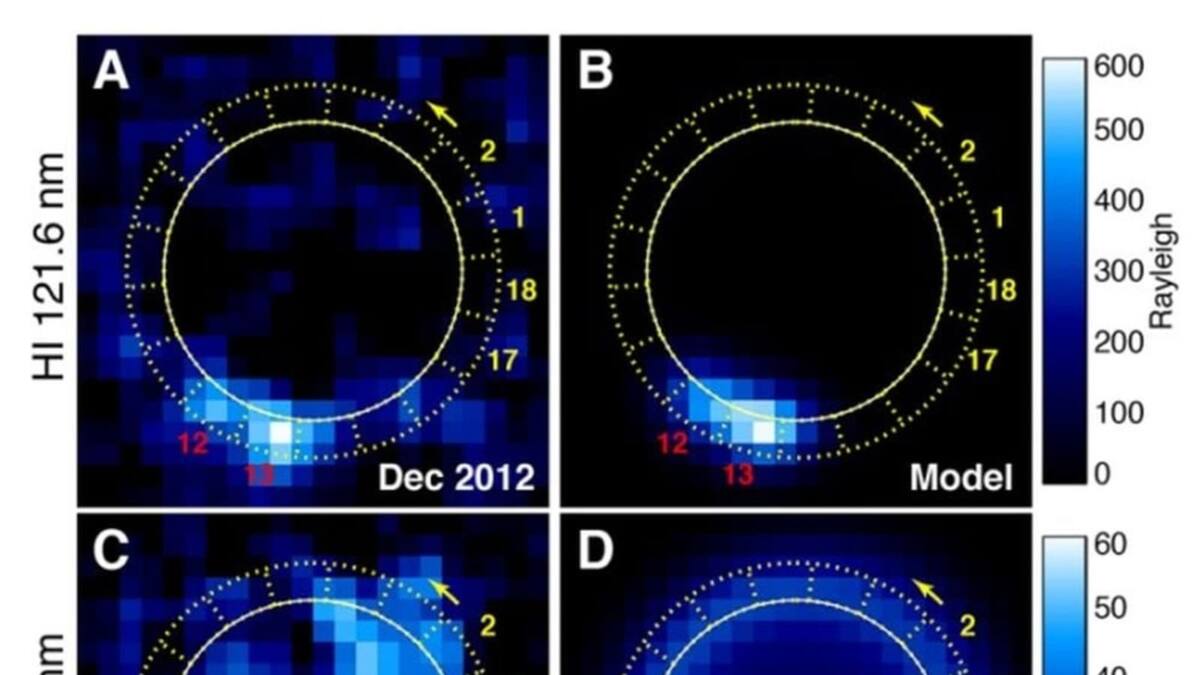
For more than a decade, Europa looked like the solar system’s best bet for a naturally sampled ocean world: water vapor jets, blasted high above the moon’s ice, would let spacecraft sniff the chemistry without drilling a hole through the crust. Now, that story has been pulled apart by a reanalysis of Hubble data, and the famous 200-kilometre plumes have been downgraded to a mix of statistical noise, pointing errors, and background hydrogen.
The twist is deliciously awkward. The new paper is led by Lorenz Roth, the same researcher who helped author the 2014 study that made Europa’s geysers famous. Science does that sometimes: it builds a headline, then spends years stress-testing it until the headline either survives or collapses. Here, it collapsed.
Why the original Europa plume claim looked so strong
The original idea was seductive because it fit the physics. If Europa’s buried ocean leaks into space through cracks in the ice, a flyby mission can analyse that material directly instead of trying to bore through an ice shell that is many kilometres thick. That is exactly the kind of shortcut planetary scientists dream about, and it helped shape NASA’s Europa Clipper mission, which is already headed for the Jupiter system and is due to begin flybys in 2031.
The 2014 paper pointed to ultraviolet observations from Hubble and claimed two plumes reaching up to 200 kilometres. A follow-up in 2016 found hints of activity in 3 of 10 observations, but even that team warned that systematic errors might be lurking in the data. Turns out ”might” was doing a lot of work.
What changed in the new Hubble analysis
The updated study went back over 14 years of Hubble spectroscopy taken when Europa was sunlit. The key problem was not a missing plume but a tiny mismatch in where the moon sat on the detector: shift Europa by just one or two pixels, and the spectrum can look very different. Once the team corrected the alignment and accounted for normal hydrogen glow, the dramatic geysers turned into ordinary background variation.
- Claimed plume height: up to 200 kilometres
- Confidence in the original detection: 99.9%
- Revised confidence: below 90%
- Data span rechecked: 14 years
The result is less glamorous but more plausible: Hubble was probably seeing Europa’s distributed hydrogen exosphere, built by radiation breaking down surface ice, with some of the signal even coming from Earth’s own extended corona. In other words, the telescope may have caught the atmosphere around the observation, not fountains from the moon.
Europa Clipper still has a job to do
This does not kill the case for a hidden ocean under Europa’s ice. It just removes the easy sampling trick. The geologic evidence for liquid water is still there, and so is the logic that makes Europa one of the most interesting places in planetary science. What changes now is the mission profile: Europa Clipper may have to work harder to infer what the moon is hiding, because the surface is not volunteering samples into space.
The bigger lesson is that planetary science is often built on fragile detections that look permanent right up until someone reprocesses the data. Europa’s missing geysers are a reminder that a dazzling result can survive for years, shape mission planning, and still be reduced to a coordinate slip. The moon is still worth visiting. It is just less helpful than advertised.
Europa Clipper should settle the argument when it reaches its target and begins those flybys in 2031. The open question is whether the mission finds a quieter ocean world than hoped, or a more complicated one that never needed geysers to be interesting.