

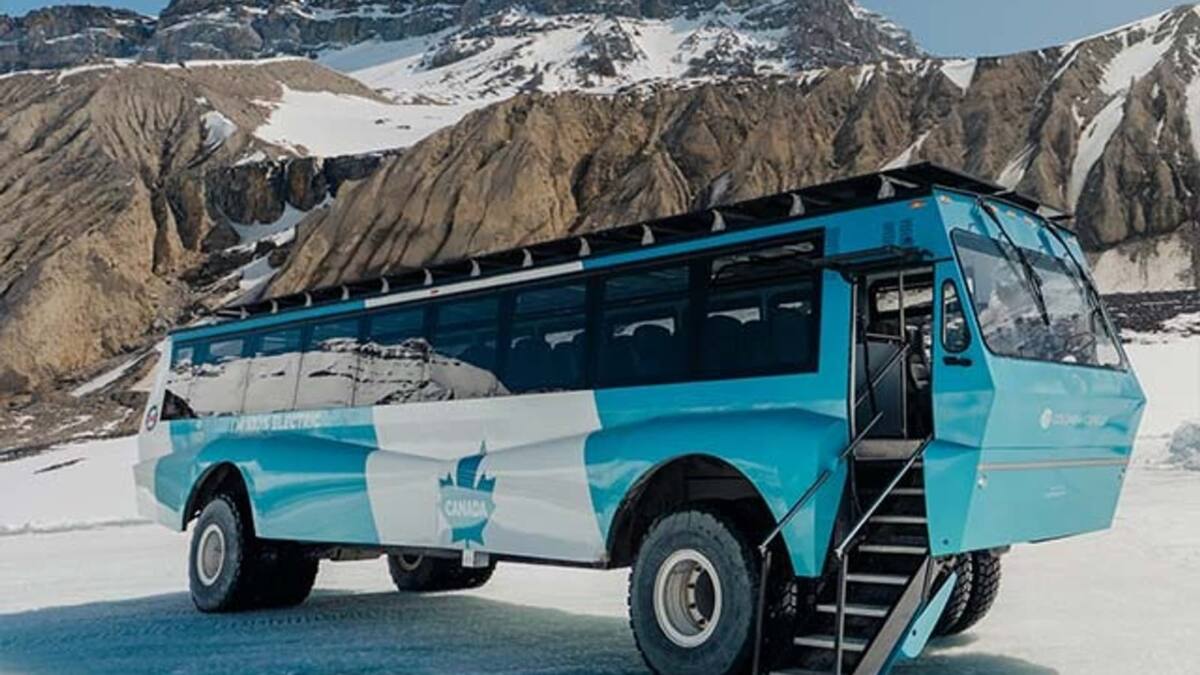
Canada’s Columbia Icefield has started using the world’s first fully electric Ice Explorer for tourist trips, swapping diesel noise for quiet glacier travel at Jasper National Park in Alberta. The new electric Ice Explorer is more than a clean-tech vanity project: it is a live test of whether heavy-duty tourism transport can work on ice, in cold weather, and far from easy charging infrastructure.
That makes this launch more interesting than a standard fleet upgrade. Electric buses are already spreading in cities, but glacier transport is a different beast entirely, where weight, traction, battery temperature, and comfort all matter at once.
A ground-up rebuild for glacier duty
The Ice Explorer was developed by Pursuit Attractions and Hospitality with Noble Northern, a company focused on heavy electric vehicles. Instead of converting an existing diesel machine, engineers kept only the upper passenger cabin and redesigned the chassis and powertrain from scratch.
The result is a frame that is more than 50% lighter than the original, which should help efficiency and traction on ice. Passenger comfort gets a boost too, thanks to air suspension.
Battery size, range, and charging aids
The vehicle uses a 528 kWh battery with a thermal management system and can complete up to 30-35 glacier trips on a single charge. That is the kind of range planners need if they want to run a tourist operation without turning the icefield into a charging depot.
- Battery: 528 kWh
- Range: up to 30-35 trips without recharging
- Efficiency tools: regenerative braking
- Solar support: 12 bidirectional panels on the roof
The solar array is not doing all the heavy lifting, but it helps. The roof panels recharge the battery in sunny weather, and that sort of assist would have sounded unrealistic only a few years ago, according to Noble Northern president Tye Noble. Heavy transport in extreme environments is becoming one of the more convincing proving grounds for electrification.
Why the company started with one vehicle
Pursuit launched the electric Ice Explorer as a pilot, not a fleet-wide conversion. That is sensible: tourism operators hate surprises, especially the expensive kind, so testing one vehicle in real conditions is the least risky way to see whether full electrification is practical.
The company says the new vehicle is part of its Promise to Place sustainability program. It has already upgraded some diesel vehicles and replaced diesel generators with propane units, cutting carbon dioxide emissions by 30%. The electric Ice Explorer is expected to reduce CO2 by 200-300 kg a day compared with diesel equivalents.
A quieter ride could be the real selling point
For visitors, the biggest change may not be technical at all. Without a diesel engine rattling away, tourists can hear the glacier itself and, in theory, feel a little less like they are aboard machinery and a little more like they are inside the landscape.
The bigger question is whether this single vehicle becomes a one-off headline or the template for other extreme-environment tourist fleets. If the pilot holds up, glacier tours could become one of the rare cases where cleaner transport is also the more appealing ride.