

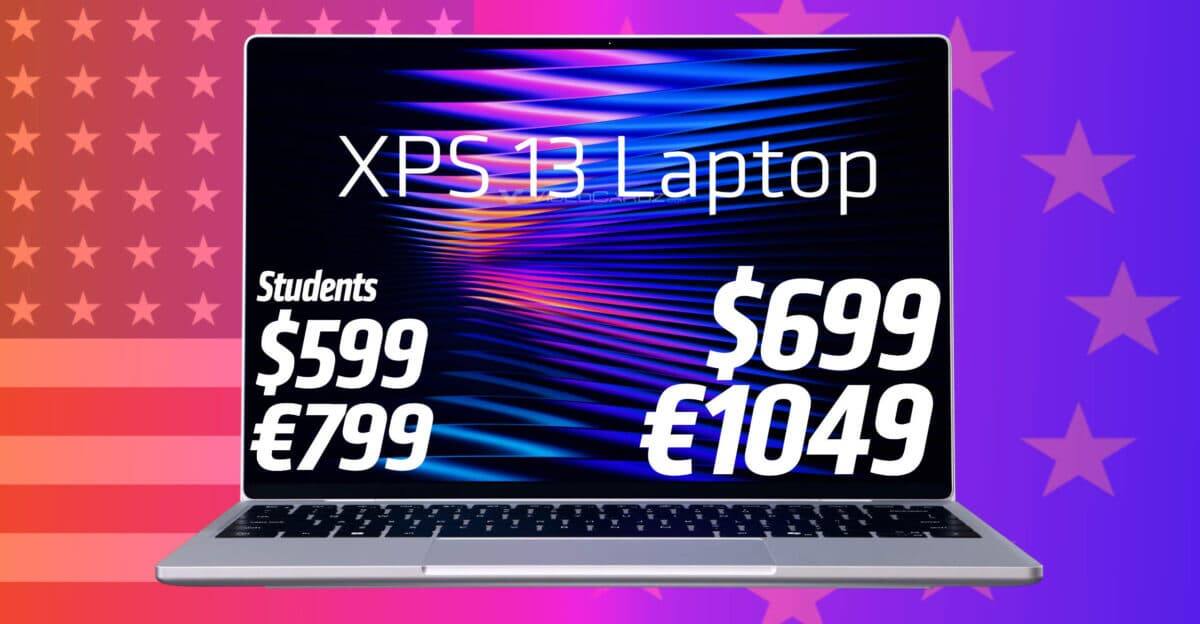
Dell pitched the XPS 13 DX13260 as a budget rival to Apple’s MacBook Neo, but the European pricing tells a more awkward story. Instead of a sharp undercut, the new XPS 13 arrives at 1050 euros, or 1220 dollars, which makes it far less ”budget” than the company’s launch pitch suggested.
That gap is partly explained by taxes, but it is still hard to square with Dell’s $700 message from Computex 2026. In Europe, where the base Neo sells for about 700 euros, Dell’s machine looks priced closer to a premium alternative than a value play. For students, the discount helps, yet even at 800 euros it is still above the $600 student price in the US.
XPS 13 DX13260 specifications
The hardware itself is more restrained than the price tag. Dell is using Intel’s Core 5 320 chip, paired with 8 GB of RAM and a 512 GB SSD, plus a 13-inch display with a 120 Hz refresh rate. Wi-Fi 7 and a 52 Wh battery round out the package, which sounds fine for an ultraportable but not especially aggressive for a machine this expensive.
- Processor: Intel Core 5 320
- Memory: 8 GB RAM
- Storage: 512 GB SSD
- Display: 13-inch, 120 Hz
- Wireless: Wi-Fi 7
- Battery: 52 Wh
Dell’s pricing makes Apple look less awkward
The real problem here is positioning. Dell appears to have built a machine meant to attack Apple’s cheapest notebook, but the European sticker price pushes it into a different class entirely. That is a familiar mistake in laptops: the headline spec sheet gets the attention, then regional pricing quietly rewrites the whole sales pitch.
If the Neo is the benchmark in Europe at around 700 euros, the XPS 13 DX13260 does not read like a direct answer. It reads like a more expensive option with a familiar XPS badge attached, and that is not the kind of surprise Dell wanted from a Computex launch.
Why the European price is hard to justify
The next question is whether Dell can justify the premium with real-world performance and battery life, because the current numbers do not do the company many favors. If this model lands in more regions with similar pricing, buyers may decide that Apple’s cheaper entry point is the less confusing deal. Strange times: the ”budget” Windows laptop is the one asking for the larger wallet.