

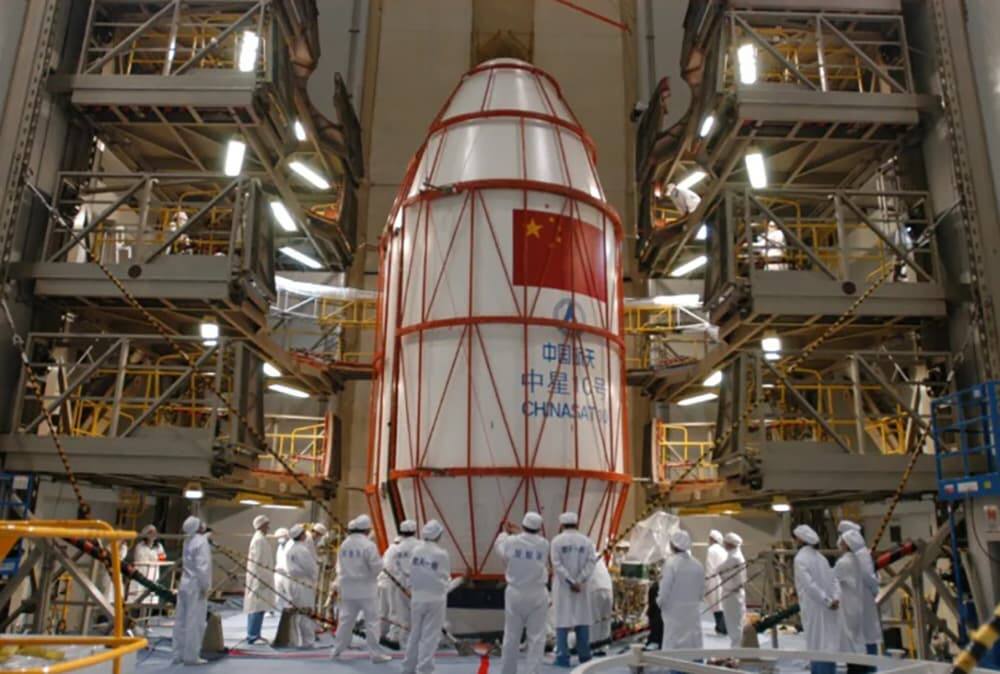
ChinaSat 10 was supposed to have aged out long ago, yet the Chinese communications satellite is still operating 15 years after launch. That kind of longevity is not just a nice anniversary; for a geostationary platform, it is a quiet endorsement of engineering, redundancy, and a bit of orbital stubbornness.
The spacecraft launched in 2011 and is still handling communications duties that once looked like they would belong to a much shorter-lived mission. It also marks an important milestone for China’s satellite industry, because ChinaSat 10 was built on the Dongfanghong-4 platform, the country’s first large geostationary communications bus designed to reduce dependence on foreign technology and push Chinese hardware into the export market.
Why Dongfanghong-4 mattered
Dongfanghong-4 was a technical stepping stone, not just another satellite frame. Chinese engineers had to develop large load-bearing structures, improve onboard reliability, and build systems robust enough to support bigger commercial ambitions. That effort later paid off with China’s first international communications-satellite contract, the kind of business result space agencies love to brag about because, this time, the bragging is justified.
At launch, ChinaSat 10 was the most capable member of the Dongfanghong-4 family. It carried a record number of transponders for the platform, stronger power generation, upgraded solar arrays, and a revised power system. It was also the first Chinese satellite to pair a domestic platform with a foreign payload, a useful reminder that even space programs keen on self-reliance still know when to borrow selectively.
What ChinaSat 10 has been doing up there
Over the years, the satellite has supported television broadcasting, corporate communications, distance learning, and telemedicine. Its capacity has also been used during disasters and emergencies, which is where aging communications satellites often earn their keep: when terrestrial networks are damaged, orbit suddenly looks very practical.
Its coverage was also the widest among Chinese satellites of its class when it entered service. That sort of footprint helped set the standard for later domestic systems, while the satellite market outside China kept moving toward more capacity, more flexibility, and, increasingly, more software-defined behavior.
Dongfanghong-4E raises the bar
China is already moving beyond the platform that made ChinaSat 10 important. The newer Dongfanghong-4E version is described as offering much higher payload capacity, support for hundreds of high-performance transponders, a hybrid propulsion system with electric thrust, and improved thermal control. It also brings artificial-intelligence elements that can diagnose faults and help restore function while the satellite is still in orbit.
That is the real story behind ChinaSat 10’s long life: it is both a survivor and a benchmark. The satellite may be old by space standards, but the platform it helped prove has evolved into something far more ambitious, and China clearly intends the next generation to last just as long – preferably with fewer surprises and a lot more capability.