

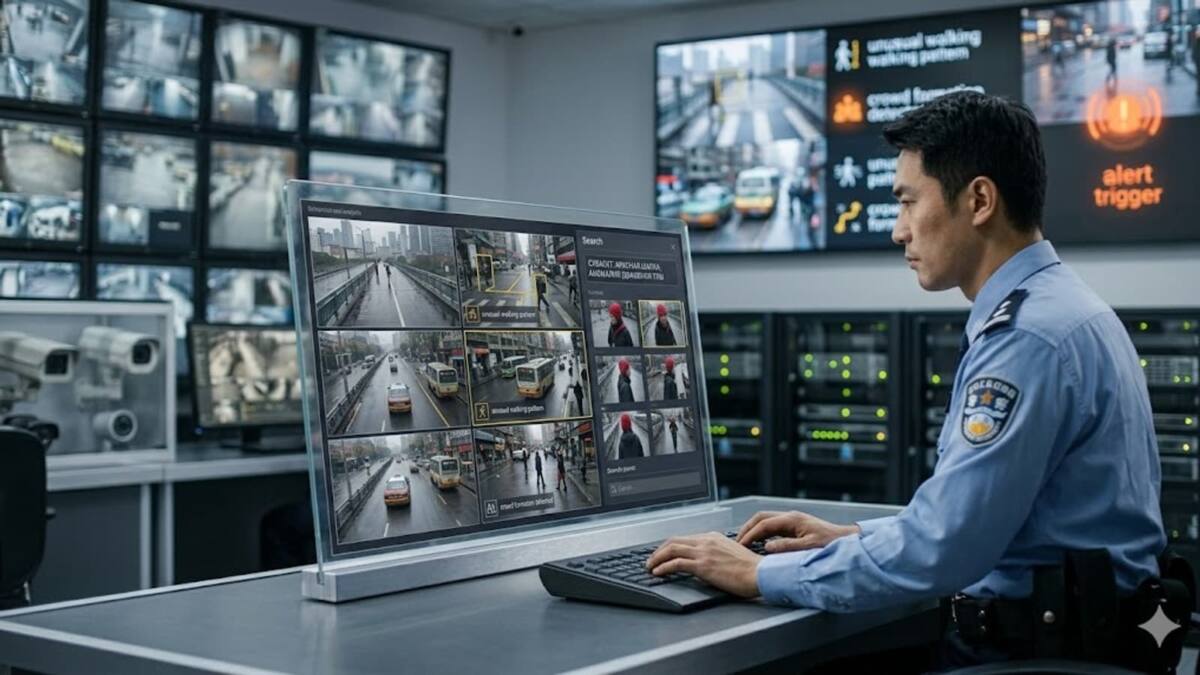
China is upgrading its vast camera network so it can do more than spot faces and license plates. The new setup, built around computer vision and language models from Hikvision and Huawei, is moving China’s AI surveillance cameras toward real-time behavior analysis, natural-language video search, and broader automated monitoring of public spaces.
That is a very different beast from the old, mostly reactive model. Instead of waiting to match a known person against a database, the system is being tuned to flag crowding, abrupt behavior changes, unauthorized access, and other patterns that software can treat as suspicious before a human ever takes a look.
From face recognition to behavior detection
The modernization touches both new deployments and existing infrastructure, according to procurement documents and market interviews cited in the report. That matters because China is not rebuilding from scratch; it is bolting AI onto a network that already reaches deep into daily life.
In practice, the upgrade turns cameras into a distributed analytics layer. Some systems can now search archives with plain-language prompts, so an operator can ask for something like ”woman in a red hat” and get the relevant clips back without manual scrubbing.
What local deployments already include
Procurement papers point to hundreds of AI-enabled cameras in specific regions. In Yaodu, in Sichuan, the plan includes about 175 cameras with intelligent video analysis, while Datong uses systems that can identify gender, posture, and clothing details. The rollout is also being done the practical way: in some places, older cameras stay in place while local servers are swapped for AI-capable compute boxes, reducing pressure on central data centers.
- Old model: identify known people and vehicles.
- New model: detect behavior, crowd patterns, and risky situations in real time.
- Search model: retrieve footage using text prompts instead of manual review.
Why the upgrade is moving now
The push appears to be tied to a 2024 order from Public Security Minister Wang Xiaohong after a string of violent incidents. That kind of trigger is familiar: security shocks often become the excuse for surveillance systems to expand, and the newer the software, the easier it is to justify as ”prevention” rather than plain old watching.
Human Rights Watch says the direction of travel strengthens mass monitoring of population behavior, while Anthropic has warned in an analysis that systems like this could scale faster in the coming years. China, in other words, is not just buying cameras; it is normalizing a model where the camera feed is only the raw material and the real product is inference.
The export question hanging over AI surveillance
The bigger story is what happens when a country with China’s procurement power turns surveillance into a software stack. If the approach proves cheap and effective, vendors and governments elsewhere will notice, especially those already comfortable with algorithmic policing and edge computing. The open question is whether other states copy the technology first and worry about the safeguards later, because that is usually how these things go.