

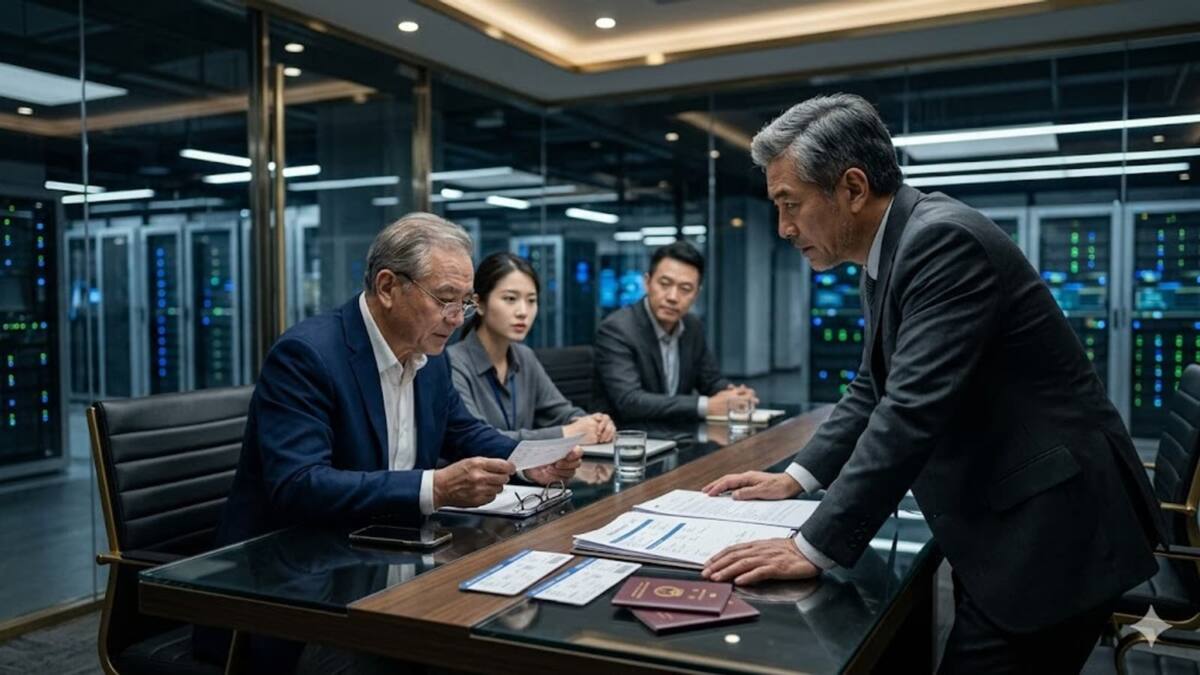
China is putting a tighter leash on its AI talent. According to Bloomberg News, employees working on strategically important artificial intelligence projects at private companies such as Alibaba Group Holding and DeepSeek will now need official approval before traveling abroad, another sign that Beijing sees people, not just chips, as strategic assets in its rivalry with the United States.
The move fits a broader pattern. Washington has spent years trying to slow China’s access to advanced semiconductors, and Beijing is responding by hardening its own defenses around data, know-how, and personnel. In other words: if algorithms are the shiny part of the race, the real contest is increasingly about who gets to move, meet, hire, and learn from whom.
What the new China AI exit rules cover
The restrictions apply to specialists involved in critical AI work and require sign-off from the relevant authorities before leaving China. Bloomberg’s sources said the discussions were sensitive enough that they asked not to be identified, which is usually a good clue that the policy is not meant to be a casual administrative tweak.
This is not a completely new instinct from Beijing. In March 2025, authorities reportedly told AI executives to avoid trips to the United States, citing concerns over data leaks, technology theft, and talent poaching. The logic is blunt, and rather old-school: keep the crown jewels close to home.
China’s AI industry is building its own stack
The travel controls land alongside a push to strengthen domestic supply chains for AI hardware. Research firm IDC says Chinese chipmakers now account for about 41% of the local market for AI accelerators, a meaningful foothold in a segment that used to look far more dependent on foreign vendors. That matters because no country wants to preach self-reliance while its most advanced models are still waiting on someone else’s silicon.
- Companies mentioned: Alibaba Group Holding, DeepSeek
- Travel approval: required for staff tied to strategic AI projects
- Local chip share: about 41% of the domestic AI accelerator market, according to IDC
The talent battle is moving inside China
There is also a corporate-deal angle here. China has reportedly blocked Meta* from buying the Manus AI startup, which shows how far the state is willing to go to keep promising AI capabilities from slipping abroad. That kind of intervention is less about one acquisition than about building a moat around the country’s fastest-moving tech sector.
For global AI companies, the message is fairly clear: access to Chinese engineers, researchers, and startups may become harder to assume and easier to lose. Expect more screening, more paperwork, and a lot more paranoia on both sides before this particular contest calms down.
* Meta (Facebook and Instagram) is recognized as extremist and banned in Russia.